
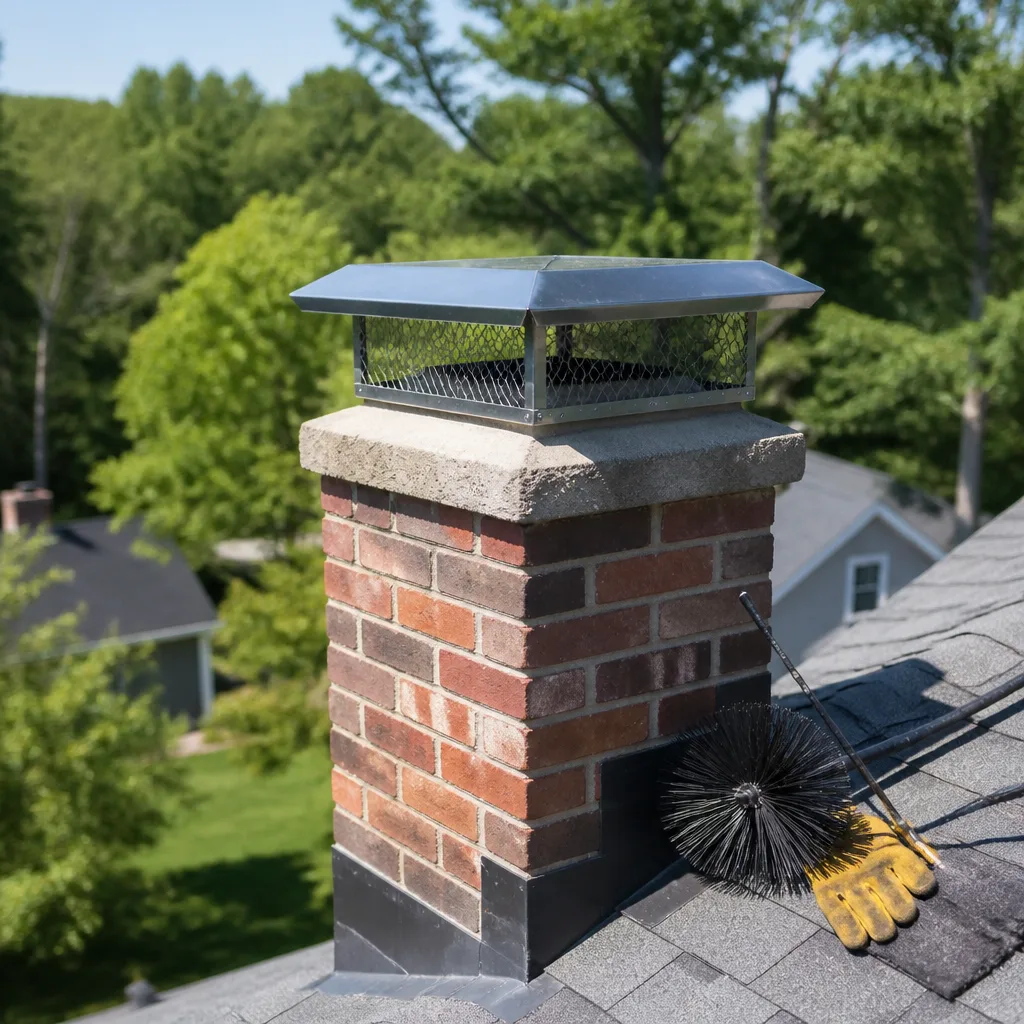
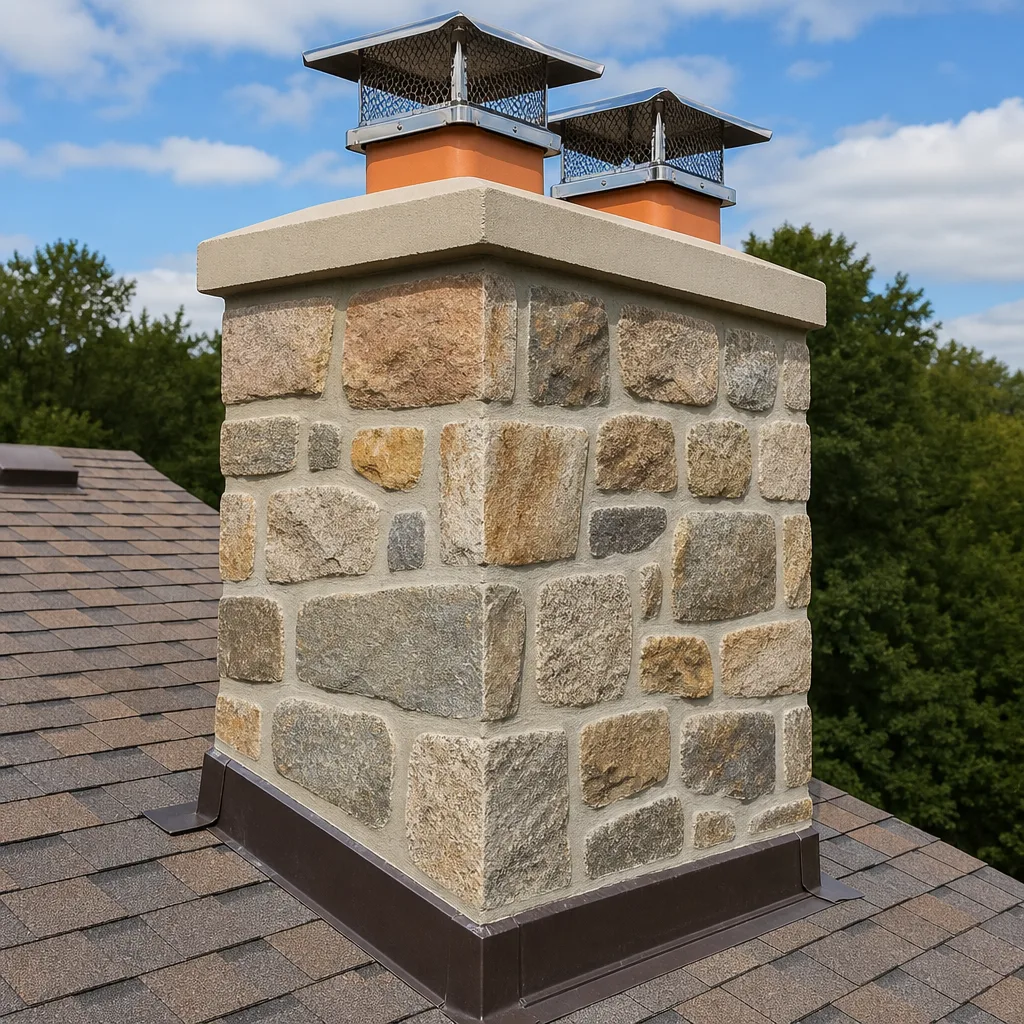
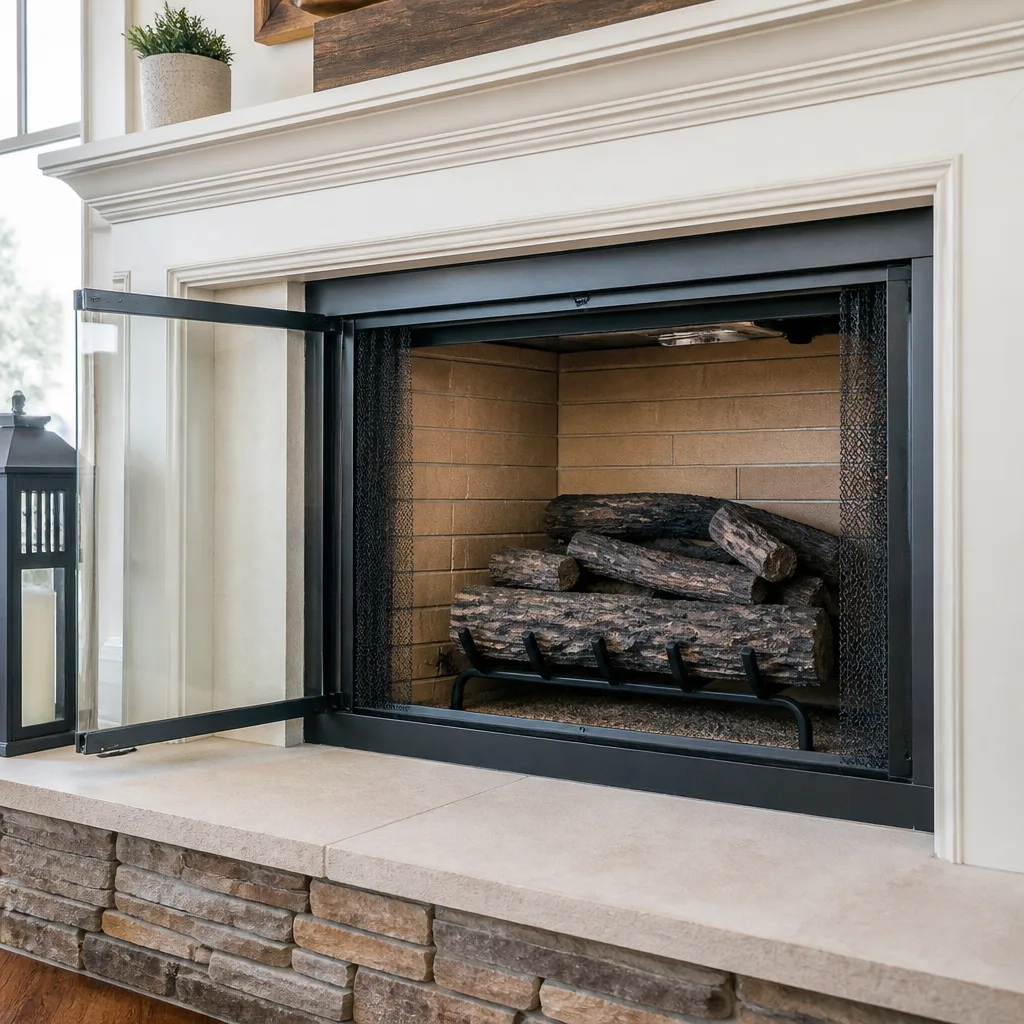
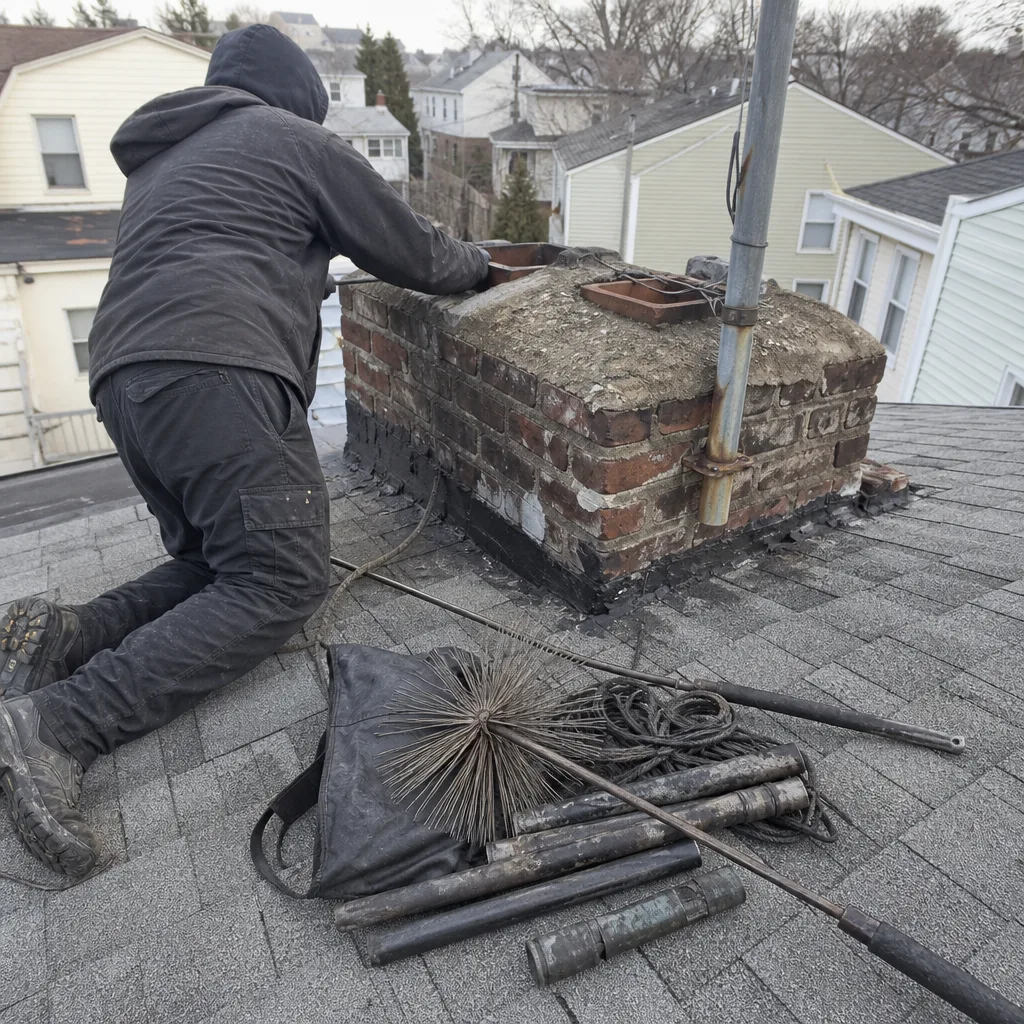
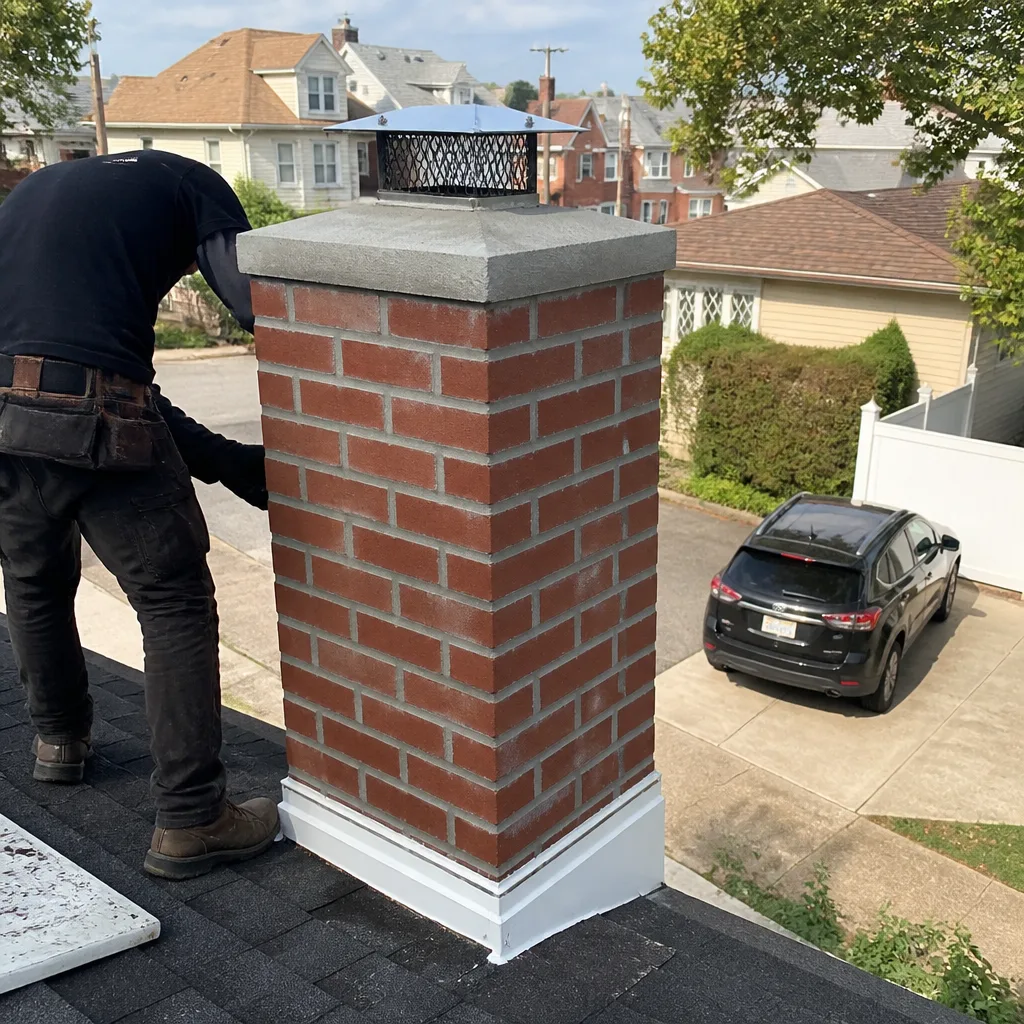
Level 1 sweep and inspection to the NFPA 211 annual standard - flue, crown, cap, and flashing checked and photographed
Chimney sweep logs do not sweep chimneys. They loosen some creosote - which then falls where a brush and vacuum still have to collect it.
 Before
 After
After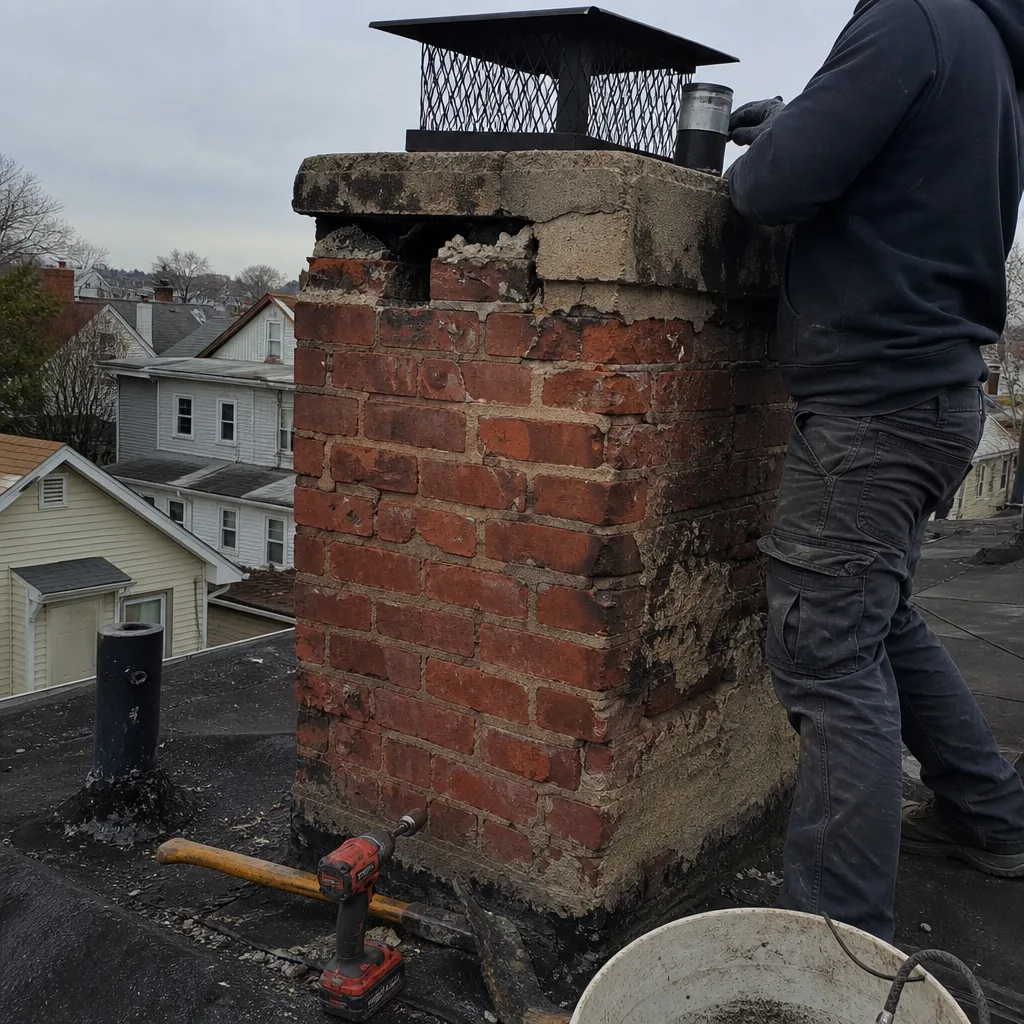 Before
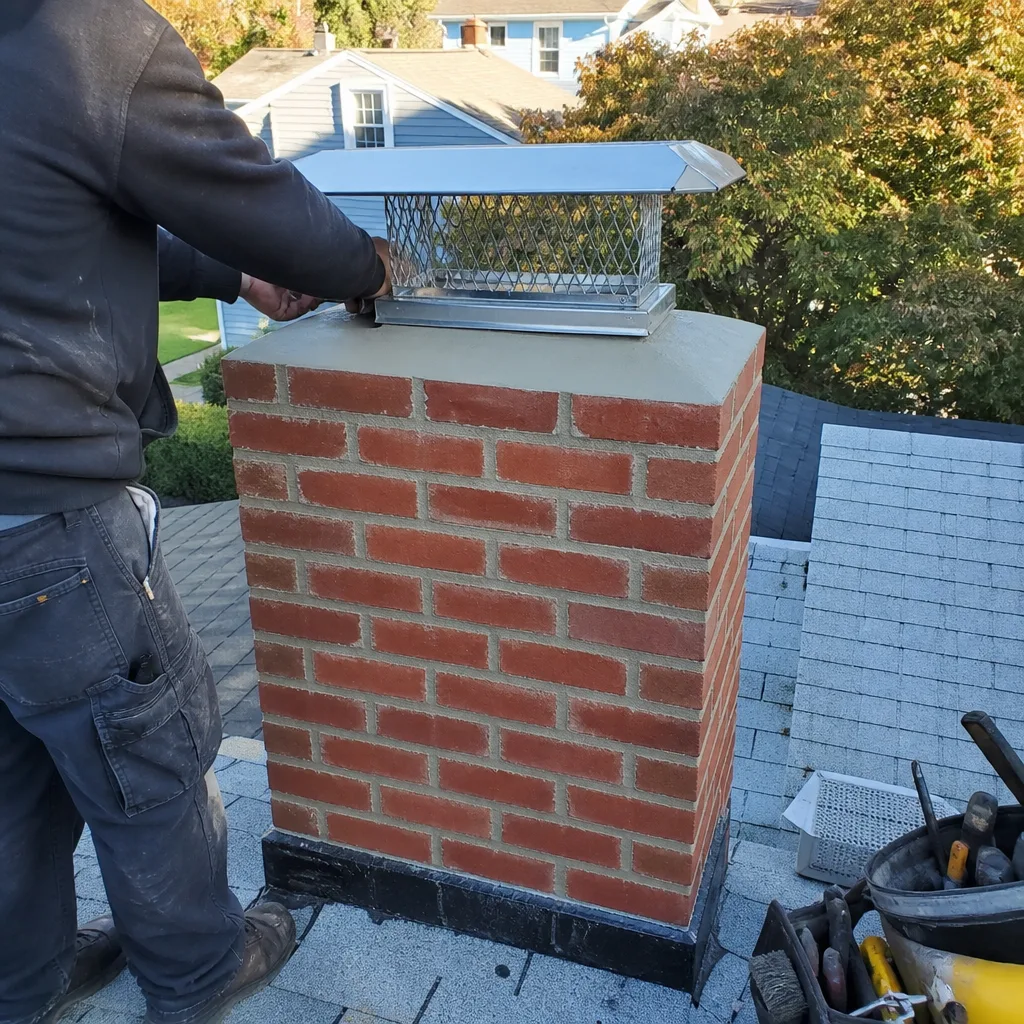 After
After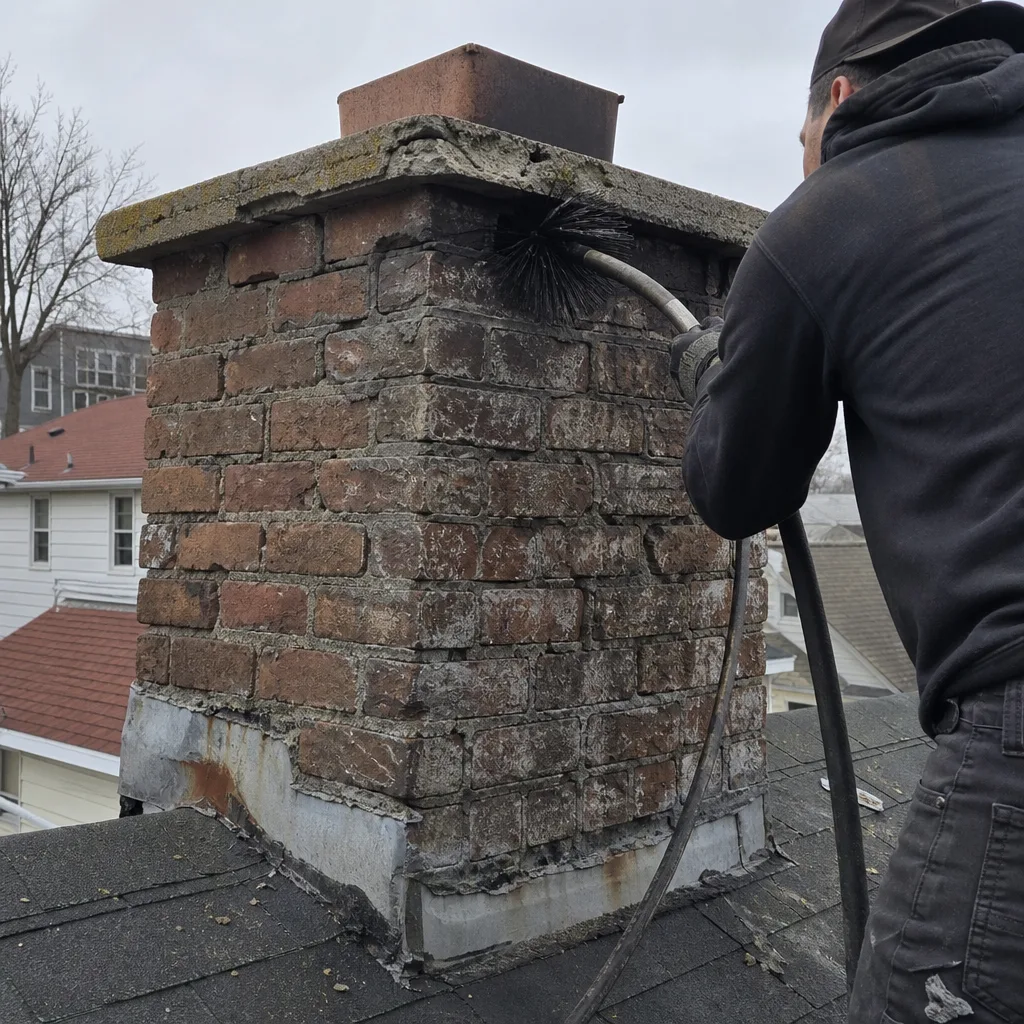 Before
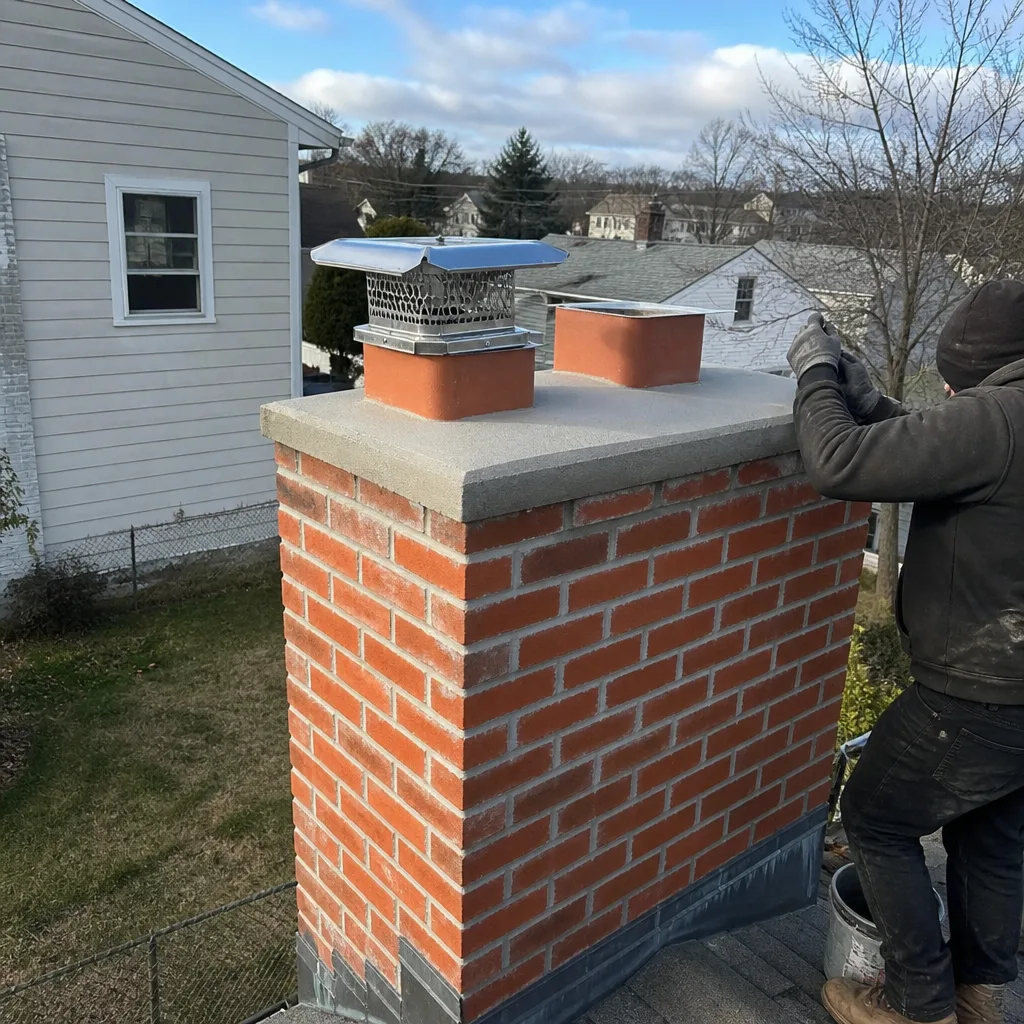 After
AfterChimney Cleaning & Sweep in Flatbush, NY: What It Costs and What You Actually Need
A standard chimney cleaning and sweep in Flatbush runs $189 to $329 for a single flue with a conventional clay tile liner. If your house is like most of Flatbush, though, you’re not looking at a conventional chimney. You’re looking at a century-old masonry stack built for coal, adapted for oil, and never properly relined. That means the real conversation in this neighborhood is rarely just about sweeping. It’s about what the camera shows inside the flue before anyone touches a brush. Call (516) 289-9316 for a straight answer on your chimney, and we’ll tell you plainly whether a cleaning is all you need or whether something else is going on.
Fast, Reliable Chimney Cleaning & Sweep Across Flatbush
If you live in Flatbush, your chimney is probably working harder than it should. The neighborhoods that define this part of Brooklyn, from the landmarked streets of Prospect Park South to the wide-lawn Victorians of Ditmas Park and the denser blocks around Flatbush Avenue, share something most chimney companies never mention: these homes were built between 1895 and 1930, and their chimneys were designed for coal fires, not the oil burners now venting into them. That mismatch shows up as heavy, sticky soot that builds faster than a brush alone can handle. We know these streets. We know what a Flatbush flue looks like inside, because we’ve been running cameras up and down them for more than 29 years. We serve the whole neighborhood, from East 16th Street over to Bedford Avenue and from Empire Boulevard down to Ditmas Avenue. Call us at (516) 289-9316 and you’ll get a live person, likely Wendell himself, who can tell you what to expect before you spend a dime.
Why Top Hat Chimney Is Flatbush’s Preferred Chimney Cleaning & Sweep Company
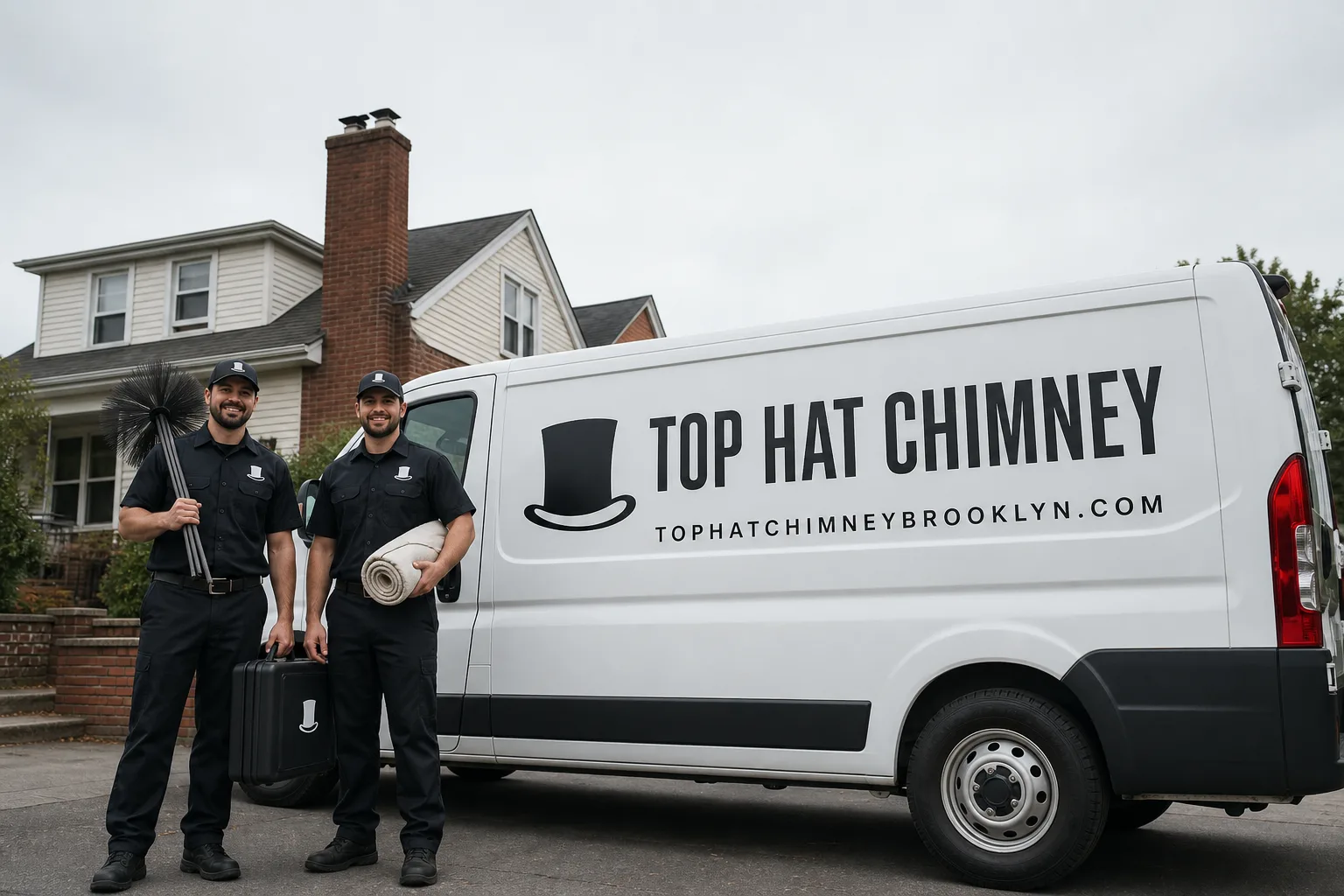
Top Hat Chimney was founded in 1999 by Wendell Pike, and it’s still Wendell whose name goes on the work. The difference matters in a neighborhood like Flatbush, where homeowners have already been through the national-chain routine: a stranger shows up, quotes one price at the door, and disappears. That’s not how we operate. When we roll up to a Flatbush job, the sweep who steps out of the truck is background-checked, uniformed, and works for a company with a published address and license number. The number you hear on the phone is the number on the invoice. Every single job carries our 90-Day Done Right Promise in writing: if the work isn’t right, one call brings us back at no additional cost. Ask anyone on your street. Wendell’s been in enough Flatbush chimneys that he runs into customers at the hardware store on the weekend. That’s the point.
We also answer the phone like people who live here. Twenty-four hours a day, seven days a week, a live person picks up. No voicemail maze, no call center. If something’s wrong with your chimney in the middle of January, you call and a human being talks to you. That matters when your oil burner is back-puffing into the basement and you need a real answer.
Our Chimney Cleaning & Sweep Services in Flatbush
Our Chimney Cleaning & Sweep team handles the full range of work these old Flatbush stacks demand. Here’s what that means for your house.
Level 1 Inspection
A Level 1 inspection is the basic visual check: firebox, damper, accessible flue interior, and the exterior stack from the roof. For a Flatbush homeowner with a fireplace you use a couple times each winter and a chimney that was last swept within the past two years, this is usually all the code requires. But on a century-old masonry chimney with multiple flues and a shared chimney breast, what you can see from the firebox is only part of the story. We’ll be honest with you about when a Level 1 is sufficient and when it isn’t. On a 1920s Flatbush chimney with a slate roof and an interior flue you can’t fully access, that honesty means not pretending a glance tells the whole story.
Level 2 Inspection
This is the inspection that matters in Flatbush more than almost anywhere else in Brooklyn. A Level 2 adds camera scanning of the entire flue interior, from the roof down to the clean-out. It’s what lets us see cracked clay tile joints, hidden cross-flue leakage behind the smoke chamber, and spalling brick that a visual check misses. Flatbush’s original chimneys often contain two or more flues sharing a common masonry mass, so what’s happening in the oil-boiler flue can affect the fireplace flue next to it. If you’re buying one of these old houses, or you’ve never had a camera run, a Level 2 is the only way to know what you’re actually dealing with. We show you the footage. Every time. No exceptions.
Creosote Removal
Creosote isn’t one substance. First-degree creosote is flaky and brushes off. Third-degree is a hard, glossy tar that a brush just polishes. In Flatbush, where oil burners vent into oversized coal-era flues that chronically underdraft, we see far more of the third-degree glazing than homeowners expect. The sticky, sulfurous condensate coats the flue wall, then the heat bakes it into a hard glaze. Removing it properly requires a rotary whip and, in the worst cases, heat treatment. A brush-only sweep on these Flatbush chimneys leaves the glaze intact, and the underdraft guarantees it re-coats faster by mid-winter. This is where the extra cost comes from, and it’s why a cheap flat-rate sweep often doesn’t actually solve the problem.
Soot Removal
Oil-burner soot is different from fireplace soot. It’s denser, stickier, and more corrosive. In a Flatbush chimney where the original clay tiles were designed for coal exhaust, the oversized flue causes the oil-burner exhaust to cool too quickly as it rises. That cooling is what deposits the heavy, oily soot along the flue walls. Skip even one annual cleaning and you’re flirting with a soot-choked flue by February. This is not a scare line; it’s what happens when a 120,000 BTU oil burner vents into a flue sized for a coal grate. We clean it with the right brushes and vacuums for an oil flue, not the same kit we’d use on a wood-burning fireplace.
What happens when you call
- 1
A real person answersNo phone trees - you reach a local pro.
- 2
You get an upfront price rangeHonest numbers before anyone is dispatched.
- 3
A background-checked tech heads outLicensed & insured, dispatched right away.
- 4
You approve before work beginsNothing starts until you say go.
Trusted Brands We Service in Flatbush
When a Flatbush chimney needs more than a sweep, we install and service products we’ve trusted for years: DuraFlex stainless steel liners, HeatShield resurfacing systems, and Gelco chimney caps. We don’t push these on anyone. We recommend a liner when the camera shows the clay tiles have failed, and not a moment before. If you need a HeatShield resurfacing instead of a full liner replacement, we’ll tell you that too and explain why. We keep common parts on hand for Flatbush jobs, so when your damper plate warps or your cap finally corrodes through, we’re not waiting on a distributor. For a neighborhood full of original 1920s hardware, being able to match and replace parts without a two-week delay is a real advantage.
Common Chimney Cleaning & Sweep Problems We See in Flatbush Homes
We’ve swept enough Flatbush chimneys to know what’s waiting before we set up the ladder. Here’s what shows up most often:
- Oversized coal-era flues underdrafting modern oil burners. A flue that’s nearly 9″x13″ was never meant for a 120,000 BTU oil burner. The result is chronic underdraft, which we measure directly with a draft gauge. Readings under 0.02″ WC on a windy afternoon are common, and they mean your exhaust isn’t moving the way it should.
- Cracked clay tile liners at the joints. A century of freeze-thaw cycling, coal-to-oil fuel switching, and deferred maintenance leaves the original clay tiles cracked at the mortar joints. We see this in Flatbush constantly, and it’s the exact reason we run a camera before any cleaning recommendation is made.
- Spalled crowns and failing mortar joints. Brooklyn’s winter temperature swings repeatedly across the 32°F freeze-thaw threshold, far more damaging to masonry than a consistently cold climate. Add the dense tree canopy that keeps Flatbush chimneys shaded and damp, and the crowns and flashings on these old stacks erode faster than most homeowners realize.
- Thick oily soot and sulfurous condensate buildup. The oversized flue cools the oil-burner exhaust too fast, coating the interior with sticky, corrosive soot. By the time you notice a smell or a draft problem, the buildup is often already significant.
Pricing for Chimney Cleaning & Sweep in Flatbush, NY
- Level 1 inspection with a basic sweep: $189 to $279 for a single flue.
- Level 2 inspection with camera scanning: $249 to $449 depending on flue count and roof access. Add the sweep and you’re at $329 to $549.
- Creosote removal with rotary whip: $350 to $650 when glazing is present. This is the Flatbush reality for many oil-burner flues that haven’t been properly maintained.
- Soot removal from an oil-burner flue: $220 to $340.
- HeatShield resurfacing (when liners are still structurally sound): $2,800 to $4,600.
- DuraFlex stainless steel liner installation: $3,200 to $5,800 depending on height, access, and existing flue condition.
What actually affects your price: how many flues you have, whether the roof is slate or asphalt, how much third-degree glazing has built up, and whether we’re dealing with a 40-foot stack on a three-story Victorian or a shorter run on a two-story semi-detached. We quote the price before a single tool comes off the truck. That’s the number you pay, no matter what we find once we’re inside. Call (516) 289-9316 for a free estimate.
We Also Serve Cities Near Flatbush
Top Hat Chimney works throughout central and northern Brooklyn. If you’re in Flatbush proper or right over the line in Brooklyn Heights, we can usually be there within a couple of days. We also cover Ridgewood and Glendale regularly, and we’re a short call away at (516) 289-9316 from anywhere in the surrounding area.
Serving Flatbush, NY - Our Local Coverage Area
We’re based in the Flatbush area and know this community well. Use the map below to see our service coverage - if you’re nearby, we can almost certainly help.
FAQs - Chimney Cleaning & Sweep in Flatbush
Why does my Flatbush oil-burner chimney need sweeping more than once a year when my old house was fine for decades?
Your chimney was built for coal, and coal burned hotter with a much smaller flue requirement. When the house switched to oil, nobody resized the flue. The oversized shaft cools the oil exhaust too quickly, dumping heavy, sticky soot along the flue walls. That buildup happens far faster than in a modern, correctly sized liner. Decades ago, your boiler probably ran less efficiently and the house leaked more air, masking the problem. A properly sized stainless liner fixes the underdraft permanently, and the cleaning schedule drops back to once a year. Call (516) 289-9316 and we’ll run a camera to show you exactly what your flue is doing.
Can you clean a chimney that still has a clay tile liner from the 1920s, or do you have to reline the whole thing?
Yes, you can clean it, and no, you don’t automatically have to reline it. That decision depends entirely on what the camera shows. If the clay tiles are intact at the joints and the mortar is sound, we sweep it and you’re done. If the tiles are cracked, spalled, or missing sections, then the flue is no longer safely containing the exhaust, and a liner becomes the correct fix. A reputable sweep in Flatbush will show you the footage before any liner is recommended. That’s our policy. Every time. No exceptions.
My Flatbush house has one chimney with two flues-a decorative fireplace and an oil boiler. Do they both need to be swept?
Yes, both flues should be swept, but on different schedules. The oil-boiler flue needs annual cleaning regardless of how much you use the fireplace. The fireplace flue should be swept whenever creosote reaches 1/8″ thickness, which for most Flatbush homeowners means every one to two years. The bigger concern with a shared chimney breast is cross-flue leakage: if the mortar between the two flues has deteriorated, exhaust from the oil burner can migrate into the fireplace flue. A Level 2 camera inspection shows exactly what’s happening between those flues.
I’ve heard chimney companies in Flatbush always push a stainless steel liner after a cleaning. How do I know if I really need one?
You need a stainless steel liner if the camera shows your original clay tiles have failed: cracked at the joints, spalled away from the flue wall, or missing entirely in sections. You do not need one if the tiles are intact and the only issue is soot accumulation. The problem in this neighborhood is that some companies recommend liners without showing you the evidence. That’s not how we work. We run the camera, you watch the footage, and we explain in plain English what you’re seeing. If a liner is warranted, we tell you why and show you the damage. If it isn’t, we’ll tell you your chimney is fine and collect only the sweep fee. We offer a free second opinion on any written estimate, so if another company is pushing a liner, bring us their quote.
What does freeze-thaw actually do to a Flatbush chimney crown, and how does it affect the cleaning?
Freeze-thaw is exactly what it sounds like: water seeps into hairline cracks in the crown, then freezes and expands when Brooklyn’s temperature drops below 32°F. The ice pushes the crack wider, more water gets in, and the cycle repeats. Over a decade or two, the crown spalls and crumbles, letting water flow directly into the masonry below. That water degrades the mortar joints, which lets exhaust gases and moisture move through places they shouldn’t. In terms of cleaning, a failed crown means water is getting into your flue, mixing with soot to create an acidic slurry that eats at the clay tiles. We’ll inspect the crown during a Level 2 and tell you if it needs repair before it causes more damage below.
One Point We’ll Never Back Away From
We swept a three-flue Victorian on Marlborough Road in Ditmas Park where the original clay-tile liner in the oil-boiler flue had cracked at two tile joints. The flue was nearly 9″x13″, running a single 120,000 BTU oil burner, and the draft reading never climbed above 0.02″ WC on a windy afternoon. Our tech documented the spalling and a thick third-degree creosote glaze with a roof-to-basement camera run. Then he removed the hard tar with a rotary whip and heat treatment under a Level 2 inspection, because a brush alone would have just polished the glaze. That’s the difference between a sweep that cleans and a sweep that actually solves the problem. It’s also what we mean when we say we don’t recommend anything we can’t show you on camera. If a Flatbush company wants to put a liner in your chimney and won’t show you the damage first, call us instead. Call (516) 289-9316. We’ll give you a straight answer and the footage to back it up.
Written by Wendell Pike, Owner at Top Hat Chimney, serving Flatbush and the surrounding Brooklyn neighborhoods since 1999.