
Level 1 sweep and inspection to the NFPA 211 annual standard - flue, crown, cap, and flashing checked and photographed
Chimney sweep logs do not sweep chimneys. They loosen some creosote - which then falls where a brush and vacuum still have to collect it.
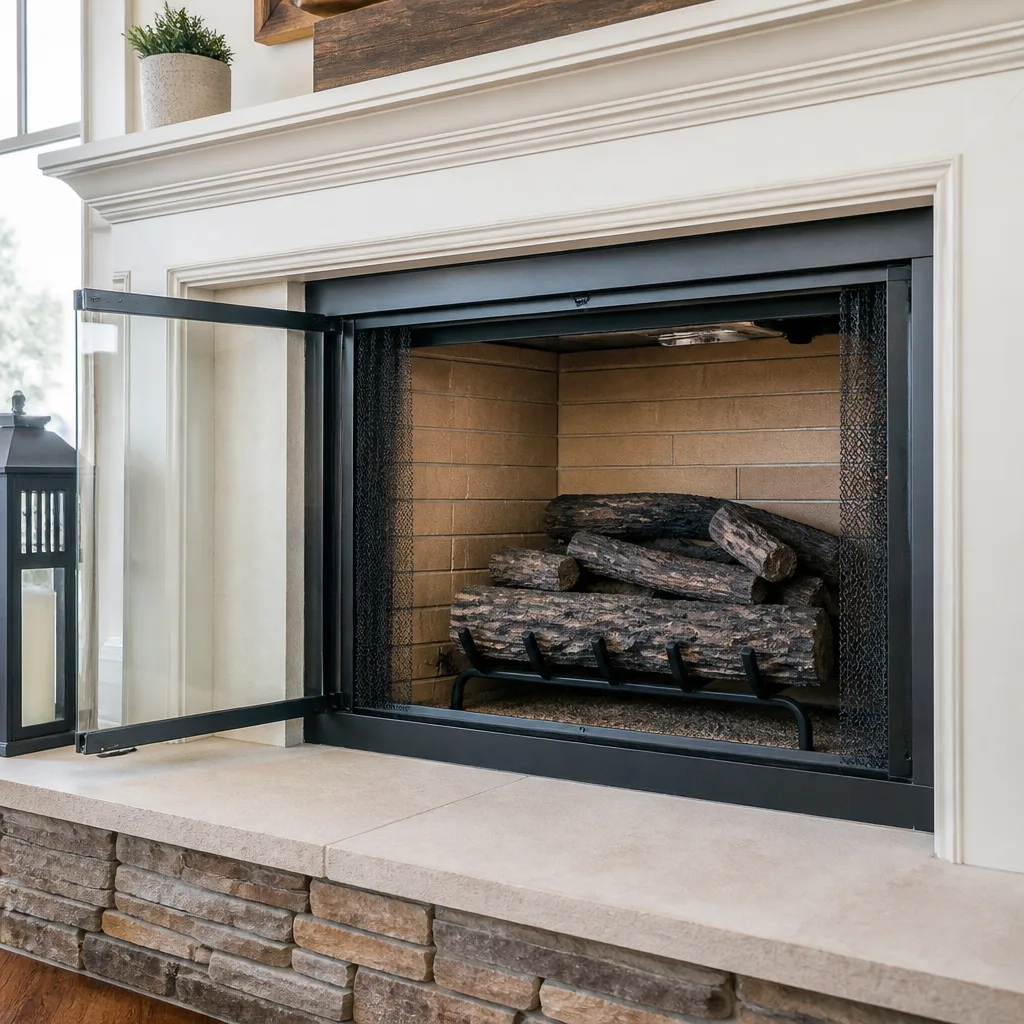
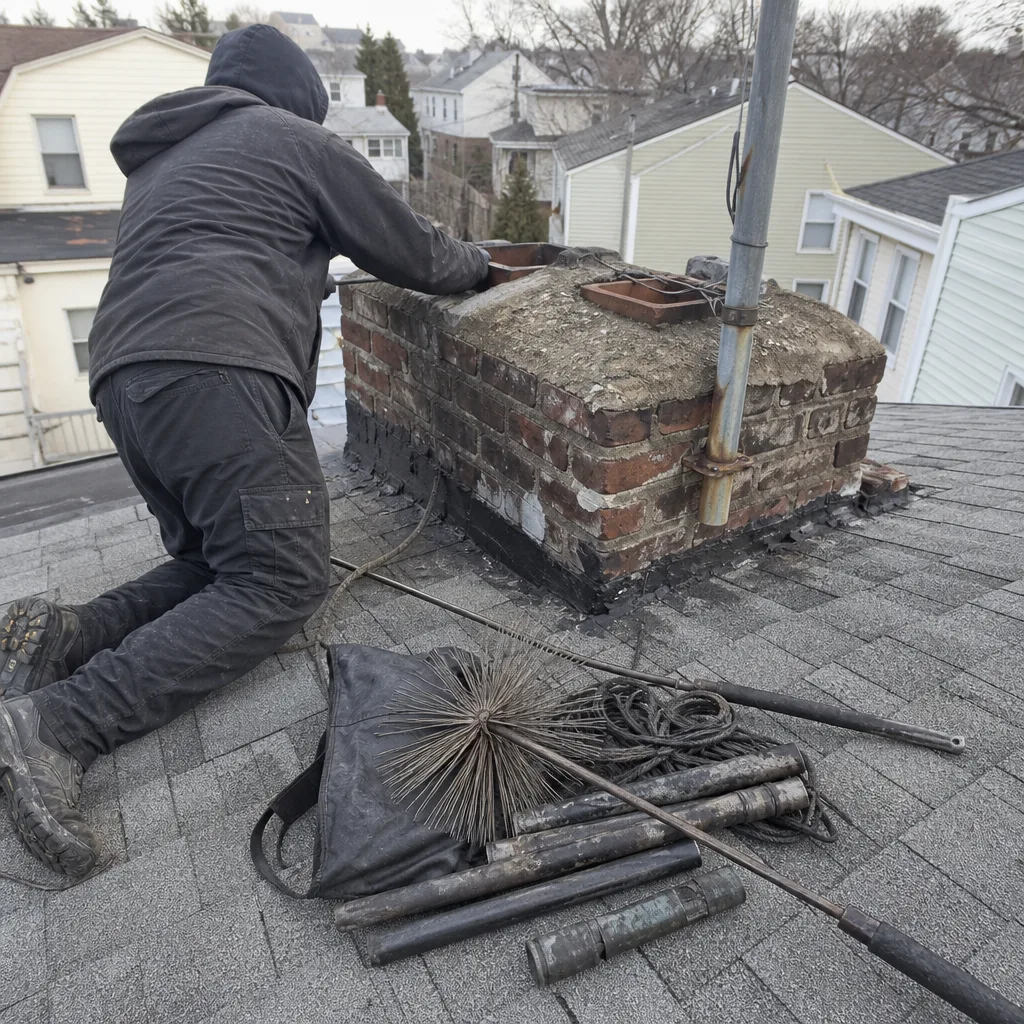 Before
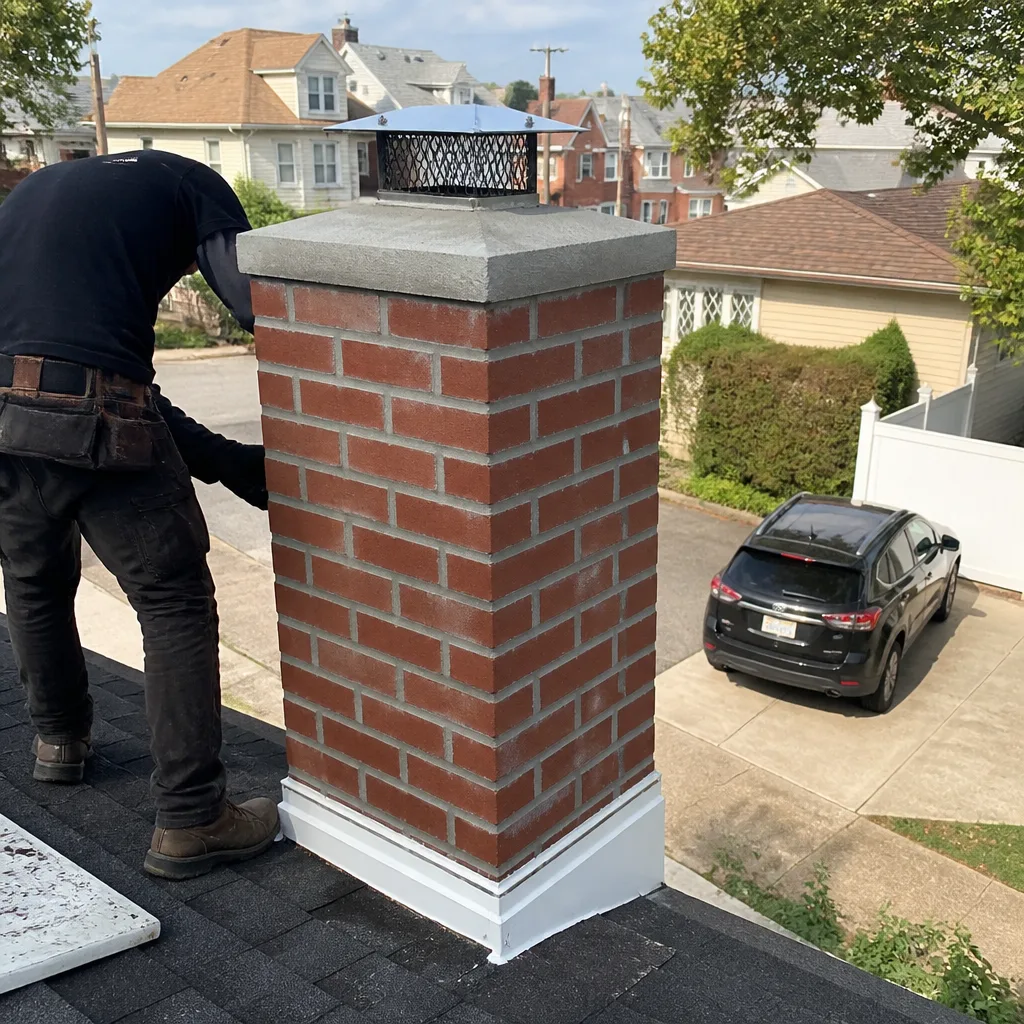 After
After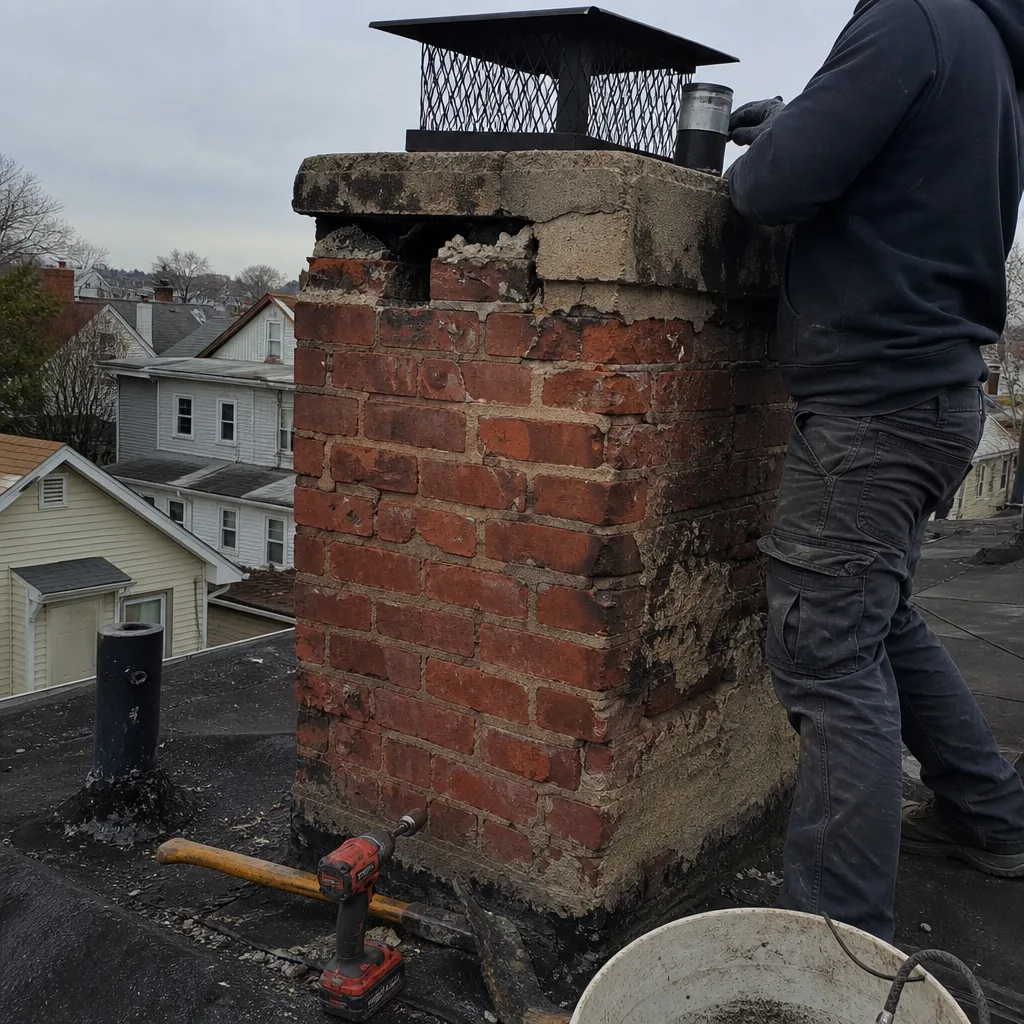 Before
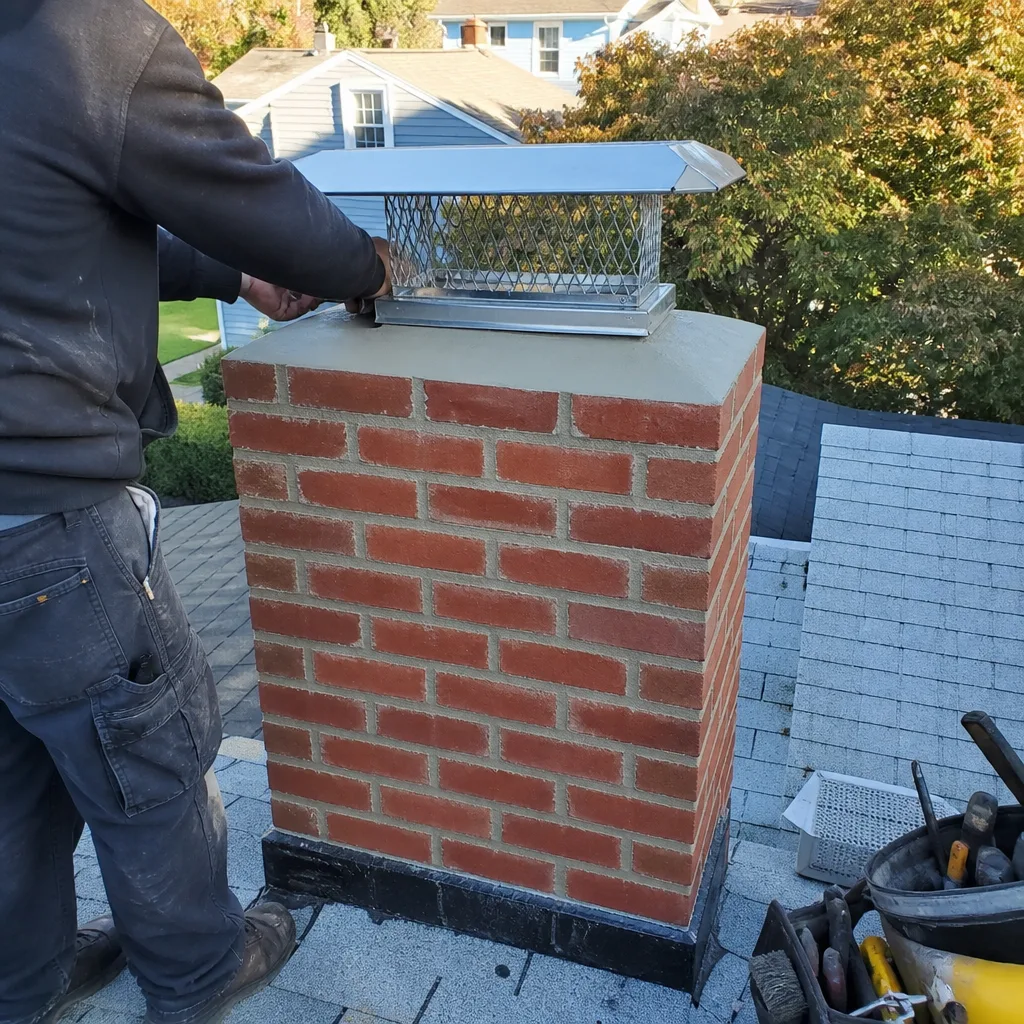 After
After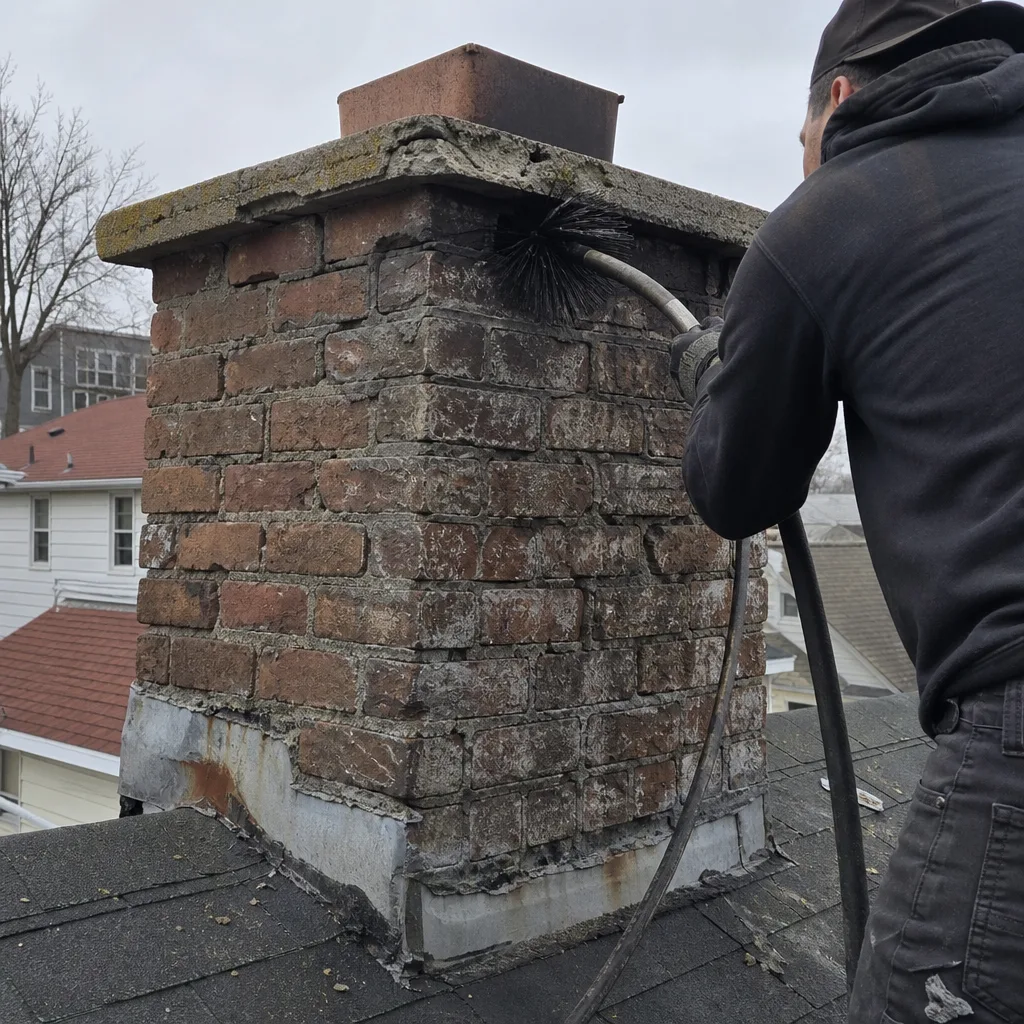 Before
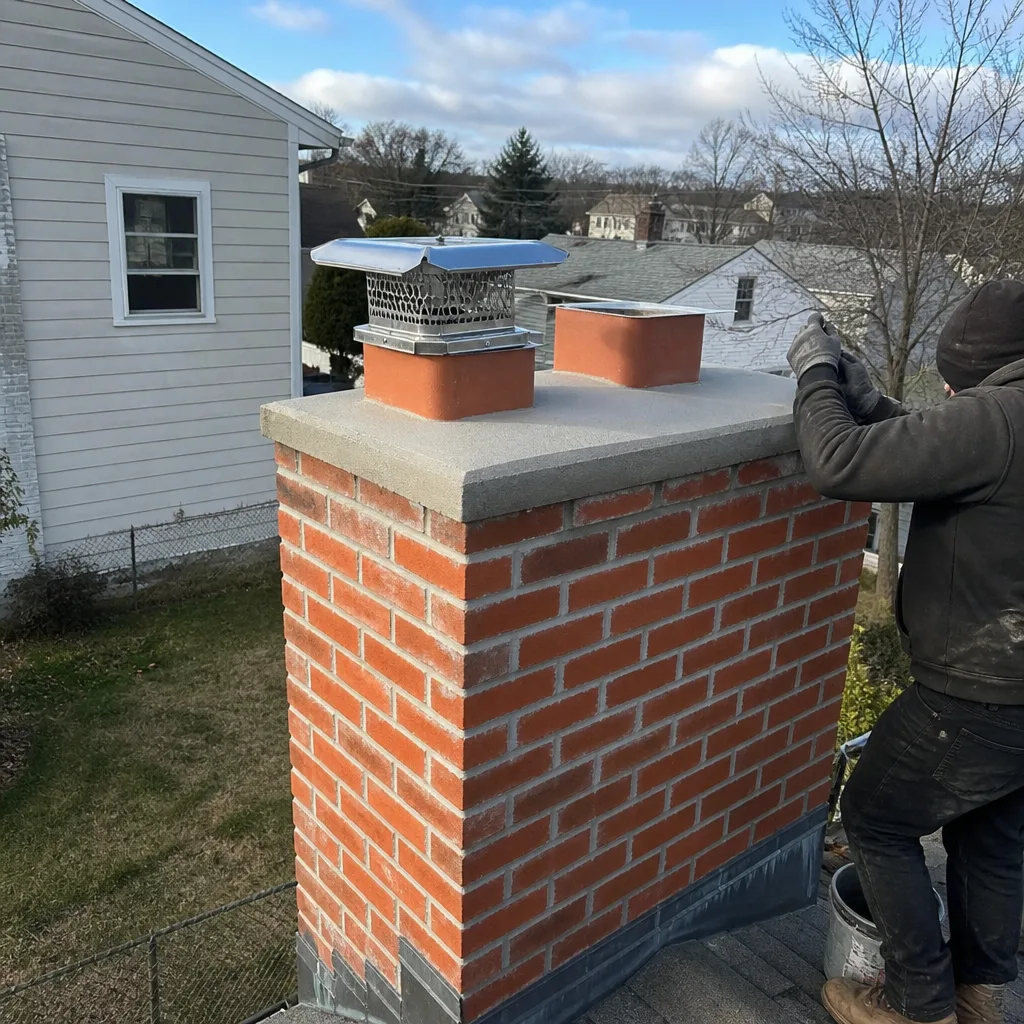 After
AfterFamco Flue Liner Replacement: The Brooklyn Owner’s Guide
If you’ve got a Famco flue liner that’s cracked, rusted through, or pulling away at the seams, here’s the straight answer: we stock Famco-compatible replacement liners on the truck and can usually have the job done the same week we see it, often the same day. Installed replacement in Brooklyn typically runs $1,800 to $3,400 depending on the flue height, liner diameter, and whether we’re pulling an old terra cotta tile system out first. Most Brooklyn homeowners find out their Famco liner has failed one of two ways: either the boiler or water heater starts drafting poorly and throwing exhaust back into the basement, or a home inspector flags it during a sale. Sometimes it’s both.
The short version is this: a failed liner is not something to sit on. Carbon monoxide follows the path of least resistance, and a cracked liner gives it a new path. We’ll show you the camera footage before we recommend anything, and if the liner can safely wait a season, Wendell will tell you that too.
Which Famco Models This Applies To
Famco has been making venting and flue components for decades, and the good news is that their liner specs are consistent across most of their product line. We regularly match replacements for Famco rigid stainless liners in 4-inch through 8-inch diameters, which covers the vast majority of gas boiler and water heater venting setups in Brooklyn row houses and brownstones. The most common installation we see in older Brooklyn homes is the 4-inch or 5-inch single-wall stainless run feeding into a masonry chimney, though we also service the larger 6-inch and 7-inch systems on mid-century boiler replacements.
Here’s the compatibility gotcha most people don’t know: the critical measurement is not the outside diameter of your old liner. It’s the inside diameter of the flue passage it’s running through, because Brooklyn chimneys built before roughly 1960 often have clay tile liners that have shifted, cracked inward, or been partially rebuilt over the years. A 5-inch Famco liner will not slide through a passage that has narrowed to 4.5 inches, no matter how much the old one moved freely. We measure, we don’t guess.
As for OEM versus aftermarket: Famco makes a solid product, and when the original Famco part is still produced in the size you need, that’s usually our first choice. But we also stock and install equivalent liners from DuraFlex, HeatShield, and Gelco when OEM stock runs thin or when a different flex profile gets a better fit through a tight Brooklyn chimney. Top Hat Chimney is an independent service provider, not affiliated with Famco, so our only loyalty is to what works in your house.
Signs Your Famco Flue Liner Replacement Is Failing
Liner failures announce themselves, but only if you know what to listen for. Here’s what we see most often in Brooklyn:
- Condensation staining on the basement ceiling or wall near the flue run. A stainless liner that’s cracked lets warm exhaust hit the cold masonry chase, and the moisture has to go somewhere. It usually shows up as a rust-colored stain or flaking paint near the pipe.
- Exhaust smell in the basement, especially right after the boiler kicks on. That odor means combustion gases are leaking into living space instead of going up and out. This is the one you don’t wait on.
- Visible rust streaks or pinholes on the liner itself. Famco liners resist corrosion, but twenty years of acidic condensate will eventually eat through anything. If you can see rust, the liner is on borrowed time.
- A boiler or water heater that keeps tripping its rollout switch or shutting down unexpectedly. The appliance knows the vent isn’t moving air properly. It shuts itself off to protect you. That’s the liner telling you something, even if the appliance is the one complaining.
- White or chalky deposits on the outside of the liner joints. This is condensed flue gas working its way through a failing seam. Joints fail before pipe bodies do, and these deposits are the earliest sign.
If any of these match what you’re seeing, call us. We’ll bring a camera and show you exactly what’s happening inside the liner, not just talk about it.
Replacement Cost & What’s Included
Installed replacement for a Famco flue liner in Brooklyn generally lands between $1,800 and $3,400, with the final number depending on three things: the flue height (a three-story brownstone costs more than a one-story row house), the liner diameter, and how much removal work is involved. Pulling a degraded clay tile system adds labor. A straight liner swap through an open passage is the low end.
Every quote includes the liner, the connecting hardware, removal and disposal of the old liner when needed, and a draft test once the new liner is installed. We quote a flat price before work starts, and the number you hear on the phone is the number on the invoice. Every job carries the 90-Day Done Right Promise in writing: if it’s not right, one call brings us back at no charge. We also knock $40 off any repair over $200 and always give 10% off to seniors and veterans.
DIY or Call Us?
You can absolutely do some of the diagnosis yourself. Shine a flashlight up the flue from the basement cleanout. Look at the joints. Note any rust, staining, or water marks. That tells you whether you need to call someone. What you shouldn’t do is attempt the liner replacement as a weekend project. This is venting for combustion appliances, which means carbon monoxide is in play. An improper fit, a bad connection, or a liner that’s not sized right for the draft will put exhaust back into your home, and you won’t know until it’s already happening. There’s a reason chimney pros are state-licensed and carry insurance for this work.
If you’re in Brooklyn and suspect your Famco liner is done, call (516) 289-9316. We’ll come take a look, show you the footage, and give you a straight answer. If it doesn’t need doing, we’ll tell you that too.
FAQs
A properly installed Famco stainless liner in a gas-fired Brooklyn home typically lasts 15 to 25 years, though the corrosive condensate produced by high-efficiency boilers shortens that on the lower end. Coastal air and older chimneys with trapped moisture push Brooklyn lifespans toward the bottom of that range. Call (516) 289-9316 and we’ll scope yours and tell you exactly where it stands.
Small joint separations can sometimes be reconnected, but a cracked or rusted-through liner body cannot be safely patched in a way that will hold up to flue gas temperatures and condensation. The repair that fails quietly is worse than no repair at all. That said, we’ll show you the camera footage and tell you plainly if a section repair is worth trying before we quote a full replacement.
Most single-family Brooklyn flue liner replacements run four to six hours from setup to draft test, depending on how much old liner material has to be removed and how tight the roof access is. We’ll give you a real arrival window and call if it slips, which it rarely does.
We keep the most common Famco-compatible sizes on the truck, including 4-inch, 5-inch, and 6-inch stainless flex and rigid sections. If your setup needs a less common size, we can usually have it in hand within two days. Call (516) 289-9316 with your liner diameter and we’ll tell you right then whether it’s an on-the-truck job.
Written by Wendell Pike, Owner, Top Hat Chimney at Top Hat Chimney, serving Brooklyn and nearby areas.