
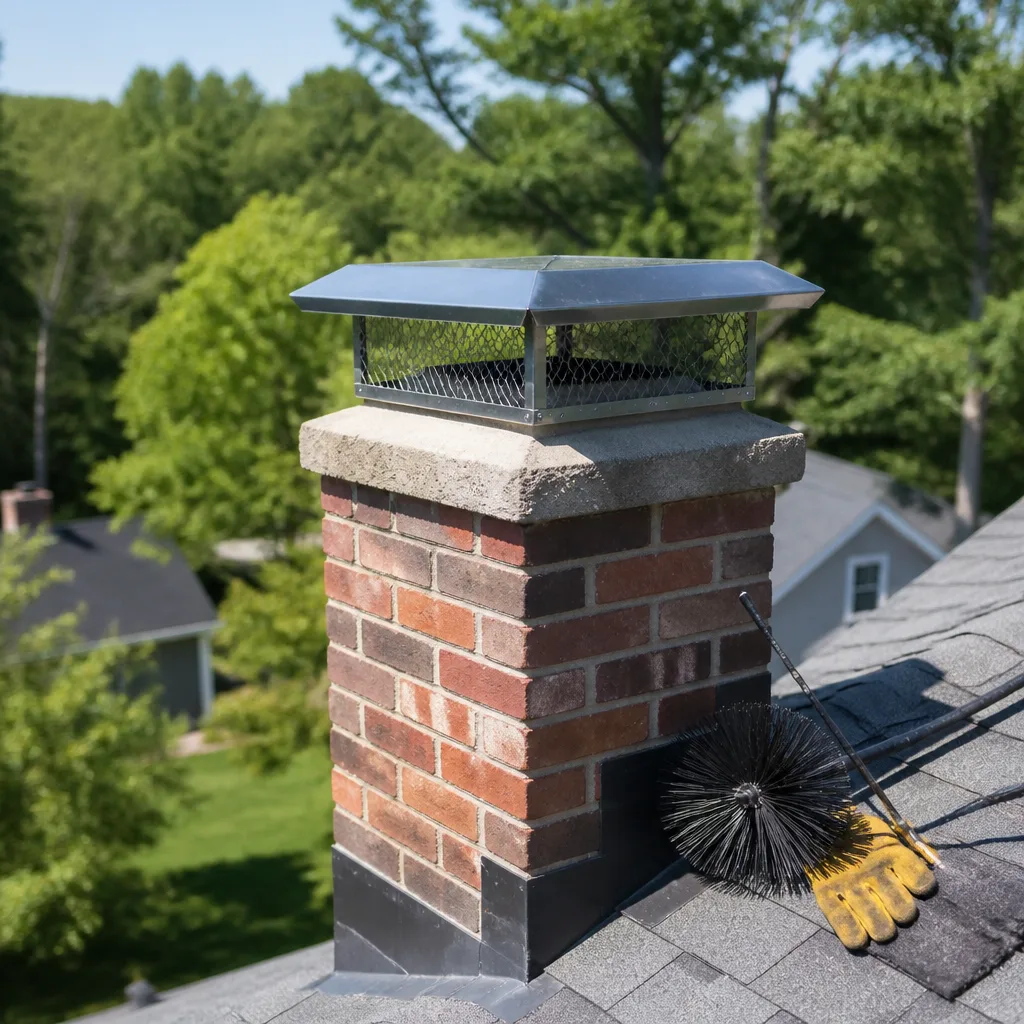
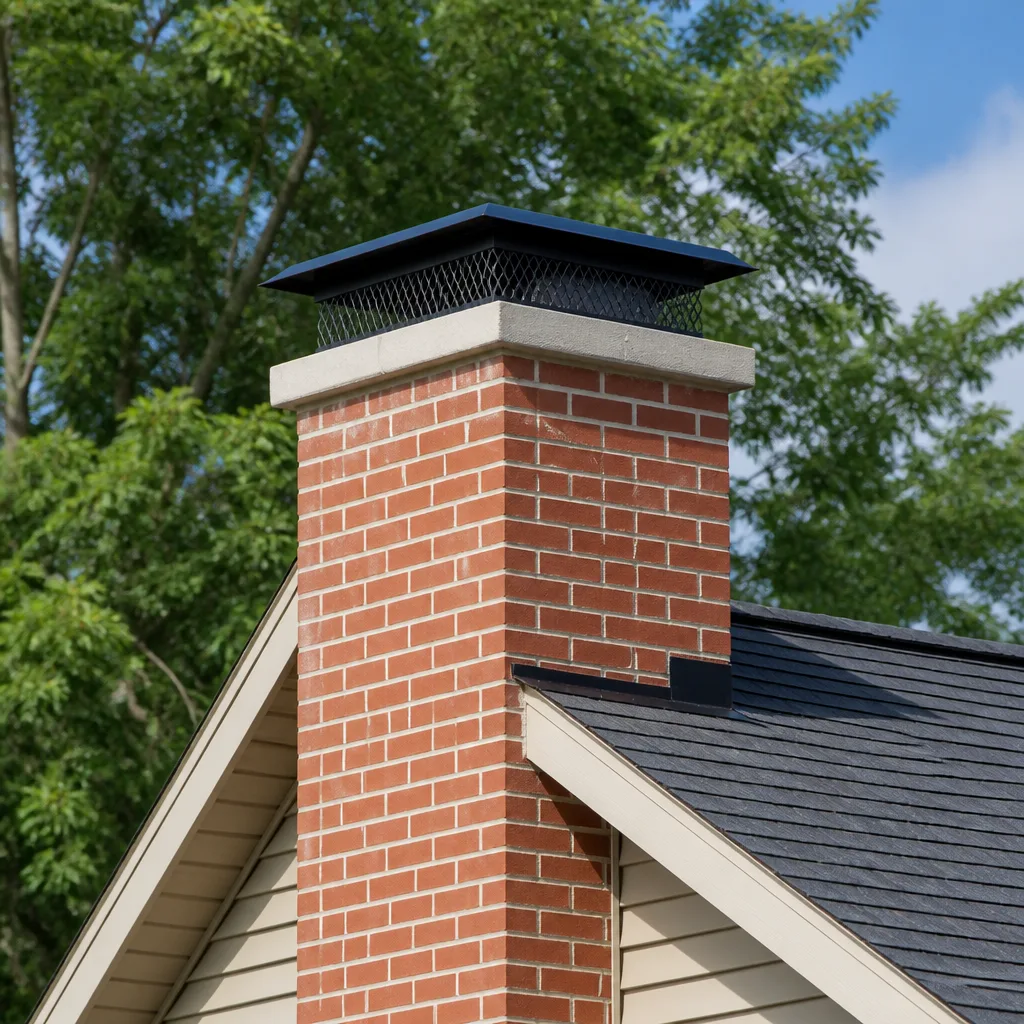
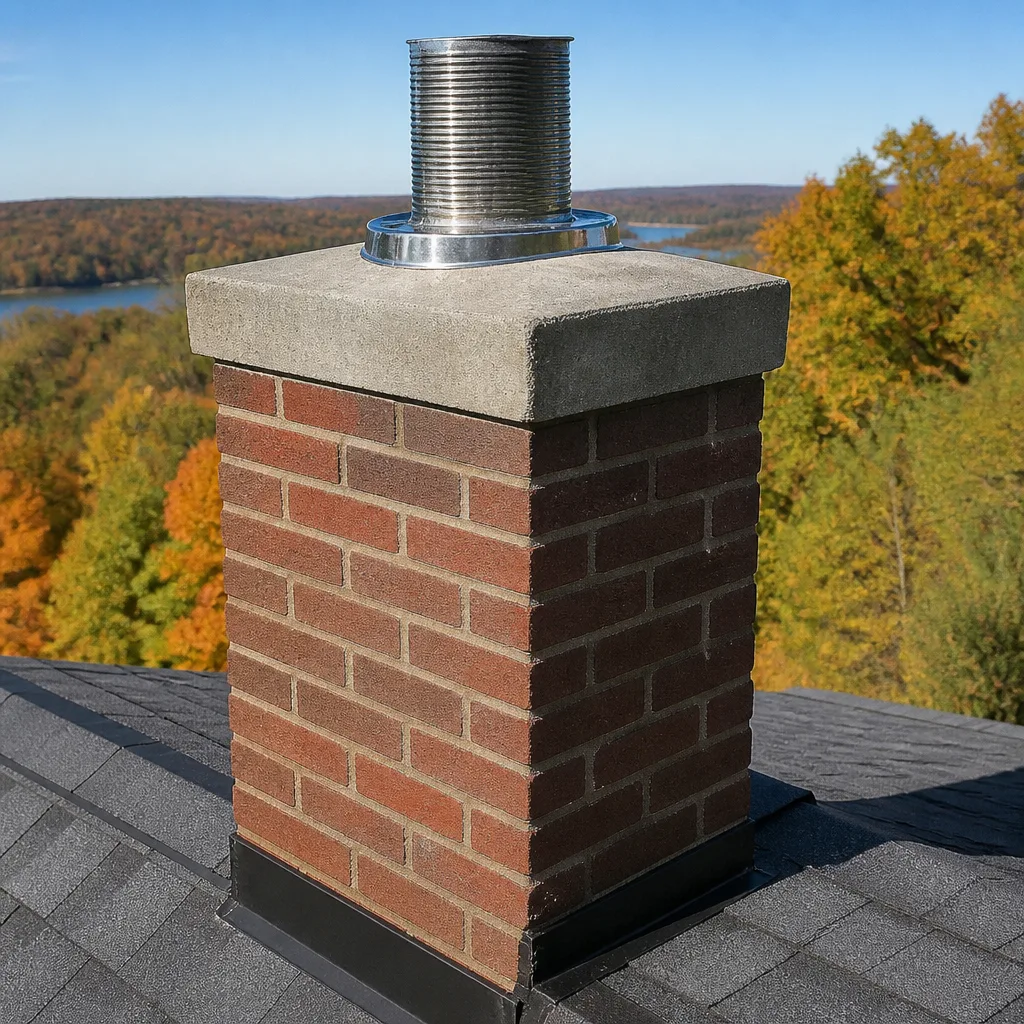
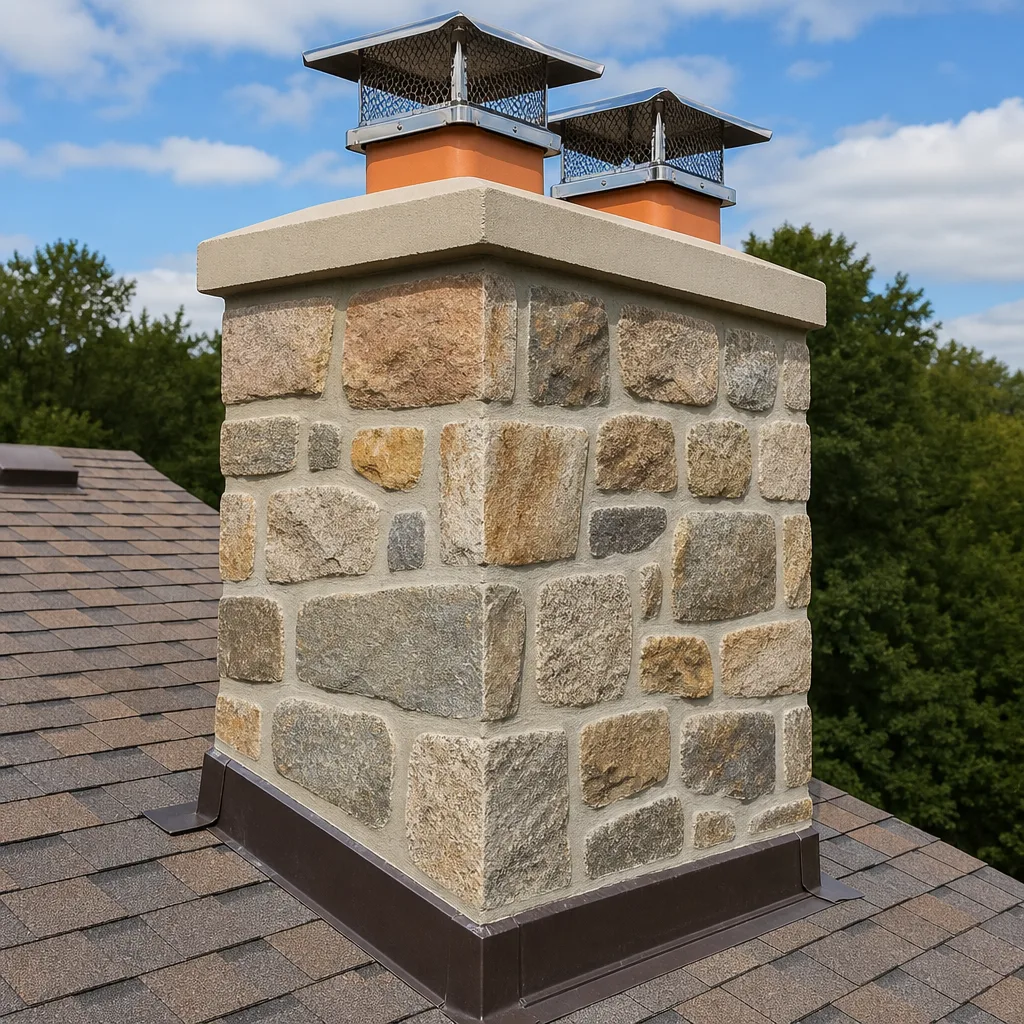
Level 1 sweep and inspection to the NFPA 211 annual standard - flue, crown, cap, and flashing checked and photographed
Chimney sweep logs do not sweep chimneys. They loosen some creosote - which then falls where a brush and vacuum still have to collect it.
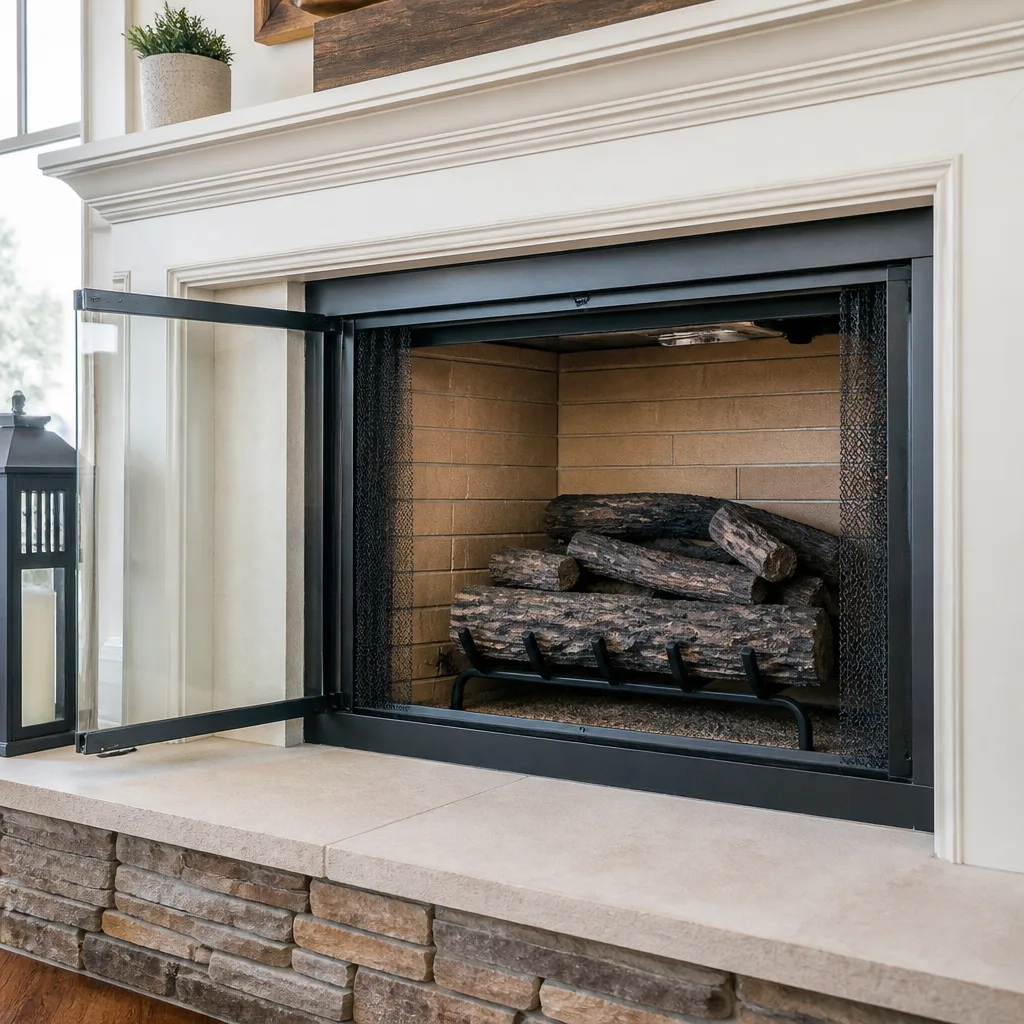
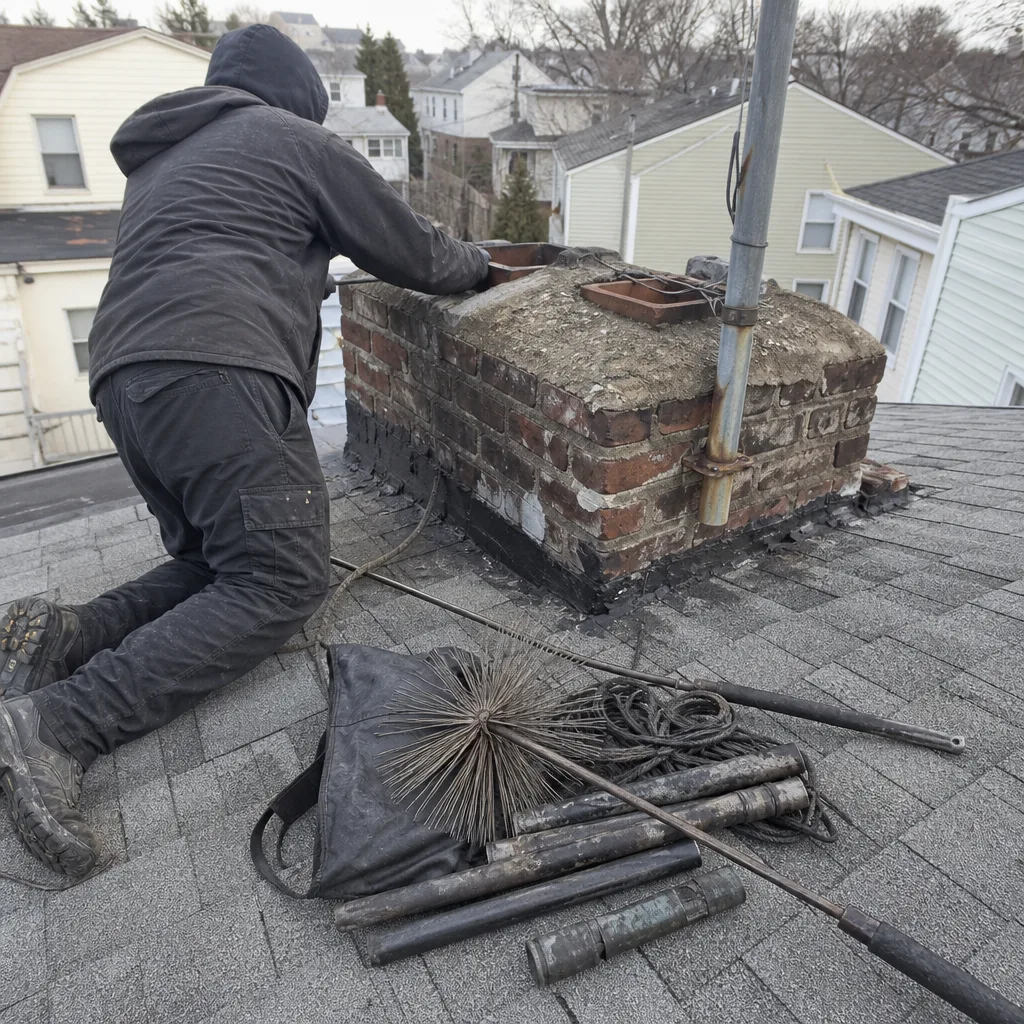 Before
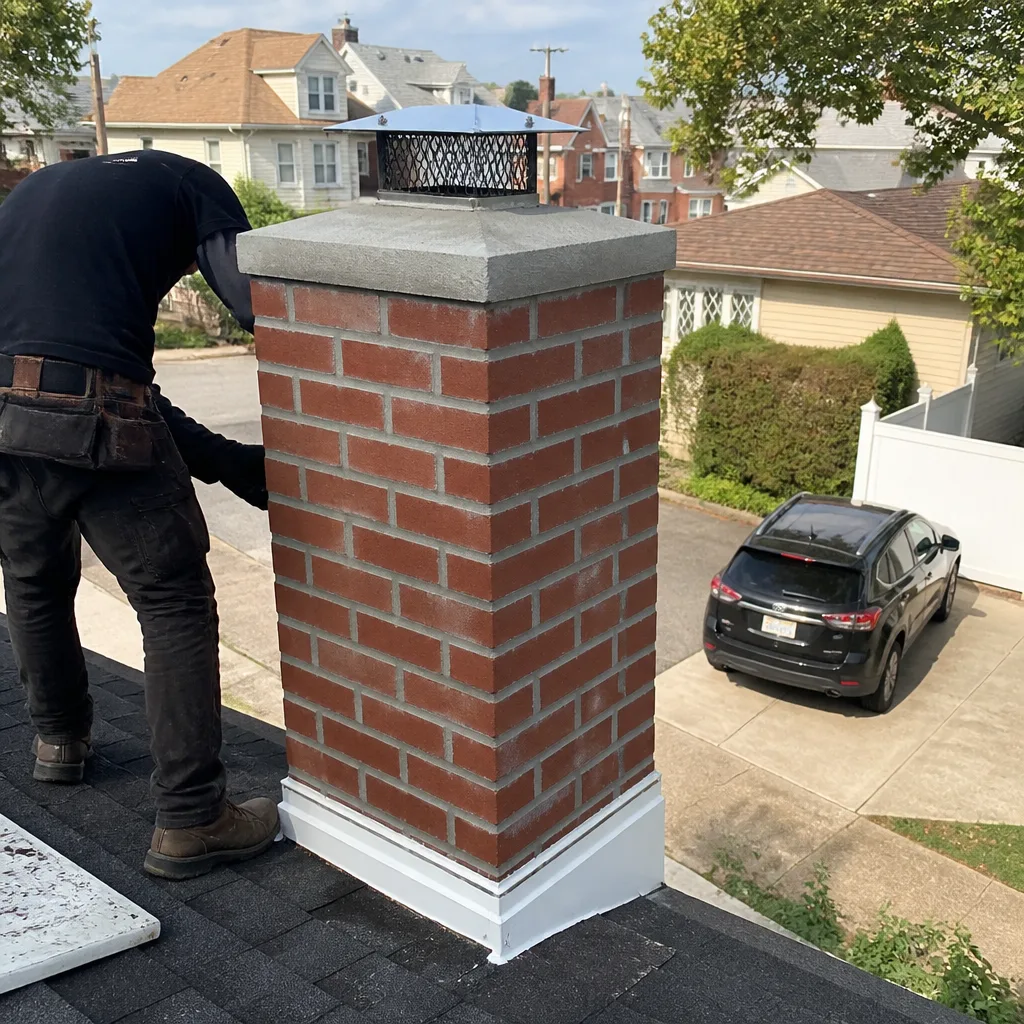 After
After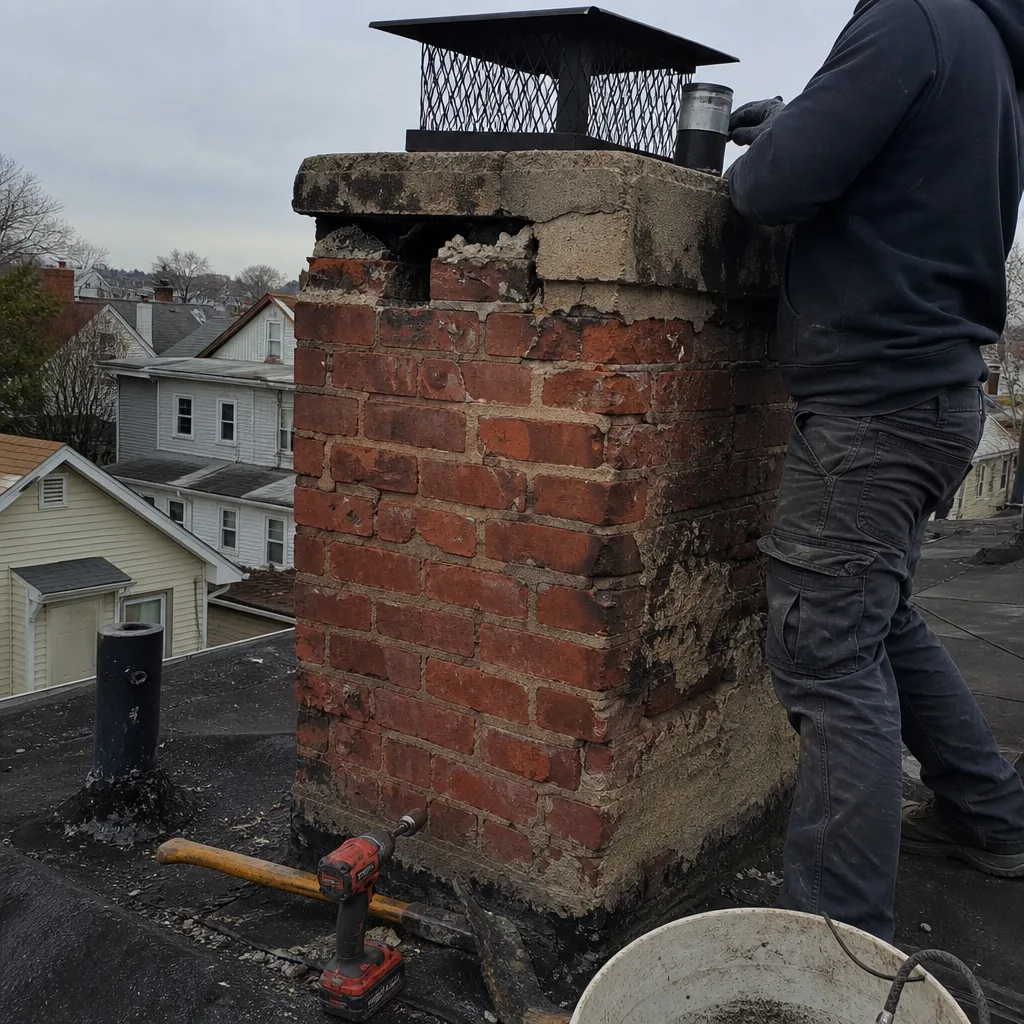 Before
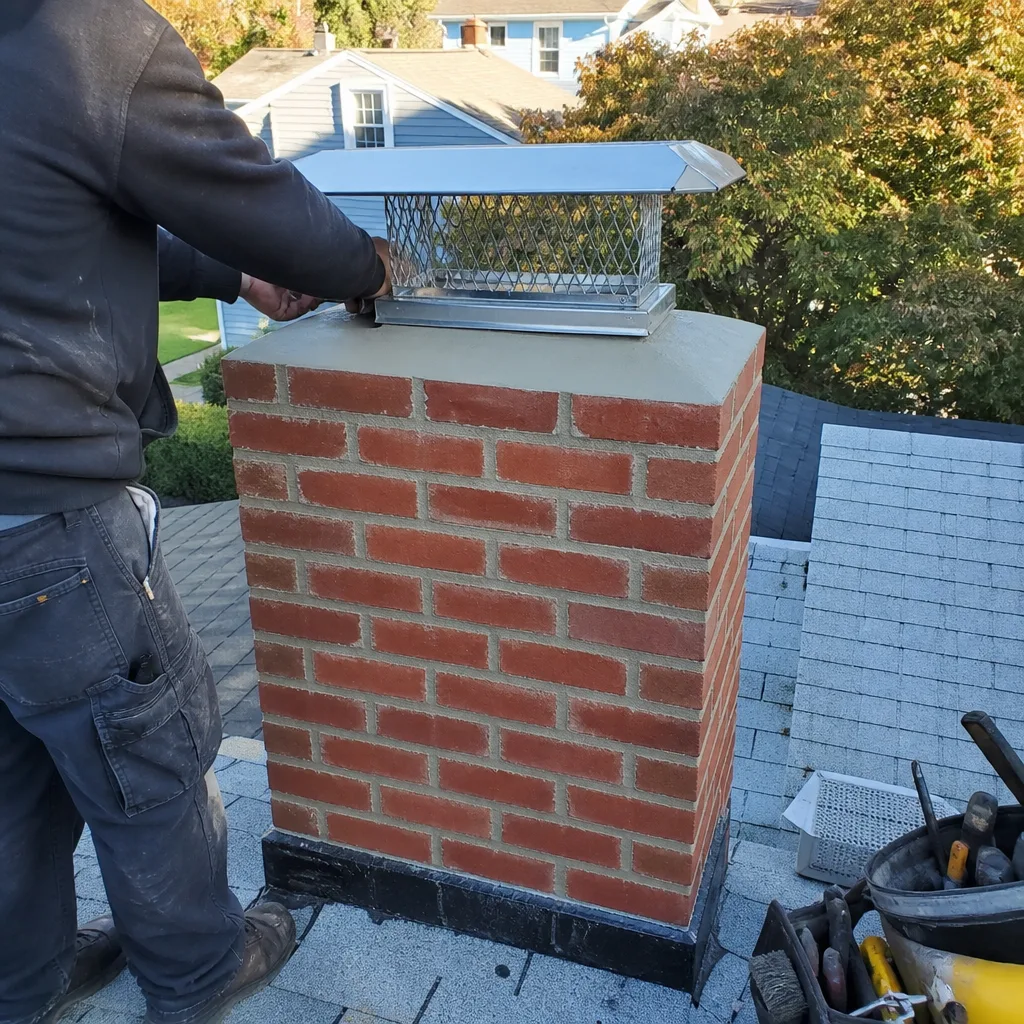 After
After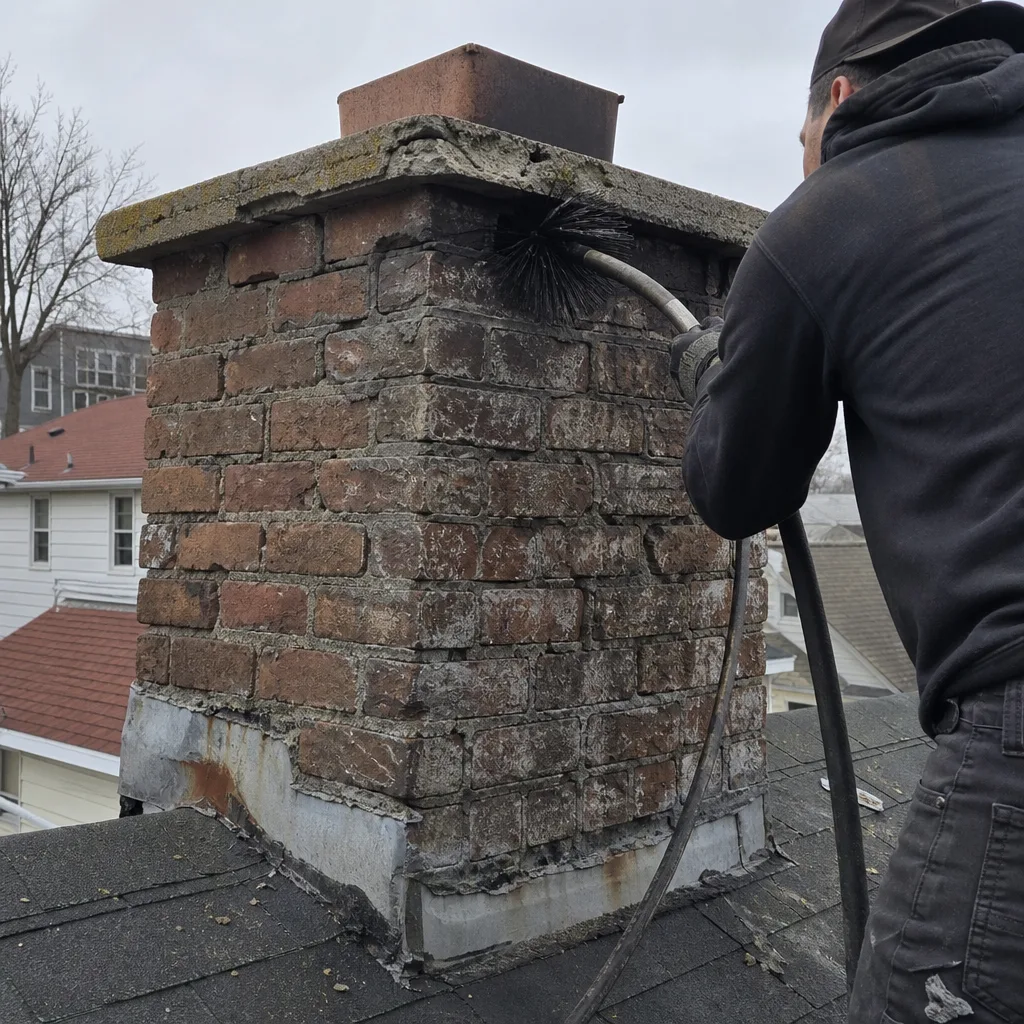 Before
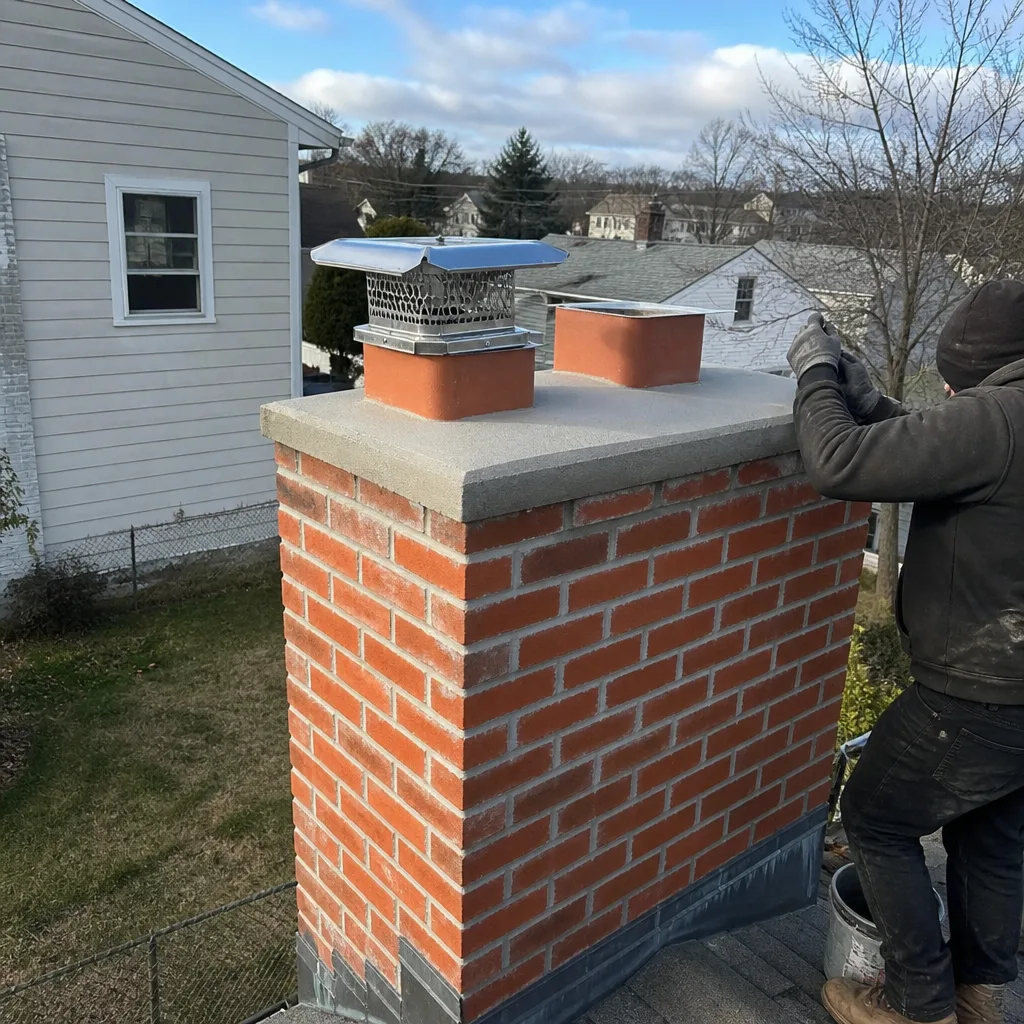 After
AfterCopperfield Flue Liner Replacement: The Brooklyn Owner’s Guide
We stock and install Copperfield-compatible flue liner replacement parts across Brooklyn, with most installed jobs landing between $1,800 and $3,600 depending on liner length, diameter, and access. We typically have common Copperfield sizes on the truck and can book your install within a week. Most owners discover their liner has failed during an annual sweep, when the camera shows cracks, separation at the seams, or rust-through that wasn’t visible from the firebox.
A Copperfield flue liner is the stainless steel pipe inside your chimney that carries smoke and combustion gases up and out. When it fails, your chimney still looks fine from the outside. That’s the problem. We’ve pulled liners out of Brooklyn brownstones that were held together by little more than soot and habit, and the homeowner had been burning fires all winter with no idea. The most common failure point on Copperfield liners we see is the seam at the tee connection, followed by pitting at the bottom cap where condensation sits during the humid Brooklyn summers.
Which Copperfield Models This Applies To
Copperfield has manufactured flue liners under a few series names over the years, and the replacement part has to match your liner’s diameter and connection style, not just the brand name. The liners we replace most often in Brooklyn homes are the Copperfield 5.5-inch and 6-inch round flex liners used on older gas and oil furnaces, and the 8-inch smooth-wall rigid sections used on wood stove and fireplace inserts. The foil label near the top plate usually carries the diameter, but after ten or fifteen years of heat cycling, that label is often gone. Your sweep will measure at the breech connection instead.
Top Hat Chimney is an independent service provider and installer. We are not affiliated with Copperfield, and we will say that plainly because it matters for this next part. For Copperfield liners that are heavily rusted through or distorted at the seam, we generally recommend replacing the full liner rather than patching with aftermarket components. The reason is not mark-up, it’s fitment. Copperfield’s corrugation profile differs slightly from what you’ll find in generics, and a mismatched coupling is exactly where the next failure starts. We carry Copperfield OEM parts and quality aftermarket equivalents such as DuraFlex and HeatShield where the profile matches cleanly.
Signs Your Copperfield Flue Liner Replacement Is Failing
- Flakes of metal at the bottom of the clean-out. The liner sheds small rust chips as the inner wall corrodes. You’ll see them when the sweep empties the base during an inspection.
- A smell like wet campfire in summer. Condensation and old creosote combine inside a cracked liner and the smell seeps through masonry joints long after the last fire went out.
- Visible separation at the tee connection. A small mirror angled up from the firebox will sometimes show a gap where the horizontal connector meets the vertical liner. That gap leaks smoke into the chase, not up the flue.
- Water stains on the wall near the chimney. A perforated liner lets flue gases and moisture migrate into the brick, and you may see a rust-colored mark on interior plaster or drywall.
- Smoke backing into the room on startup. When the liner is partially collapsed or blocked at a failed seam, the draft never establishes properly. The smoke takes the path of least resistance, which is back into your living room.
Replacement Cost & What’s Included
For a standard single-story Brooklyn row house, expect a Copperfield flue liner replacement to run between $1,800 and $3,600 installed. What moves the number is the liner length, the diameter, whether we are relining an existing masonry chimney or running a new liner through an enclosed chase, and how much scaffolding or roof access the job requires. A two-story brownstone off Flatbush Avenue with a steep roof pitch costs more than a single-story house in Marine Park with a low slope. That’s just the physics of ladder work.
Every quote includes the labor, the liner, the connectors, and the camera inspection afterward. You’ll see the footage yourself before we finish, so you know what went in and that it’s seated correctly. The 90-Day Done Right Promise covers the work in writing. If something is not right, one call brings the crew back at no additional cost. You can also take $40 off any repair over $200, and seniors and veterans get 10% off, always.
DIY or Call Us?
Flue liner replacement is not a Saturday morning project. The liner runs through a narrow masonry chase, it has to be pulled and fed from the roof in most Brooklyn homes, and a dropped section can wedge itself in the old clay tiles and turn a one-day job into a three-day extraction. The danger is not theoretical: a partially seated liner can leak carbon monoxide into the wall cavity, and you cannot smell carbon monoxide. If your liner has failed, leave it alone and call us at (516) 289-9316.
What you can safely do is look up from the firebox with a flashlight and note what you see: flaking rust, a gap at the tee, or water stains. Write it down and have that ready for the phone call. It saves us a round of questions and helps Wendell size the job before he even gets to your block.
FAQs
In Brooklyn’s climate, a Copperfield stainless steel flue liner typically lasts 15 to 25 years. Homes that burn seasoned wood and get an annual sweep tend to see the higher end. Homes where the furnace was converted from oil to gas and the liner was never inspected tend to see the lower end, because gas exhaust is wetter than most people realize and it eats the liner from the inside out over time. Call (516) 289-9316 if you are not sure which end you’re on, and we’ll camera it for you.
Sometimes the top six inches are rusted but the rest of the liner is sound, and in that case a top section replacement is a legitimate fix, not a patch job. If the rust has reached the tee connection or the middle thirds, repair buys you a year or two at most before another seam fails. The camera footage tells us which situation you are in, and if it does not need doing, we’ll tell you that too. Estimates are free.
Most single-liner Copperfield replacements in Brooklyn take four to six hours on site, including roof access, removal of the old liner, feeding the new one, and the camera verification. If the old clay tiles are collapsed and need to be broken out first, it becomes a full day or a day and a half. We’ll give you a real arrival window and call if anything slips.
Yes, we keep common Copperfield diameters and a selection of Copperfield-compatible components on the truck, along with parts from DuraFlex, HeatShield, and Gelco. Unusual lengths or smooth-wall rigid Copperfield sections may need to be ordered, which adds a few days. We’ll tell you on the phone whether your job is a same-week booking or needs parts ordered first.
Once a year, burn or no burn. Chimneys break in the off-season too, and a Brooklyn summer is hard on a liner, especially the humidity-driven rust at the bottom cap. An annual sweep with a camera inspection catches the seam separation before you light the first fire in October and find out the hard way.
If you have a Copperfield liner that is showing any of the signs above, or you just had a sweep tell you the liner is shot and you want a second opinion, call (516) 289-9316. A live person answers, and it may well be Wendell himself. The number you hear on the phone is the number on the invoice, and there is no trip charge inside the county.
Written by Wendell Pike, Owner, Top Hat Chimney at Top Hat Chimney, serving Brooklyn and nearby areas.