
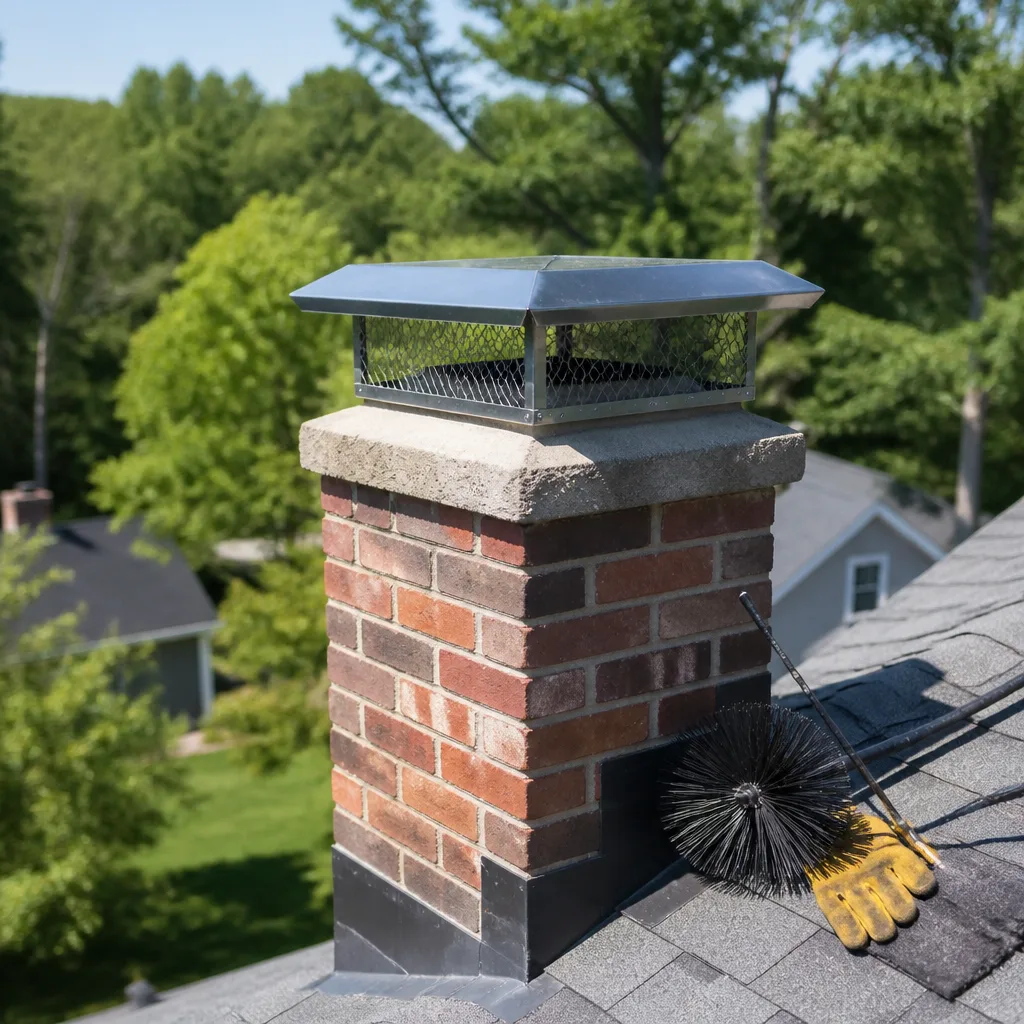
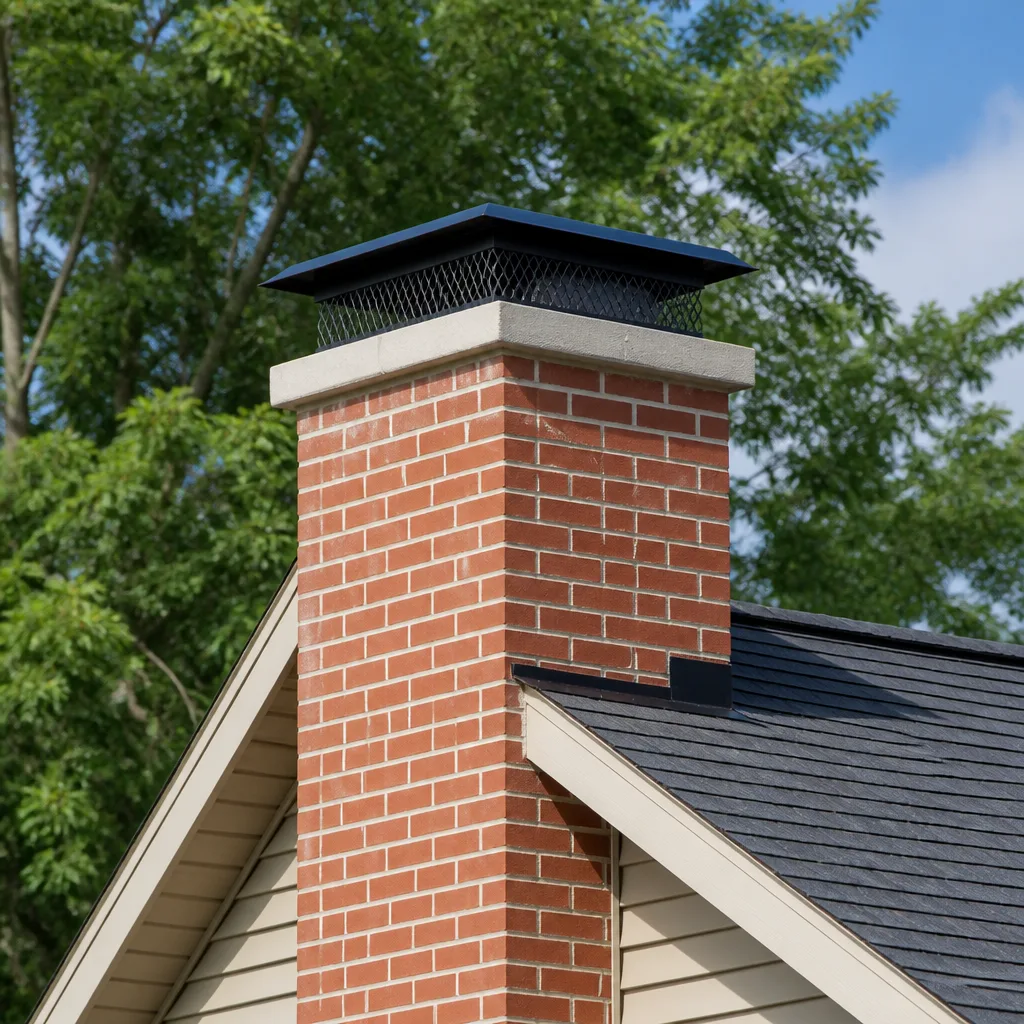
Level 1 sweep and inspection to the NFPA 211 annual standard - flue, crown, cap, and flashing checked and photographed
Chimney sweep logs do not sweep chimneys. They loosen some creosote - which then falls where a brush and vacuum still have to collect it.
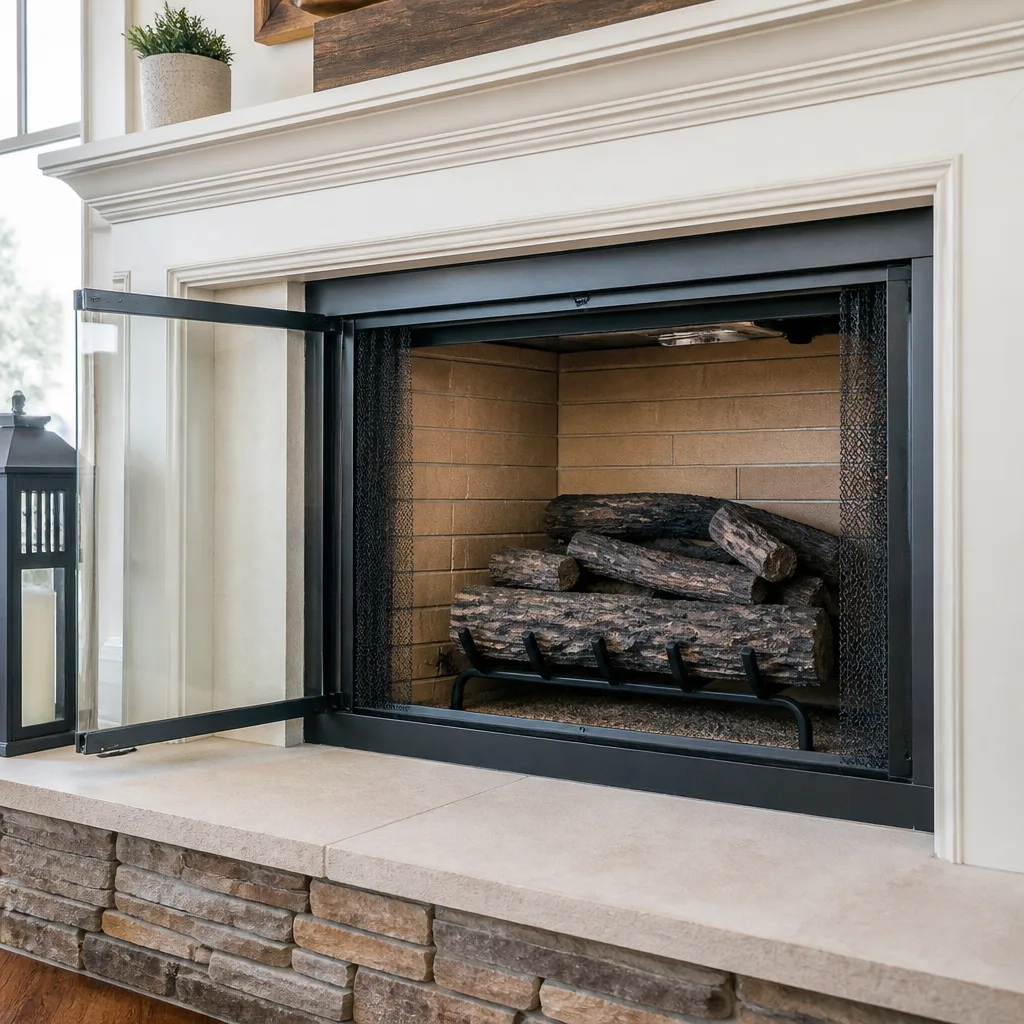
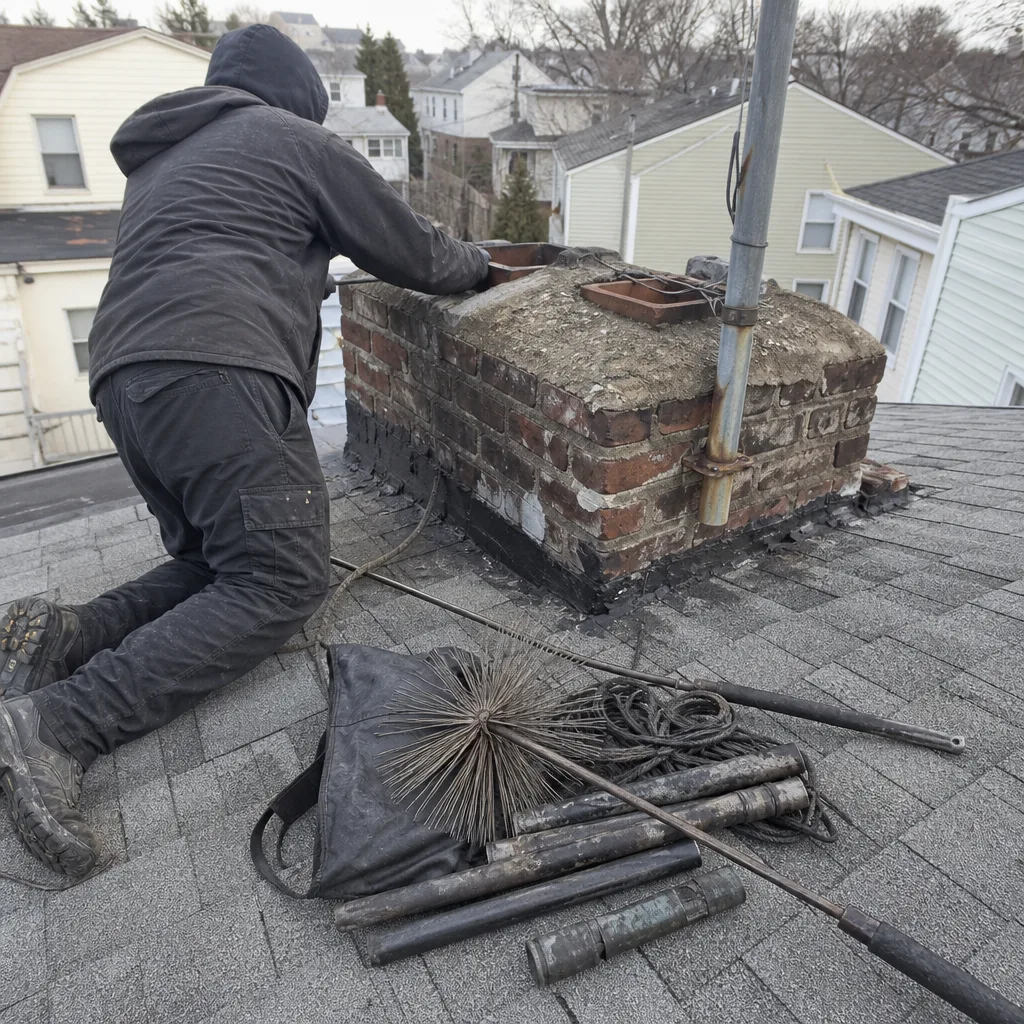 Before
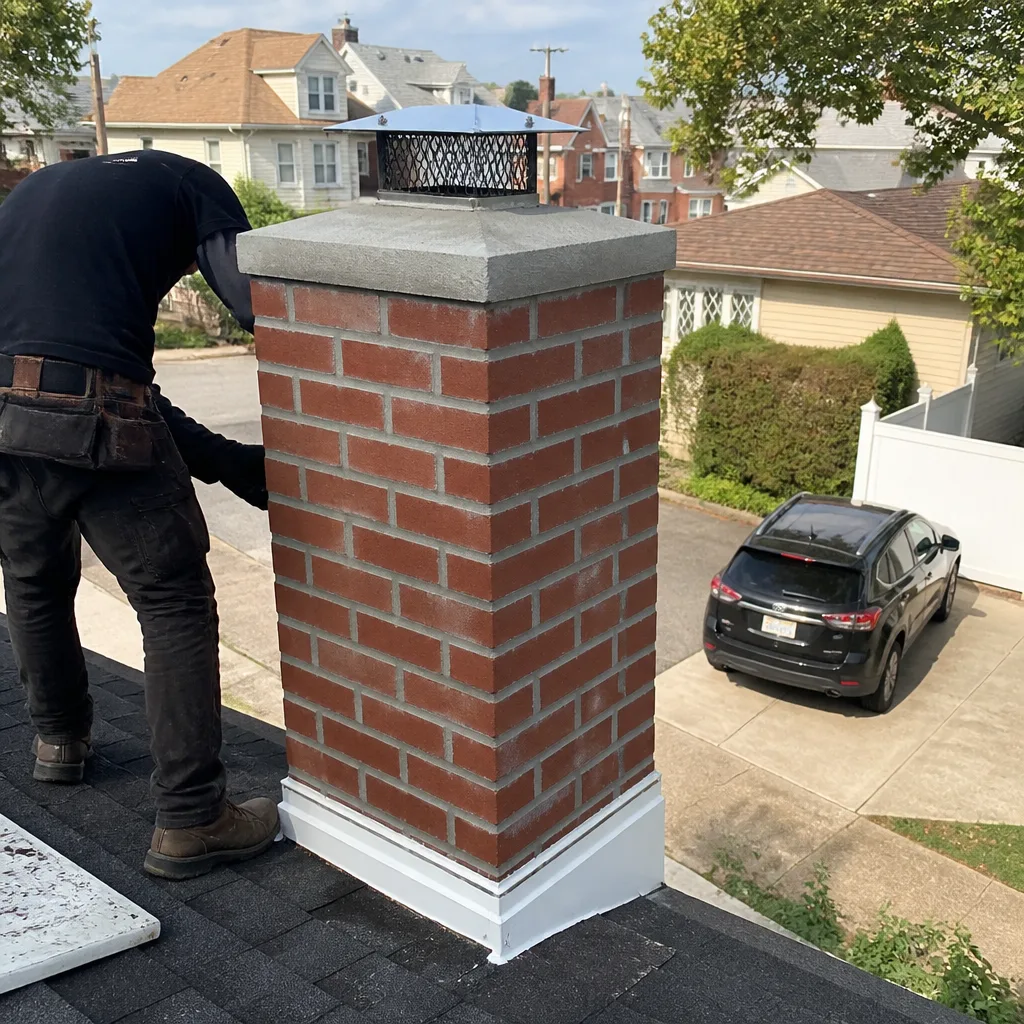 After
After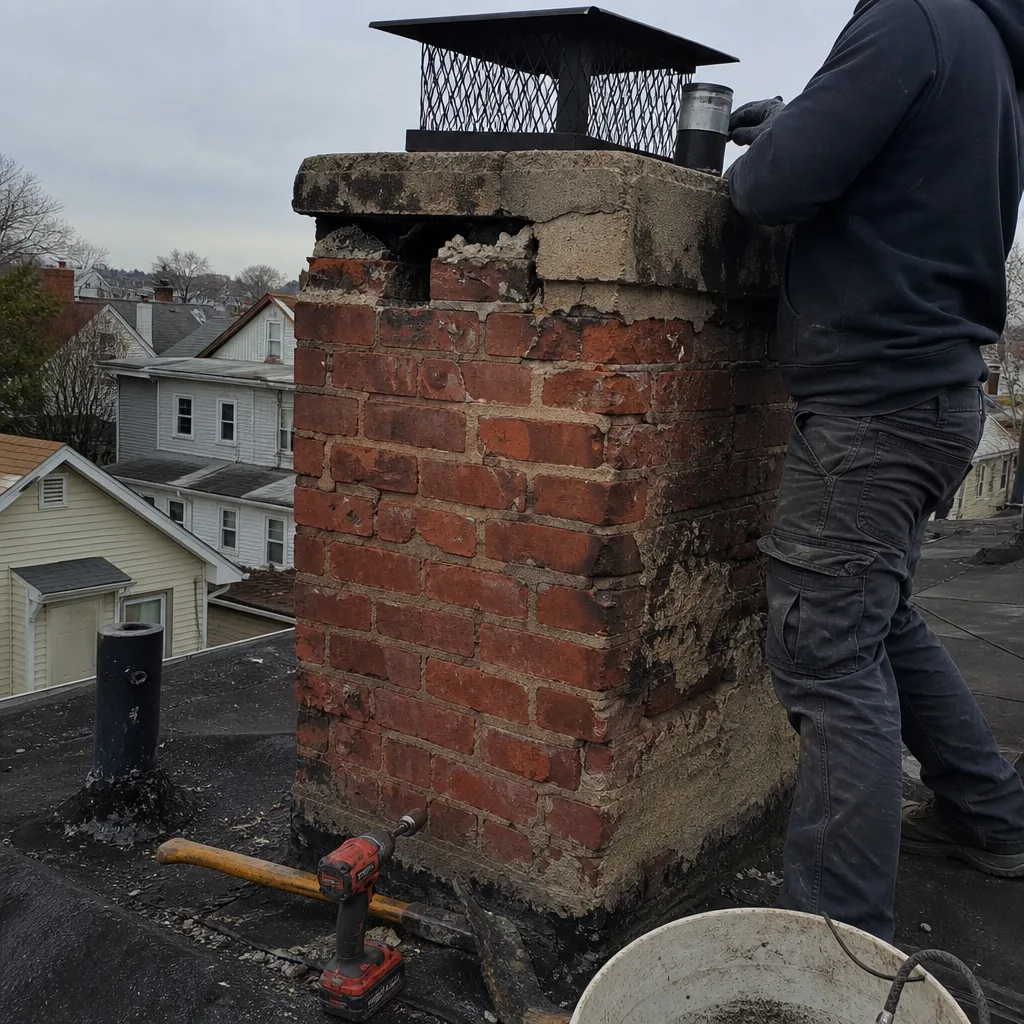 Before
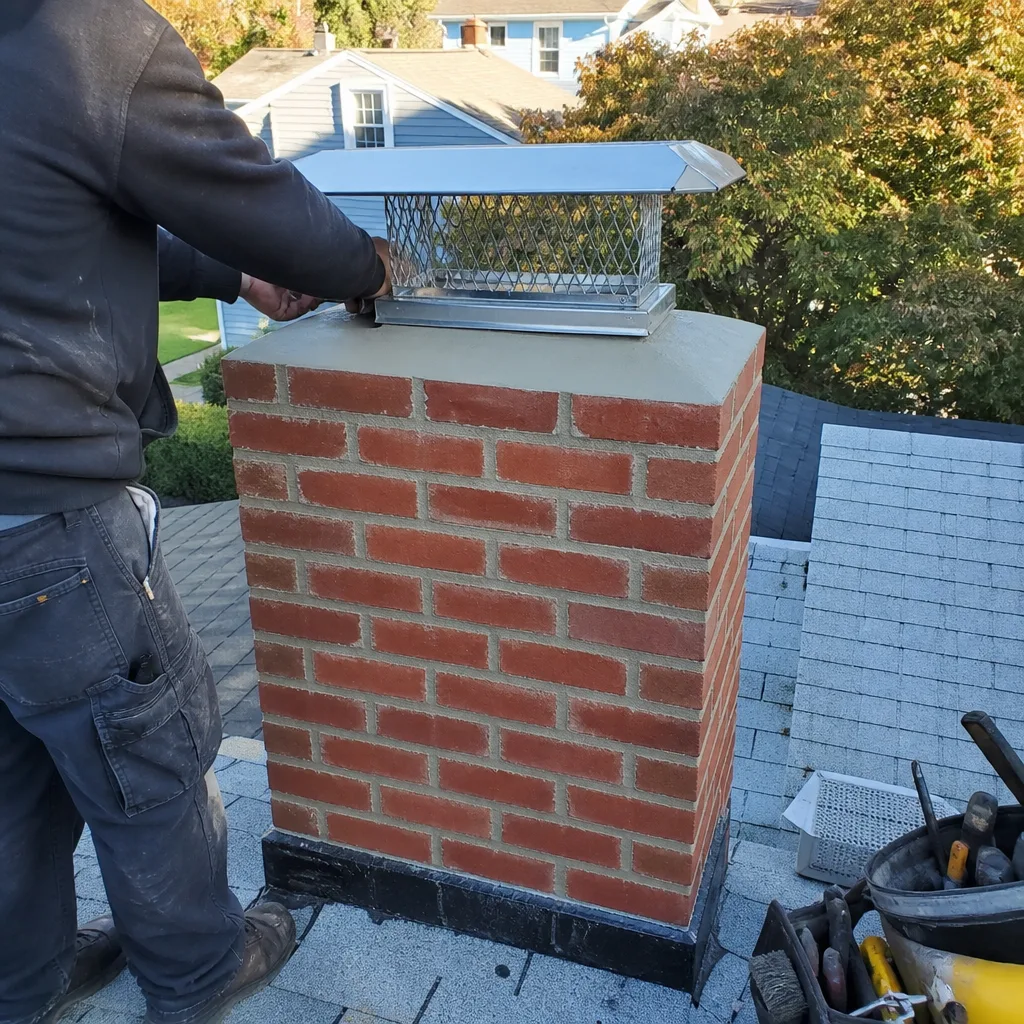 After
After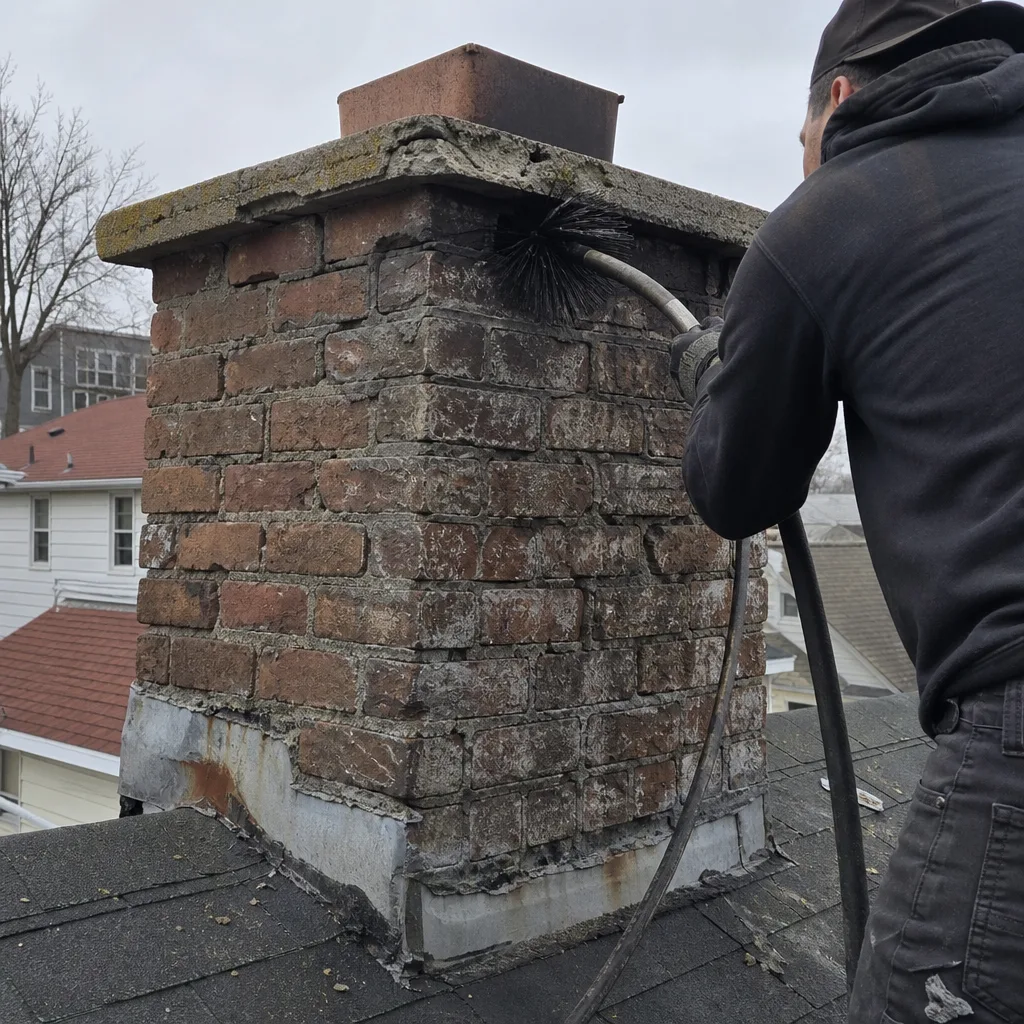 Before
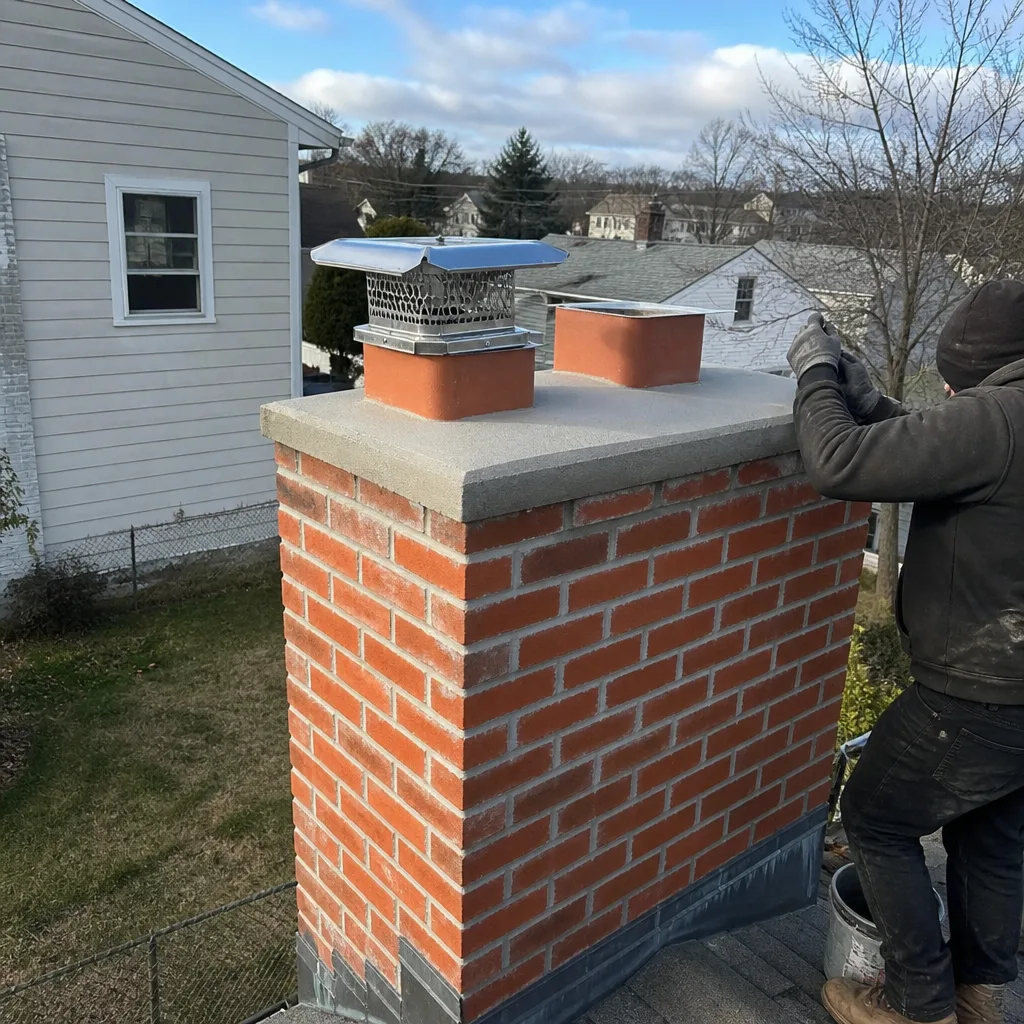 After
AfterWhy Brooklyn Homeowners Choose HeatShield Chimney Cleaning
Top Hat Chimney provides independent Heatshield repair in Brooklyn and Cerfractory repair service across the borough, from Park Slope brownstones to Bed-Stuy row houses. We’re not affiliated with or authorized by HeatShield, and we say that plainly because you deserve to know exactly who’s on your roof. What sets our HeatShield work apart is the camera-verified approach: every flue gets a Level 2 inspection before and after service, so you see precisely what we see before you spend a dime on repairs. Call (516) 289-9316 and Wendell Pike or a member of his crew will talk you through what your chimney actually needs.
Why Trust Top Hat Chimney for Your HeatShield Chimney Cleaning?
Wendell Pike has been working chimneys in Brooklyn since 1999, long enough to have seen HeatShield Cerfractory systems installed, fail, get re-coated, and fail again. He learned the mechanical side of the trade at Palomar College before spending two decades on rooftops from Flatbush Avenue to Carroll Gardens, including plenty of Heatshield repair in Ridgewood and nearby neighborhoods. Our crew has inspected, repaired, and maintained hundreds of HeatShield flue systems in prewar masonry, decorative brick, and zero-clearance fireplaces. We’re factory-trained on HeatShield application methods, which means we understand how Cerfractory bonds, cures, and degrades. That training is the difference between a sweep who cleans around a failing liner and one who spots delamination before it becomes a carbon monoxide problem. Every job ends the same way: camera footage and a plain-English verdict, every time, no exceptions.
As an independent HeatShield service provider, we answer to you, not to a manufacturer’s warranty department. That independence means we’ll tell you when a repair will hold and when it won’t. If it doesn’t need doing, we’ll tell you that too.
Common HeatShield Chimney Cleaning Problems We Fix in Brooklyn
HeatShield systems fail in predictable ways, and after 29 years of Brooklyn service calls we recognize the patterns before the ladder is even up. Here’s what we find most often:
- Cerfractory foam delaminating from old clay tile. This is the big one in Brooklyn’s prewar row houses. The original clay liners absorb moisture from salt-laden air and freeze-thaw cycles, and that moisture works its way between the old tile and the HeatShield Cerfractory layer. The foam peels away in sheets, leaving gaps where flue gas escapes into the masonry. If you see white or gray flakes falling into your fireplace, the liner is separating.
- Pinhole leaks at mortar joints after repeated thermal shock. HeatShield’s Joint Repair System seals the mortar lines between clay tiles, but wood-burning fireplaces cycle from cold to 1,000 degrees and back. Over years, those cycles open pinholes in the cured Cerfractory. The leak starts small, but carbon monoxide doesn’t need a big opening. This is why we push annual inspection, burn or no burn.
- Powdering along vertical seams from a failed prior application. We see this constantly in flipped brownstones where a previous owner hired the cheapest bid. If the Cerfractory was applied too thin or mixed wrong, it cures brittle and turns to powder along the vertical seams. That powdering means the liner is structurally gone. You can’t patch powder. It requires full mechanical removal and either re-application or replacement.
- Hidden gaps behind resurfacing from improper thickness. HeatShield’s Resurfacing System works only when the Cerfractory is applied at the right thickness and properly heat-cured. A rushed job leaves voids between the foam and the old flue wall. Those voids create a second path for flue gas, one that’s invisible without a camera. We’ve pulled camera footage in Bed-Stuy showing a two-inch gap running six feet up a flue that looked fine from the top and bottom.
- Cracked CeCure sleeves at the smoke shelf offset. The CeCure Sleeve Relining System is built for severely damaged flues, but it has a known failure point in Brooklyn row houses: the 45-degree smoke shelf offset. If the installer didn’t grind the clay tile shoulder smooth before fitting the sleeve, thermal cycling forces a vertical tear right at that offset. We found exactly this on a 1970s row house flue in Cobble Hill. The original installer had skipped the grinding step, and the sleeve had a two-inch vertical tear. We removed the loose Cerfractory, reset the offset with a full-length stainless liner, and had heat back in the house within one day.
HeatShield Parts & Our Repair-vs-Replace Approach
We use genuine HeatShield Cerfractory materials on every application, never budget knock-offs. Heat-cured sealant bonds to itself, which matters if you or a future owner adds a top coat down the line. A knock-off foam won’t bond to genuine Cerfractory, and you’ll be paying for the same repair twice. We keep HeatShield Joint Repair material and Cerfractory Flue Sealant on hand for standard applications, which means faster turnaround on most Brooklyn jobs. Full resurfacing kits and CeCure sleeves we order per job, matched to your flue dimensions.
Here’s where we get honest about repair versus replace: if the existing HeatShield is powdering or has already been re-coated once, we don’t recommend a third coat. Cerfractory layers stack poorly, and a third application on a failing base is money you’ll spend again in three to five years. In that situation we recommend full replacement, usually with a stainless liner from DuraFlex. If the base is still sound and the failure is a single pinhole or a localized delamination, a targeted HeatShield repair makes sense. Call (516) 289-9316 and we’ll walk you through what your camera footage shows and what each option costs.
Our HeatShield Service Process - Step by Step
There is no mystery to how we work. The process is the same on a Park Slope brownstone as it is on a Fort Greene row house:
- 1
Diagnosis. We run a Level 2 camera inspection from the firebox to the crown. You see the screen at the same time we do. We identify whether the HeatShield system is intact, delaminating, powdering, or leaking at the joints. We measure the damaged area and note the type of HeatShield product originally applied.
- 2
Repair or install. For joint repairs and localized resurfacing, we mechanically clean the failed area, remove any loose Cerfractory, and prep the surface to manufacturer spec. Then we apply genuine HeatShield material at the correct thickness and heat-cure it properly. If we’re replacing a failed system, we install the new liner or sleeve and set the offset correctly.
- 3
Test. After the material cures, we run a second camera scan end to end. You see the result: no gaps, no voids, no bypass. We also check draft with a smoke test on wood-burning fireplaces.
- 4
Warranty. Every completed job carries our 90-Day Done Right Promise in writing. If something isn’t right, one call brings our crew back at no additional cost. The camera footage from both scans stays on file for your records and for any future insurance or real estate inspection.
HeatShield Products We Service & Install in Brooklyn
We work on the full HeatShield line. That includes the Cerfractory Flue Sealant for standard joint repair, the Cerfractory Resurfacing System for full flue relining, and the Joint Repair System for thin-coat joint sealing. You’ll find all three in Brooklyn flues that were modified piecemeal from coal to oil to gas over the last century. We also service and install the CeCure Sleeve Relining System for severely damaged flues where the original clay tile has collapsed. We keep joint repair materials stocked locally for fast response, and we order full resurfacing kits per job to match your exact flue dimensions.
We Also Service These Brands
HeatShield is one tool in the box, not the whole box. We also install and service stainless steel liners from DuraFlex and Gelco, and we carry products from Olympia Chimney, Famco, and Copperfield. If the honest answer is that your flue needs a stainless liner instead of a Cerfractory repair, we’ll tell you that and quote accordingly. Our loyalty is to the chimney, not to any one manufacturer. Ask anyone on your street.
FAQs - HeatShield Chimney Cleaning Service in Brooklyn
Is Top Hat Chimney authorized by HeatShield?
No. Top Hat Chimney is an independent HeatShield service provider. We are not authorized by, affiliated with, or sponsored by HeatShield. We are factory-trained on HeatShield application methods and we use genuine HeatShield Cerfractory materials, but we operate independently. That matters because it means our recommendation is based on what your chimney needs, not on what a manufacturer’s warranty requires.
Do you use genuine HeatShield or OEM parts?
We use genuine HeatShield Cerfractory materials on every HeatShield repair and resurfacing job. We do not use budget knock-offs, because heat-cured Cerfractory sealant must bond to itself if a top coat is ever added later. A knock-off foam won’t bond properly, and you’ll be paying for the same repair twice. For stainless liner replacements, we use DuraFlex or Gelco products, depending on the application.
Does Brooklyn weather cause HeatShield Cerfractory to fail faster than other liners?
Yes, in specific ways. Brooklyn’s position surrounded by Upper New York Bay, the East River, and the Atlantic-facing shore means salt-laden air accelerates mortar spalling and metal corrosion at a faster rate than inland New York markets. Add repeated freeze-thaw cycles each winter, and moisture gets driven into cracked crowns and open mortar joints on century-old stacks. That moisture is what causes Cerfractory to delaminate from the old clay tile behind it. A HeatShield system in a Park Slope brownstone faces harsher conditions than the same system in, say, Albany. That’s why we recommend annual inspection here, burn or no burn. Call (516) 289-9316 for an exact quote, estimates are free.
How do you clean a HeatShield-lined flue without destroying the Cerfractory surface?
We use soft brushes and controlled rotary tools, never wire brushes. Cerfractory is a cured ceramic foam, and aggressive wire brushing can score the surface and create the exact pinholes and delamination points you’re trying to avoid. First-degree creosote is a brush job. Third-degree is a glaze, catch it early. After cleaning, we run the camera again to confirm the liner surface is intact as part of our Chimney Cleaning & Sweep services. Cleaning a HeatShield flue is not a place for aggressive mechanical removal.
What is the lifespan of a HeatShield CeCure sleeve in a Brooklyn row house?
In ideal conditions, a properly installed CeCure sleeve can last 20 to 25 years. In Brooklyn’s attached row houses, the realistic lifespan is shorter if the original installer skipped prep work. The most common failure point is the smoke shelf offset, where thermal cycling forces the sleeve apart if the clay tile shoulder wasn’t ground smooth. We’ve replaced CeCure sleeves that failed in under ten years for exactly that reason. If you have a CeCure sleeve, have it camera-inspected at least every two years. It’s cheaper than a replacement, and you’ll know before it fails.
Does HeatShield work on chimneys with spalling brick?
HeatShield Cerfractory works on the inside of the flue, not on the exterior masonry. If your chimney has spalling brick, the masonry needs to be addressed separately, either with rebuilding, repointing, or a crown repair. A flue liner is only as good as the chimney it hangs in. We’re the only Brooklyn-based service team that pairs camera-verified HeatShield Chimney Cleaning in Brooklyn Heights, NY and beyond with local masonry repair. If your chimney needs both, one crew handles both, which saves you the headache of coordinating two contractors on a shared party wall.
How much does HeatShield chimney cleaning cost in Brooklyn?
HeatShield chimney cleaning in Brooklyn typically runs $199 to $349, depending on flue condition and access. Joint repairs using HeatShield sealant start around $450 to $800 per joint area. Full Cerfractory resurfacing typically ranges from $3,500 to $7,500, depending on flue height and the extent of mechanical removal required. CeCure sleeve installation runs $4,000 to $8,500. These are honest ranges, not bait pricing. You’ll get an exact quote before any tool comes off the truck. Call (516) 289-9316 for a free estimate, and remember we offer $40 off any repair over $200 and a free second opinion on any written estimate from another company.
Book Your HeatShield Service in Brooklyn, NY
If your HeatShield flue needs cleaning, inspection, or repair in Brooklyn, call Top Hat Chimney at (516) 289-9316. A live person answers, around the clock, and it may well be Wendell himself. You’ll get straight answers, upfront pricing, and a 90-Day Done Right Promise in writing. Your flue doesn’t care how the fire looks. It cares how it breathes.
Written by Wendell Pike, Owner at Top Hat Chimney, serving Brooklyn since 1999.