
Last updated September 10, 2026
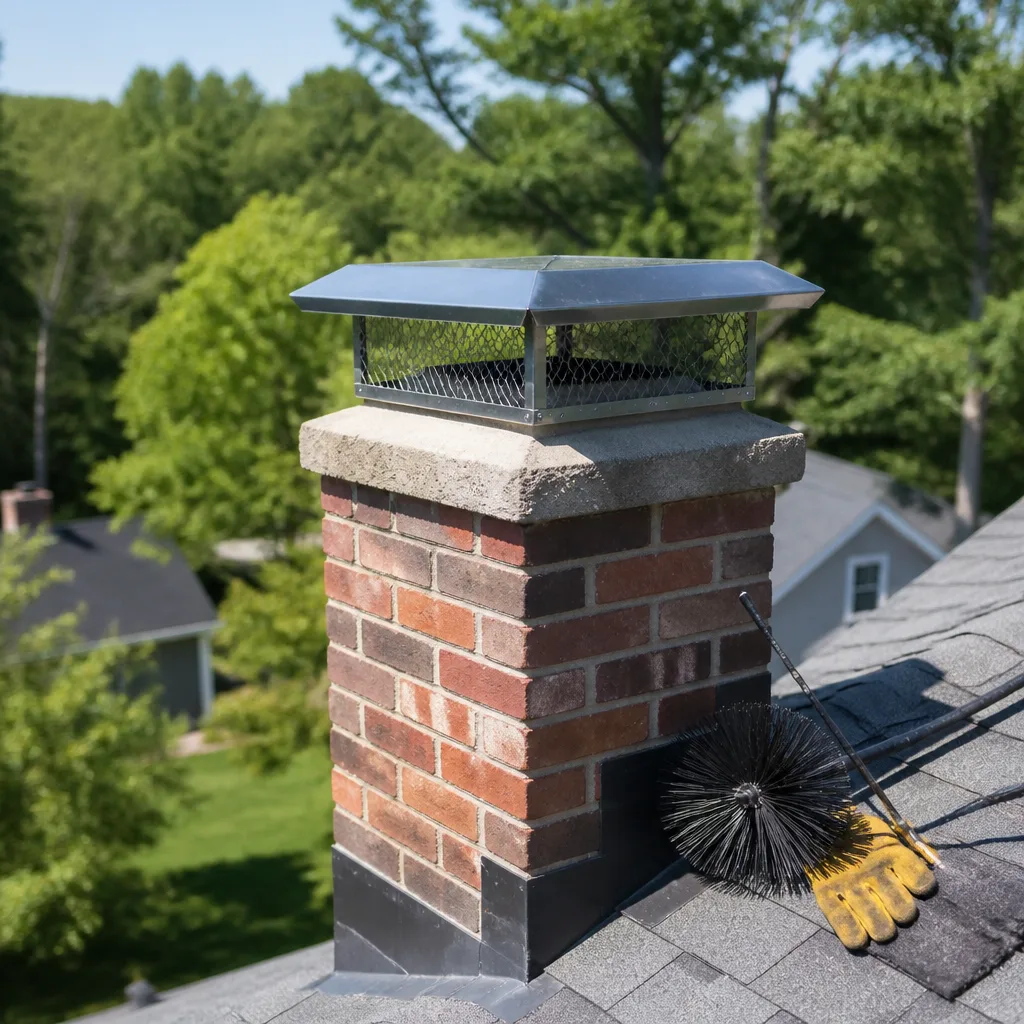
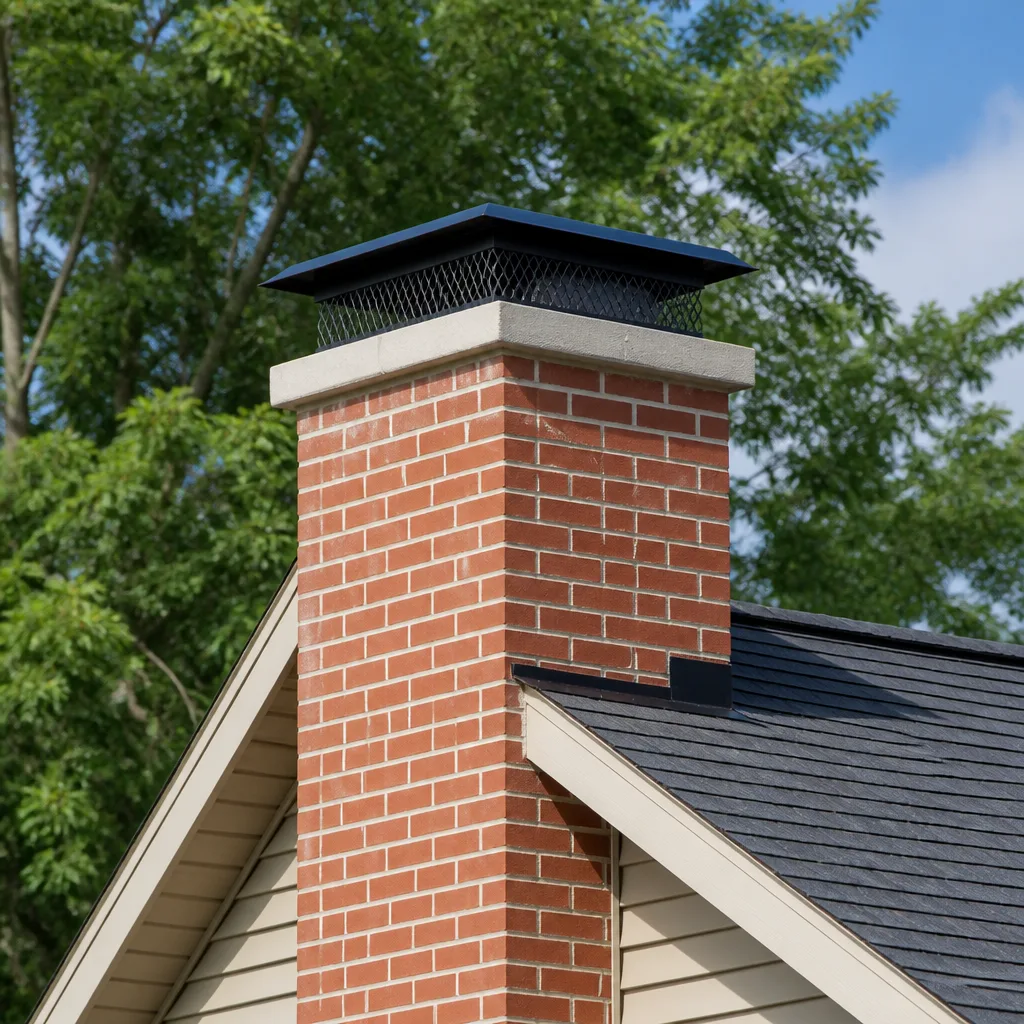
Level 1 sweep and inspection to the NFPA 211 annual standard - flue, crown, cap, and flashing checked and photographed
Chimney sweep logs do not sweep chimneys. They loosen some creosote - which then falls where a brush and vacuum still have to collect it.
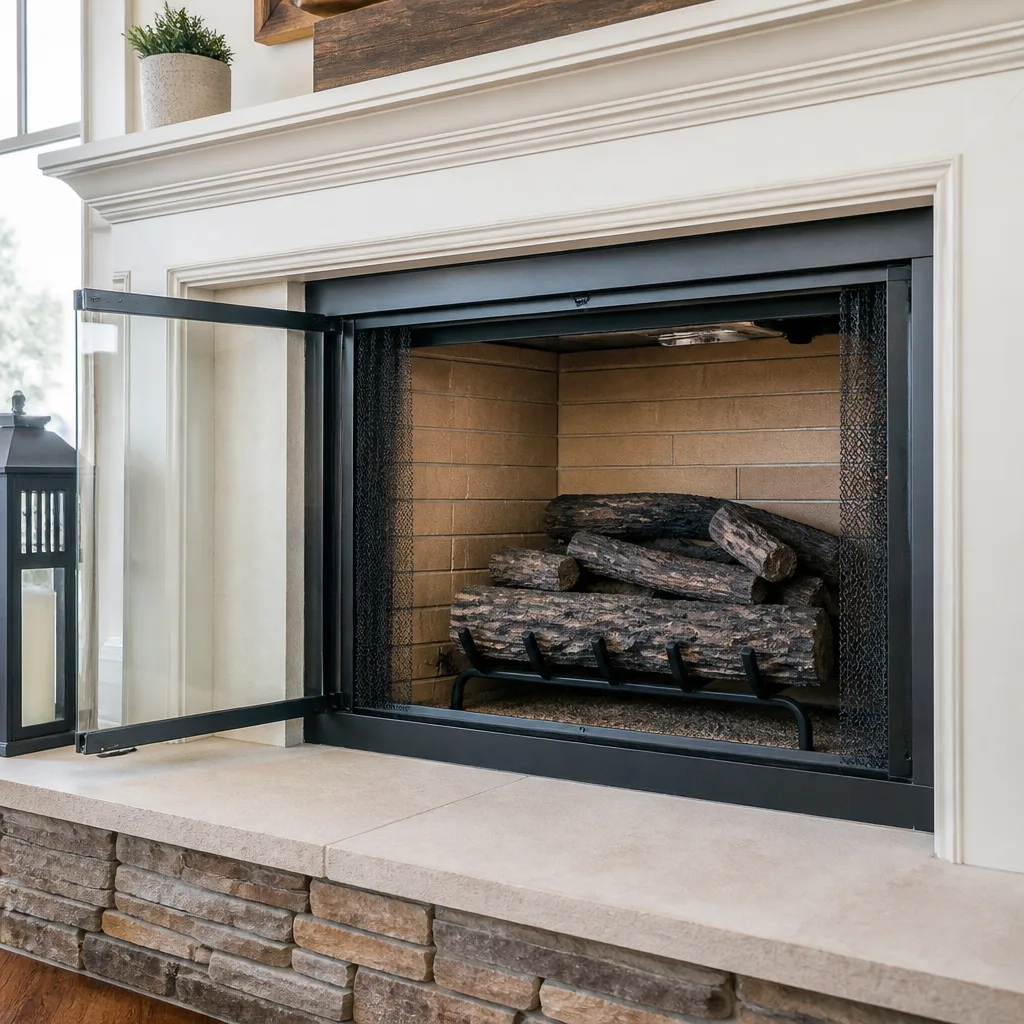
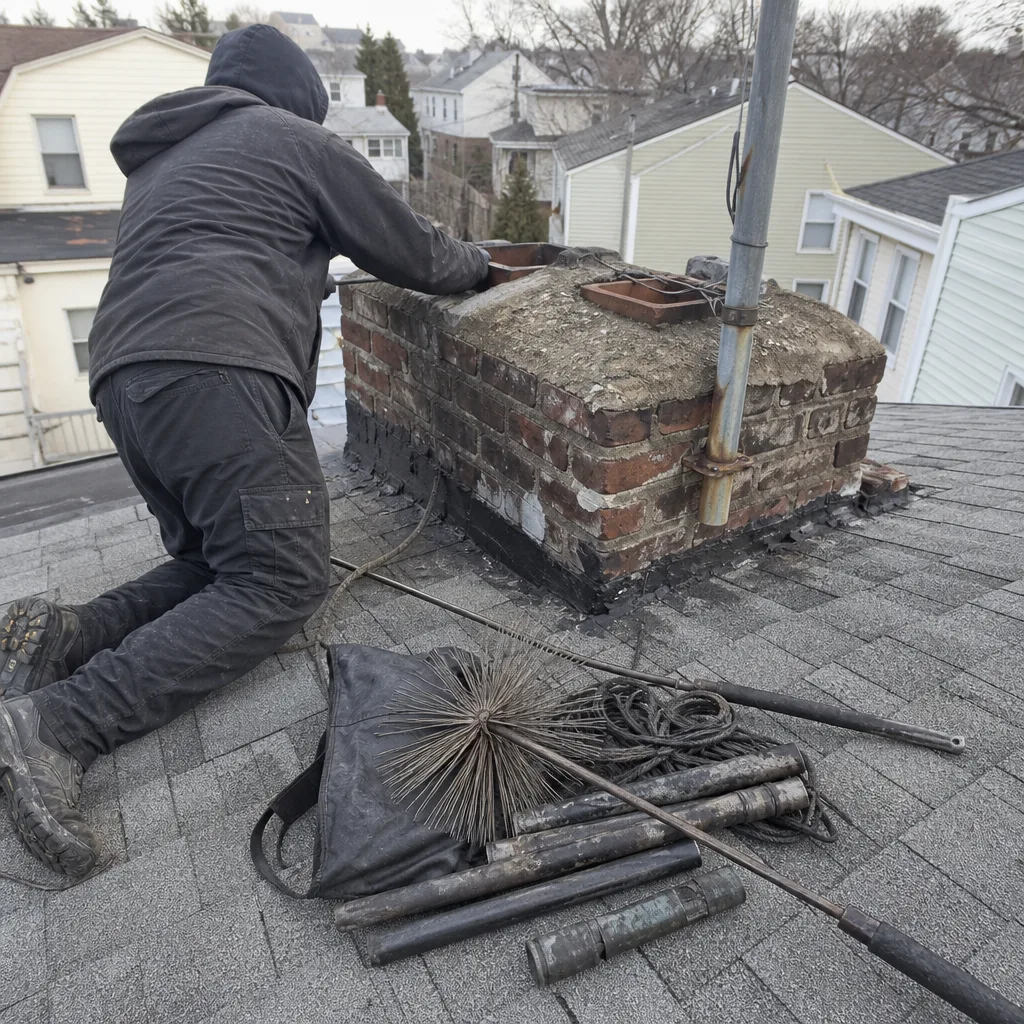 Before
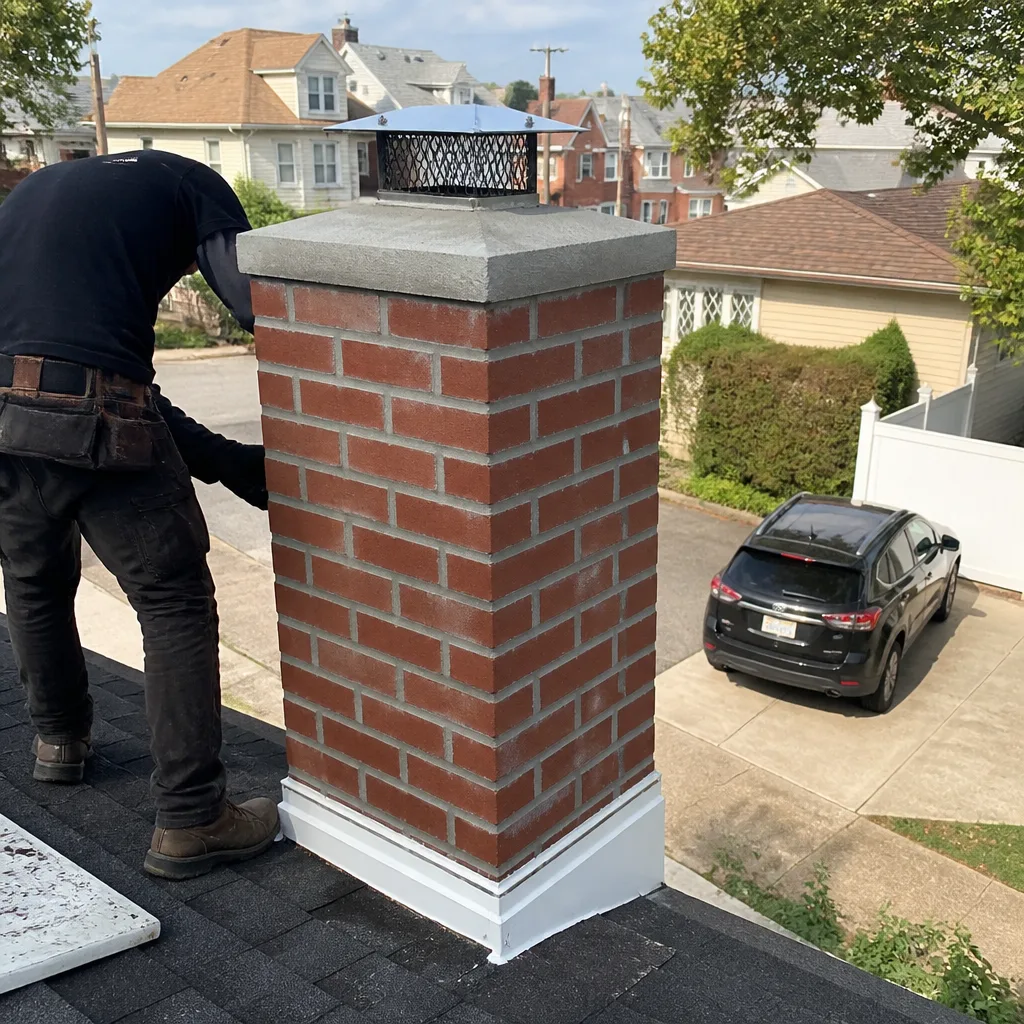 After
After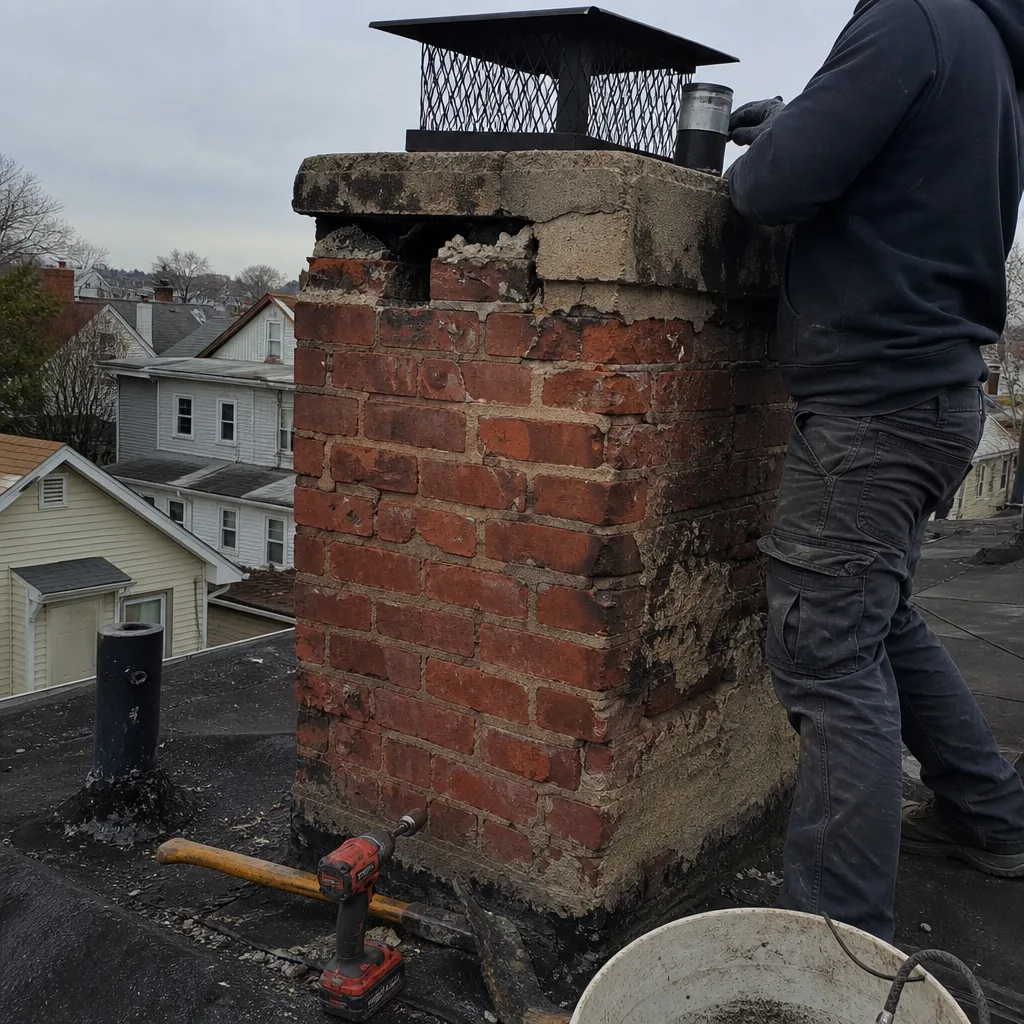 Before
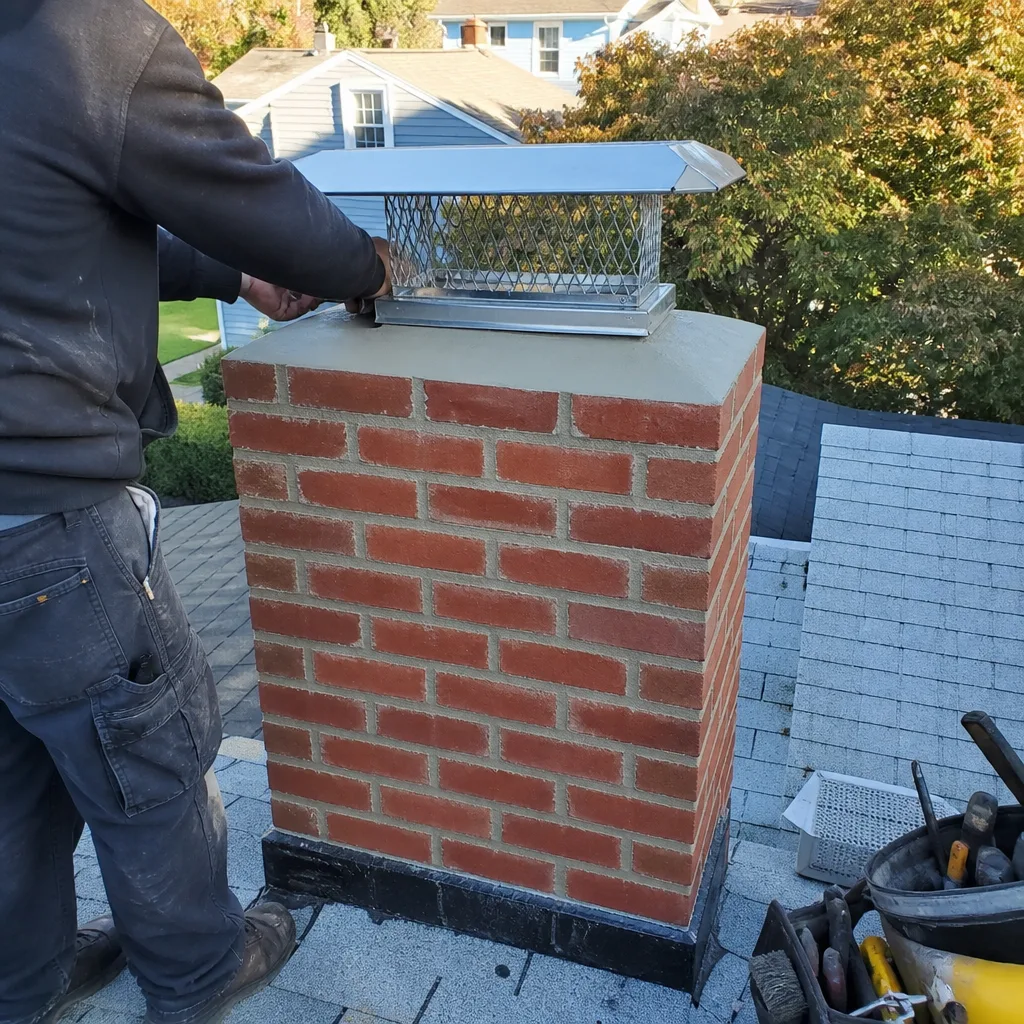 After
After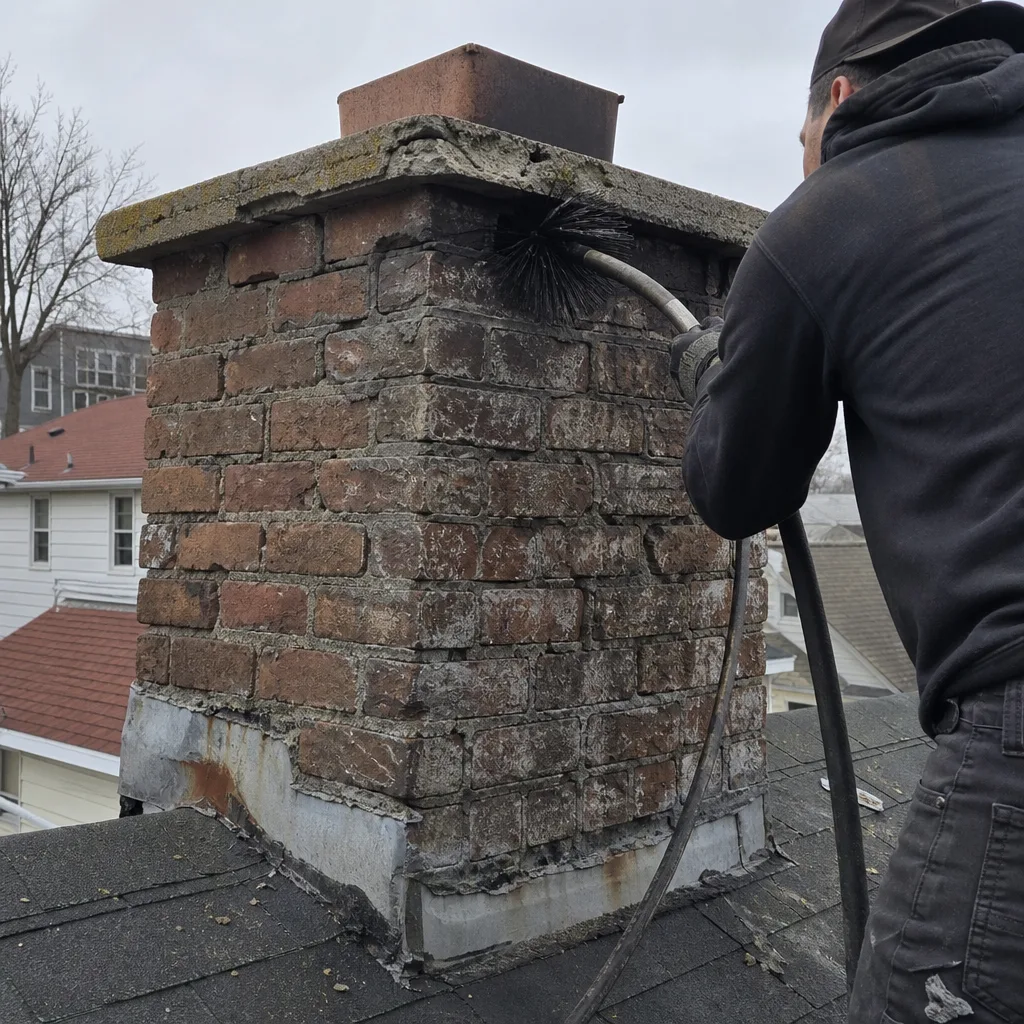 Before
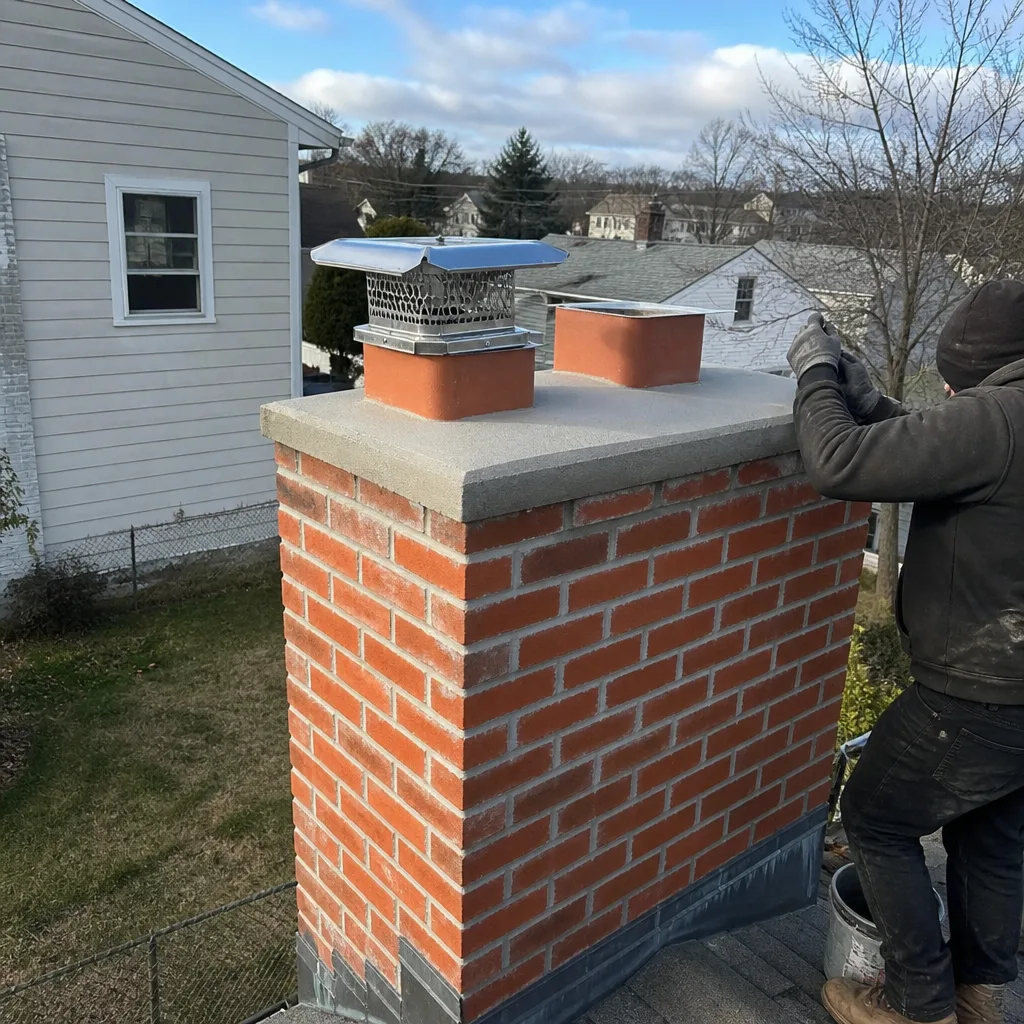 After
AfterChimney Cleaning Cost Breakdown: The Brooklyn Homeowner’s Reference for 2026
Here’s a number that should stop you cold: the average $49 chimney sweep special ends with an invoice between $400 and $900. That’s not a mistake, and it’s not a crooked technician. It’s a business model, and the $49 was never the price of cleaning your chimney. It was the price of getting a salesperson through your front door. This guide walks through what a legitimate chimney cleaning in Brooklyn actually costs in 2026, line by line, so you can tell the difference between a fair price, a bargain, and a trap. We’ll cover labor time, the add-ons that are real, the ones that aren’t, and how to read an estimate like the person writing it doesn’t want you to.
Quick Answer
A legitimate chimney cleaning and Level 1 inspection for a single-flue home in Brooklyn costs between $180 and $340 in 2026, as detailed in our Chimney Cleaning & Sweep Maintenance Checklist for Brooklyn Homeowners. Add $75 to $150 for a second flue, $90 to $200 for heavy creosote that needs rotary cleaning, and $125 to $250 for a camera inspection if the sweep sees something worth a closer look. Anyone quoting $49 to $79 for the same work is not selling you a cleaning; they’re selling you an appointment.
Table of Contents
- What a Legitimate Chimney Cleaning Actually Costs in Brooklyn
- The Line-Item Breakdown: Labor, Equipment, Disposal
- What Legitimately Adds Cost (And What Doesn’t)
- Why the $49 Special Always Ends in a Bigger Number
- Chimney Cleaning Company vs. Chimney Repair Company
- How to Read a Chimney Estimate Like You Mean It
- What a 90-Day Guarantee Is Actually Worth
- Common Mistakes to Avoid
- When to Call a Professional
- Frequently Asked Questions
What a Legitimate Chimney Cleaning Actually Costs in Brooklyn
In Brooklyn, a standard chimney sweep and Level 1 inspection for a single flue runs between $180 and $340 in 2026. That’s the number you should hear when the chimney is in normal working condition, you burn wood regularly, and you’ve had it cleaned within the last two or three years. The range exists because Brooklyn’s housing stock varies wildly. A brownstone in Park Slope with a three-story flue and an old terra cotta liner takes longer and requires more care than a single-story home in Marine Park with a straight run and an easy roof access point.
Here’s what that $180 to $340 pays for, before we get into the line items below:
- A full mechanical brushing of the flue, top to bottom
- Removal of creosote, soot, and any debris from the smoke shelf, damper, and firebox
- A Level 1 inspection of the accessible portions of the chimney interior and exterior
- Disposal of the debris in accordance with local waste requirements
- Time on the roof, which in Brooklyn means dealing with row house rooflines, parapet walls, and the occasional pigeon situation that tests a man’s patience
If you’re on the lower end of that range, you either have a simple chimney or you’ve kept up with maintenance. If you’re on the higher end, you have a taller flue, an older home, or enough creosote that the brush is working for its money. Neither number is a red flag. Both are what honest work costs when the person doing it is licensed, insured, and has been doing it in the same neighborhood since 1999.
The Line-Item Breakdown: Labor, Equipment, Disposal
Most chimney cleaning invoices don’t show line items, and that’s part of the problem. Wendell has always believed a homeowner deserves to know what they’re paying for, so here’s how a legitimate Brooklyn sweep breaks down in 2026. These numbers reflect what we see in our own work and in competing estimates across the borough, from Bay Ridge to Canarsie.
| Line Item | Typical Portion of Total | What It Covers |
|---|---|---|
| Labor time (2 technicians, 60-90 minutes) | 50-60% | Roof access, flue brushing, firebox cleanup, inspection time |
| Equipment wear and consumables | 15-20% | Brushes, rods, drop cloths, HEPA vacuum, inspection tools |
| Disposal and cleanup | 5-10% | Debris removal, interior protection, leaving the hearth cleaner than when we arrived |
| Insurance, licensing, and overhead | 10-15% | The part of the price that means someone shows up insured and licensed |
| Travel and logistics | 5-8% | Parking in Brooklyn, moving equipment through the house, the time it takes |
A few notes on these numbers. Labor is the biggest chunk because a proper sweep is not a five-minute job. One person is on the roof running the brush down the flue, and the second is inside running the vacuum and checking the firebox. In Brooklyn, the roof work is often complicated by shared structures where chimneys from adjacent homes sit inches apart. That takes care and time, and time is exactly what the discount outfits are cutting.
Equipment costs are what they are. Polypropylene brushes cost money, rods wear out, and a HEPA vacuum that actually contains chimney dust costs more than the shop vac in your basement. A company using a $49 price point is cutting this corner somewhere. Either the vacuum is not HEPA, the brushes are cheap and worn, or the crew is paid per stop, which means they’re incentivized to finish in 20 minutes and move on. Wendell’s crew is paid by the hour, not by the stop. That matters.
Disposal is a small line item that tells you a lot. Soot and creosote from Brooklyn chimneys can’t just go in the regular trash. A legitimate company accounts for this. A company that doesn’t mention it is probably dumping somewhere they shouldn’t, or they’re not cleaning thoroughly enough to have much to dispose of in the first place.
What Legitimately Adds Cost (And What Doesn’t)
Before you accept an upcharge, know which add-ons are real work and which are theater. Here’s what actually costs more in Brooklyn in 2026, and what you should expect to pay for each.
Real Add-Ons
- Second flue: $75 to $150 extra. Many Brooklyn homes, especially older brownstones, have a furnace flue alongside the fireplace flue. That’s a second full cleaning, and it costs accordingly.
- Heavy creosote requiring rotary cleaning: $90 to $200 extra. If a standard brush can’t cut through the glaze, the sweep needs rotary chains or a specialized creosote remover. This is real equipment, real time, and real added cost.
- Camera inspection: $125 to $250. If the Level 1 inspection turns up something suspicious – a crack, a void, a rusted liner – a camera inspection is the only way to see what’s actually happening inside. Any company that recommends a liner replacement without camera footage is guessing, and guessing is not a service you should pay for.
- Flue height above three stories: $50 to $150 extra. Taller flues require more rods, more ladder work, and more care. Brooklyn’s three and four story brownstones fall into this category.
- Animal removal: $100 to $250. Raccoons, squirrels, and birds find Brooklyn chimneys as appealing as some landlords do. If there’s a nest in there, it has to come out before the cleaning happens.
Add-Ons That Should Not Cost Extra
- Removing the damper for inspection. That’s part of the job.
- Sweeping the smoke chamber. Also part of the job.
- Checking the chimney cap. That’s the inspection you already paid for.
- A “free” roof inspection that comes with the cleaning. If it’s free, it’s not separate.
- Cleaning the firebox. Anyone who charges for this separately is itemizing the obvious to make the base price look lower than it is.
In our experience, the honest way to price add-ons is to tell you before the work happens, not after the brush is in the flue. Wendell has always run on a simple rule: the number quoted on the phone is the number on the invoice, unless the homeowner approves a change in writing first. That’s not a marketing line. It’s how a person runs a business when they plan to see you at the hardware store on Saturday.
Why the $49 Special Always Ends in a Bigger Number
The $49 chimney sweep is real. The technician shows up, walks through your door, and spends 20 minutes brushing the flue. And then the inspection starts. And the inspection almost always finds something, because that’s what the inspection is designed to do. The average ticket on a $49 special in Brooklyn runs between $400 and $900 before the truck pulls away. Here’s the math.
That $49 covers about 15 minutes of labor and the gas it took to drive to your house. It does not cover insurance, equipment, disposal, or a living wage for the person holding the brush. So the company makes its money on the back end. The technician is often paid a commission on repair sales. The “cleaning” is the foot in the door, and every crack, every chip, every patch of rust becomes a line item on a repair estimate. Some of those repairs are real. Many are not.
The key to understanding this model is simple: a company that sells chimney cleanings for $49 is not a cleaning company. It’s a repair company using the cleaning as a lead generator. There’s nothing illegal about that, but you deserve to know it. When Wendell answers the phone, he’s answering as a chimney sweep first. We clean chimneys because they need cleaning, and if we find something during the inspection, you see the camera footage before we suggest spending a nickel on repairs. That’s the difference between a cleaning company and a repair company, and we’ll get into that more below.
Chimney Cleaning Company vs. Chimney Repair Company
This is the distinction that explains more Brooklyn chimney pricing than any other factor. There are companies whose primary work is cleaning and inspection. And there are companies whose primary work is selling and installing liners, caps, crowns, and rebuilds. Both call themselves chimney companies. Both sweep chimneys. But their incentives are pointed in completely opposite directions.
A chimney cleaning and sweep company makes its money on volume: clean flues correctly, build a book of repeat customers, come back every year. A repair company makes its money on the repair ticket: the more problems found, the more revenue generated. Neither is inherently dishonest, but you need to know which one you have in your living room. The $49 special is almost always a repair company in cleaning clothing.
Chimney repair work is real, and it’s expensive for legitimate reasons. A stainless steel liner from DuraFlex or a cast-in-place repair through HeatShield costs real money to source and install. A proper crown replacement means mortar work on a Brooklyn roof. When these repairs are genuine, they’re worth paying for. When they’re invented or exaggerated, they’re the entire margin on a lowball cleaning.
Wendell’s take, after 29 years of doing both, is that the two services should not be confused. We clean chimneys, and we repair chimneys, but we never use one to pressure you into the other. If the flue is clean and the inspection is clear, that’s the end of the conversation. If the flue has a problem, we show you the footage. You decide. The ability to say no is part of the service.
How to Read a Chimney Estimate Like You Mean It
An estimate is either a fixed price or an opening number, and you can usually tell which in the first two sentences. Here’s a step-by-step way to read a Brooklyn chimney estimate in 2026.
- Look for the word “estimate” vs. “quote.” A quote is a fixed number. An estimate is a starting point. Know the difference before the work begins.
- Check whether the scope is itemized or summarized. A legitimate estimate lists what’s included: flue brushing, inspection, disposal. An opening number just says “chimney cleaning” and leaves the scope open for interpretation.
- Look for what’s excluded. If the estimate doesn’t mention a second flue, a chimney cap check, or disposal, those are probably about to become upcharges.
- Count the zeros after the decimal point. If the number is round to the nearest hundred and doesn’t match any of the ranges in this guide, someone is guessing or selling.
- Read the fine print on the guarantee. We’ll cover this below, but the difference between a real guarantee and a clause that covers nothing is visible in the language.
- Ask who does the work. If the company can’t tell you the name of the person who will show up, or if that name changes every visit, you’re dealing with a rotating crew. Wendell’s people have been with him for years, and they answer to him by name.
Here’s a simple test. If you called the company right now and asked them to walk through the estimate line by line, would a live person answer? Top Hat Chimney has a live person on the phone every hour of the day, and it may well be Wendell himself at two in the morning. That’s not a sales tactic. It’s a fact of how we’ve run the business since 1999. If your estimate came from a company where no one answers the phone after 5 p.m., ask yourself what happens if the work doesn’t hold up.
What a 90-Day Guarantee Is Actually Worth
Every chimney company has a guarantee. Most of them are worthless. Here’s the difference.
A real guarantee says something specific: if the work is not done right, the company comes back and makes it right at no charge. It has a term, it has a scope, and it has a phone number attached to a person who actually answers. Wendell’s 90-Day Done Right Promise is in writing on every single job. If the chimney is not right, one call brings the crew back. No arbitration, no “wear and tear” loophole, no phone tree. That’s what a guarantee is supposed to be.
A hollow guarantee says the work is “warranted against defects” but then defines defect so narrowly that nothing qualifies. It excludes creosote, weather, settling, and “normal use.” It requires you to mail a form within 14 days or the coverage lapses. It is written by a lawyer to protect the company, not the chimney. Here’s the tell: read the exclusions first. If the exclusions are longer than the guarantee, the guarantee is decoration.
In Brooklyn, a guarantee also means something about geography. If the company that cleaned your chimney last year is no longer answering the phone, no piece of warranty paper matters. Wendell has lived and worked in the same communities since 1999. He runs into his customers at the grocery store. A guarantee is only as good as the person standing behind it, and a person who has to face his neighbors every weekend is a person whose guarantee means something. Ask anyone on your street.
Brooklyn-Specific Factors That Shape Chimney Pricing
Brooklyn is not a generic housing market, and chimney costs here follow the borough’s specific geography, architecture, and regulations. Here’s what actually moves the number in 2026.
Three Stories Is the Magic Number
Most Brooklyn brownstones and row houses run three or four stories. That means the chimney is 35 to 50 feet off the ground, which changes the entire job. Longer ladders, taller access points, more brush rods, and more time on the roof. A one-story chimney in a suburban split-level takes one person 45 minutes. A four-story flue in Bed-Stuy or Cobble Hill takes two people 90 minutes. That’s the single biggest variable in Brooklyn chimney pricing, and it’s why you can’t compare quotes from other cities to what you’ll pay here.
Shared Party Walls
In row house neighborhoods like Park Slope, Gowanus, and Williamsburg, chimneys often sit on shared walls or in shared stacks. Access sometimes means coordinating with a neighbor, working around parapet walls, or navigating a roof that hasn’t seen maintenance since the Bloomberg administration. None of this is a problem for a sweep who works Brooklyn every day. All of it adds time for a company that’s not familiar with the borough’s quirks.
Older Homes, Older Liners
Brooklyn’s housing stock is old. Many homes still have original terra cotta flue liners from the 1920s and 1930s. Terra cotta liners crack. They crack from age, from water intrusion, from the freeze-thaw cycle that hits brownstones especially hard. That doesn’t mean every old liner needs replacement. It does mean a visual inspection is not enough to rule out problems, which is why the camera inspection add-on matters more in Brooklyn than it does in a 1990s suburb. When we recommend a liner repair, it’s because we’ve seen the crack on camera, and we’ll show you the same footage. Nothing is recommended without the evidence.
Local Codes and the Clean Air Act
New York City has its own air quality regulations, and Brooklyn falls under them. The city restricts what can be burned in residential fireplaces, and some neighborhoods have additional rules during air quality alert days. A sweep who works Brooklyn knows these rules and can tell you whether your fireplace is compliant. A chain that flies in from out of state may not. Fireplace services in Brooklyn include making sure the damper, flue, and firebox meet current standards, and that’s not a conversation you’ll get from a $49 crew.
For the full scope of what we check during a Brooklyn cleaning and inspection, see our Chimney Cleaning & Sweep in Brooklyn page. For fireplace repair and maintenance work, we cover everything from dampers to surrounds. And if you’re starting from scratch, the Top Hat Chimney home page explains who we are and how we work.
Common Mistakes to Avoid
- Falling for the $49 coupon without reading what it actually covers. It covers a brush. It does not cover an inspection worth the name. The average ticket in that model runs hundreds before the truck leaves.
- Accepting a repair recommendation without camera footage. If the sweep says you need a new liner but can’t show you the crack, you need a second opinion. In Brooklyn, we offer a free second opinion on any competing written estimate.
- Comparing Brooklyn prices to national averages. A three-story brownstone is not a one-story ranch in Ohio. The numbers in this guide are specific to Brooklyn’s labor market, housing stock, and roof access.
- Skipping the off-season. Once a year, burn or no burn. Chimneys break in the off-season too, and Brooklyn winters do more damage to bricks and mortar than any fire ever will.
- Hiring a company that can’t tell you the name of the person who will show up. A name means accountability. A rotating cast means no one’s reputation is on the line. Wendell puts his name on the work, and he runs into you again on Saturday.
- Paying for add-ons before the base work is priced. If a company won’t give you a fixed number for the base cleaning, the add-ons are where they’ll make their margin.
- Assuming an old chimney needs a new liner without asking why. Creosote accumulation is not a liner problem. A visual crack is. Those are different conversations with different price tags.
When to Call a Professional
A chimney sweep is not a DIY project. The work happens on a roof, often three or four stories up in Brooklyn, and it involves equipment and materials you don’t keep in the garage. More importantly, it involves your safety. First-degree creosote is a brush job. Third-degree is a glaze. Catch it early and you’re paying for a cleaning. Leave it and you’re paying for a reline, or worse. Your flue doesn’t care how the fire looks. It cares how it breathes. If the fire is struggling, the smoke is backing up, or you can’t remember the last time the flue was brushed, it’s time to call. Top Hat Chimney offers free estimates in Brooklyn. Call (516) 289-9316 and a live person answers. It may well be Wendell himself.
Frequently Asked Questions
A standard single-flue chimney sweep and Level 1 inspection in Brooklyn costs between $180 and $340. The exact number depends on flue height, roof access, creosote buildup, and whether you’ve kept up with annual maintenance. Call (516) 289-9316 for a fixed quote based on your specific home; there’s no trip charge for calls inside our service county.
The $49 cleaning is real in the sense that someone will actually come to your house. It is not real in the sense that $49 covers the cost of a thorough sweep, inspection, and disposal. Companies offering this price are usually repair companies using the cleaning as a lead generator, and the average final ticket runs $400 to $900. Know that going in, and ask for camera footage of any recommended repairs.
Once a year, regardless of how much you burn. The National Fire Protection Association recommends annual inspection and cleaning as needed. Brooklyn’s freeze-thaw winters stress masonry even when the fireplace sits unused, and creosote builds up even with low usage. Annual cleaning catches problems before they become expensive repairs.
Not every chimney needs a camera inspection during a routine cleaning. But if the Level 1 visual inspection finds anything suspicious – a rusted damper, a spalled brick, a crack in the flue – a camera inspection at $125 to $250 is the only way to see what’s actually happening inside. Never accept a liner replacement recommendation without camera footage you’ve seen with your own eyes. We show every homeowner the same footage we’re looking at.
Creosote accumulates in layers. First-degree creosote brushes off easily. Second-degree takes more work. Third-degree is a hardened glaze that requires rotary cleaning or chemical treatment, and it’s the layer most likely to ignite into a chimney fire. A chimney fire can crack the flue, melt the mortar, and spread to the house structure. Annual cleaning is cheap insurance compared to a reline, which runs into the thousands. Call (516) 289-9316 and we’ll quote you a fixed price before a single tool comes off the truck.
No trip charge for calls inside our own service county. That’s a standing offer, not a limited-time deal. If you’re in Brooklyn within our county, the estimate visit is free, and the number we quote is the number on the invoice. Seniors and veterans always get 10% off, and any repair over $200 carries $40 off.
The Bottom Line
Chimney cleaning in Brooklyn costs what it costs for reasons you can see and verify. A fair price for a single flue is $180 to $340. A second flue, heavy creosote, a tall roofline, or a camera inspection pushes that higher for legitimate reasons. The $49 special is a door opener, not a cleaning, and the average invoice tells the story. What you’re buying with a company like Top Hat Chimney is a fixed price before the work starts, camera footage before any repair recommendation, and a 90-Day Done Right Promise in writing on every job-explore our more guides & resources to learn more. Wendell has been working Brooklyn chimneys since 1999. He answers his own phone. He sees you at the hardware store. That’s the real guarantee.
Written by Wendell Pike, Owner at Top Hat Chimney, serving Brooklyn since 1999.