
Last updated September 10, 2026
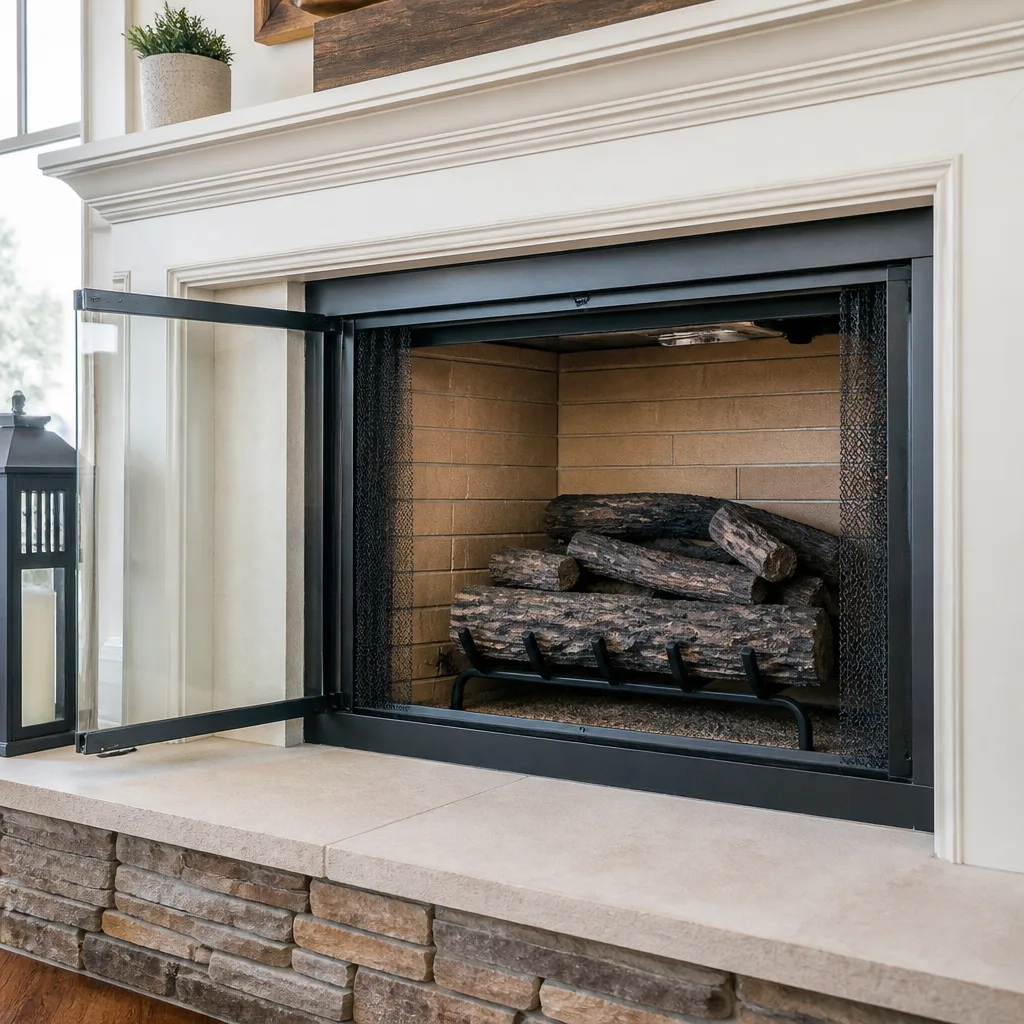
Level 1 sweep and inspection to the NFPA 211 annual standard - flue, crown, cap, and flashing checked and photographed
Chimney sweep logs do not sweep chimneys. They loosen some creosote - which then falls where a brush and vacuum still have to collect it.
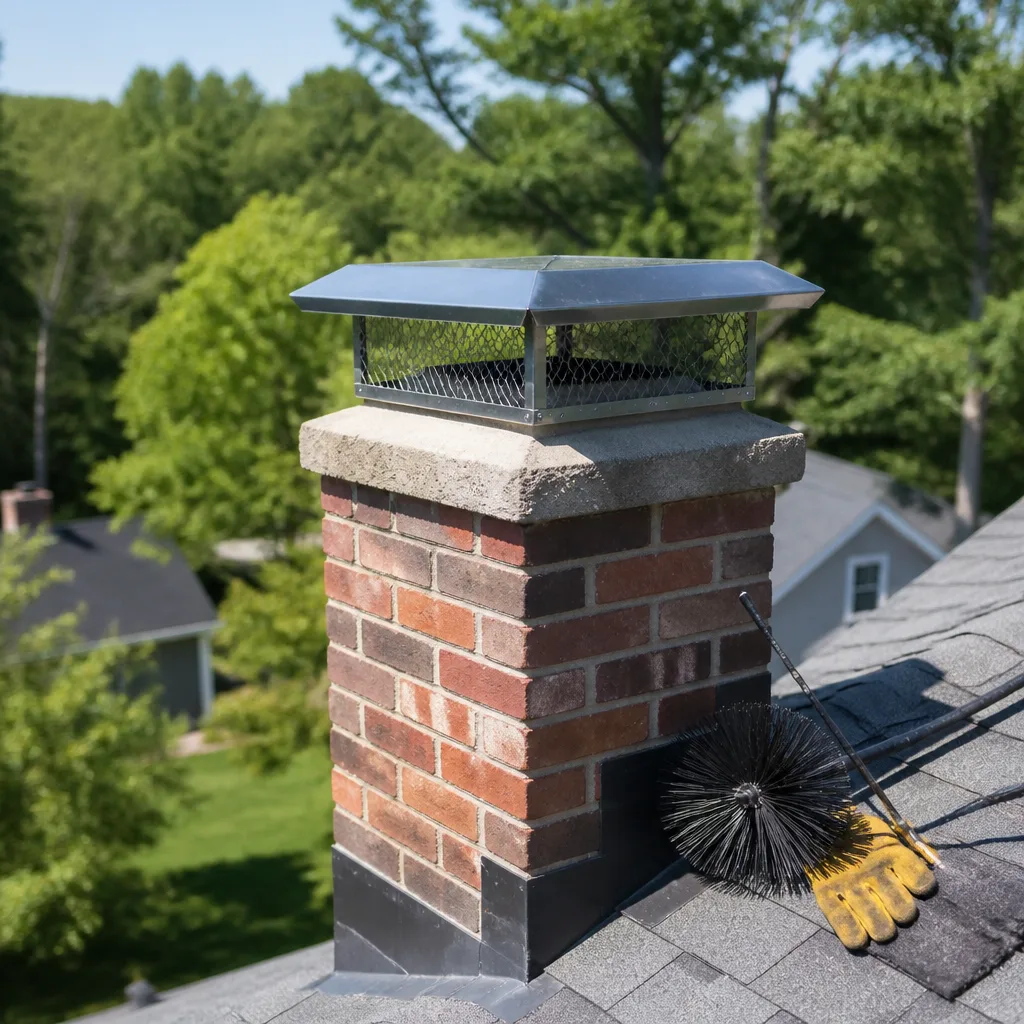
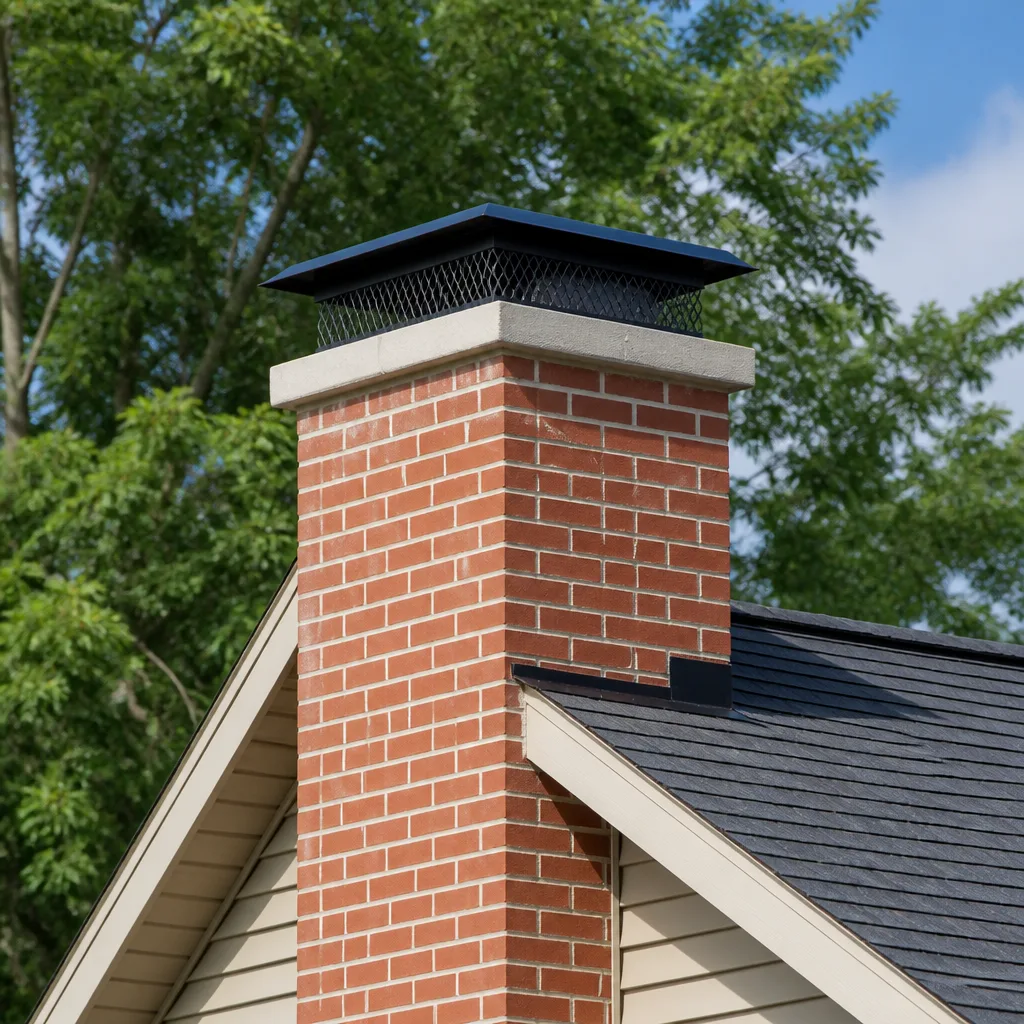
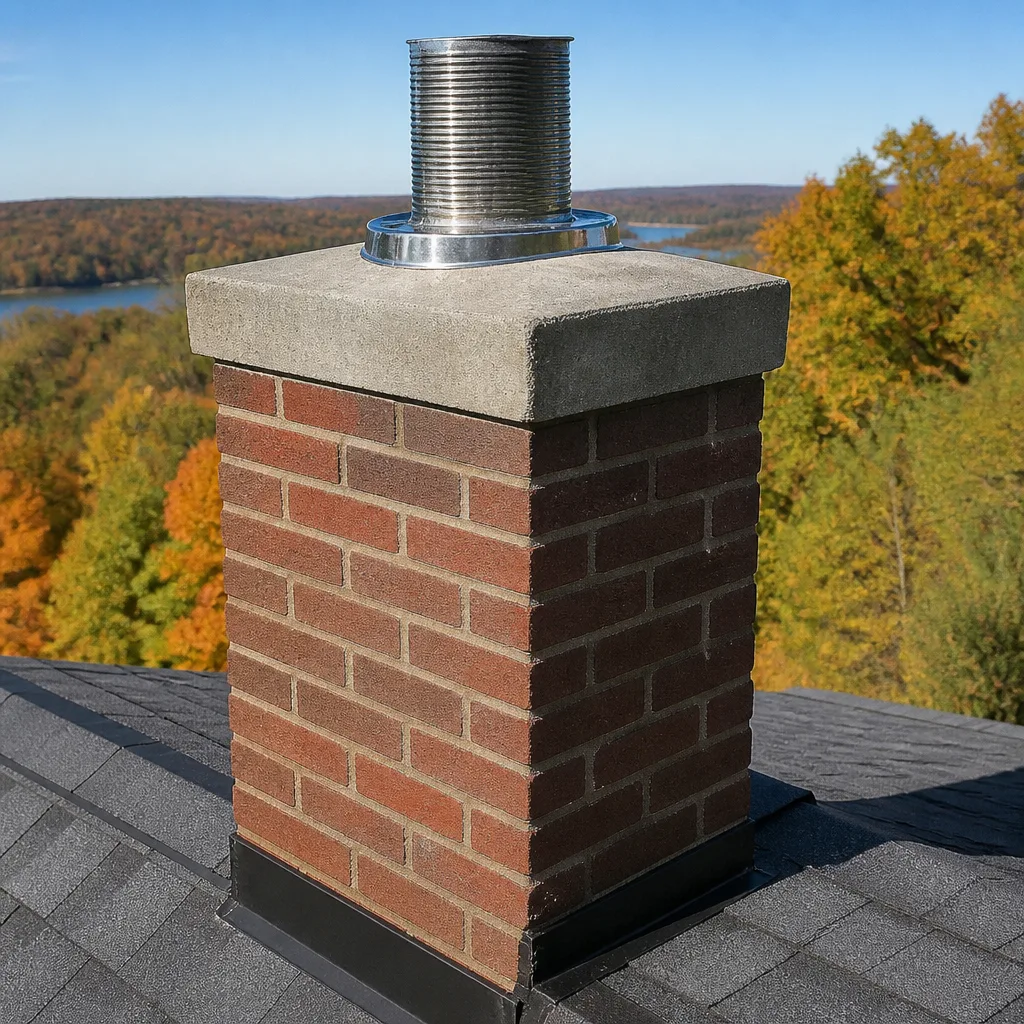
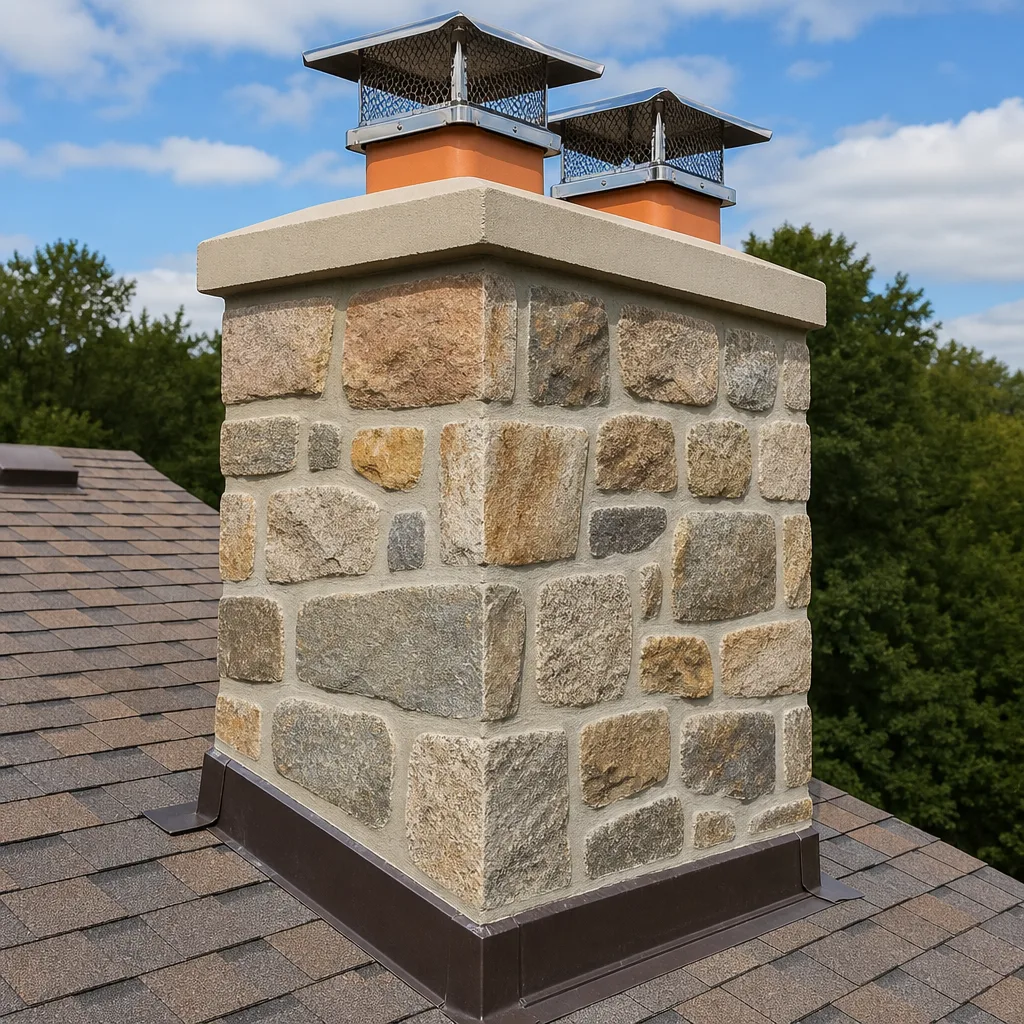
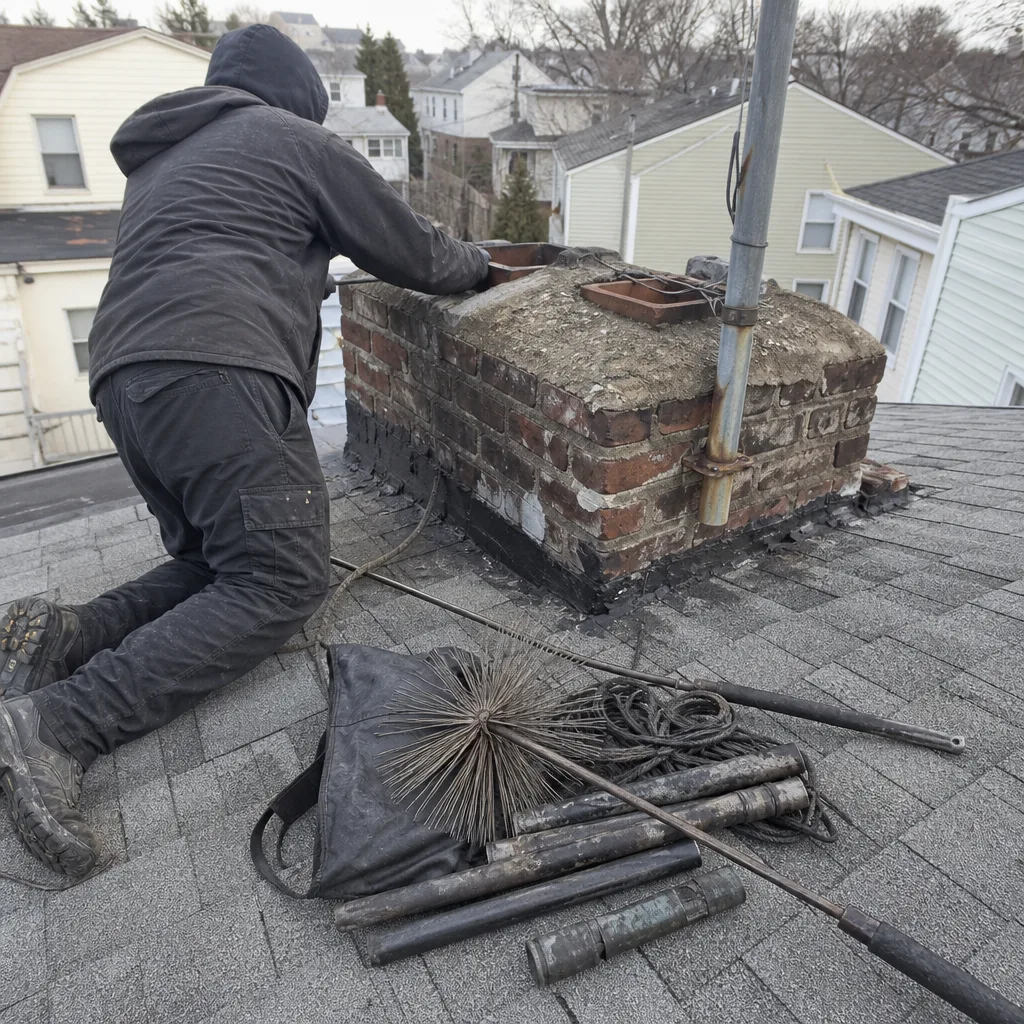 Before
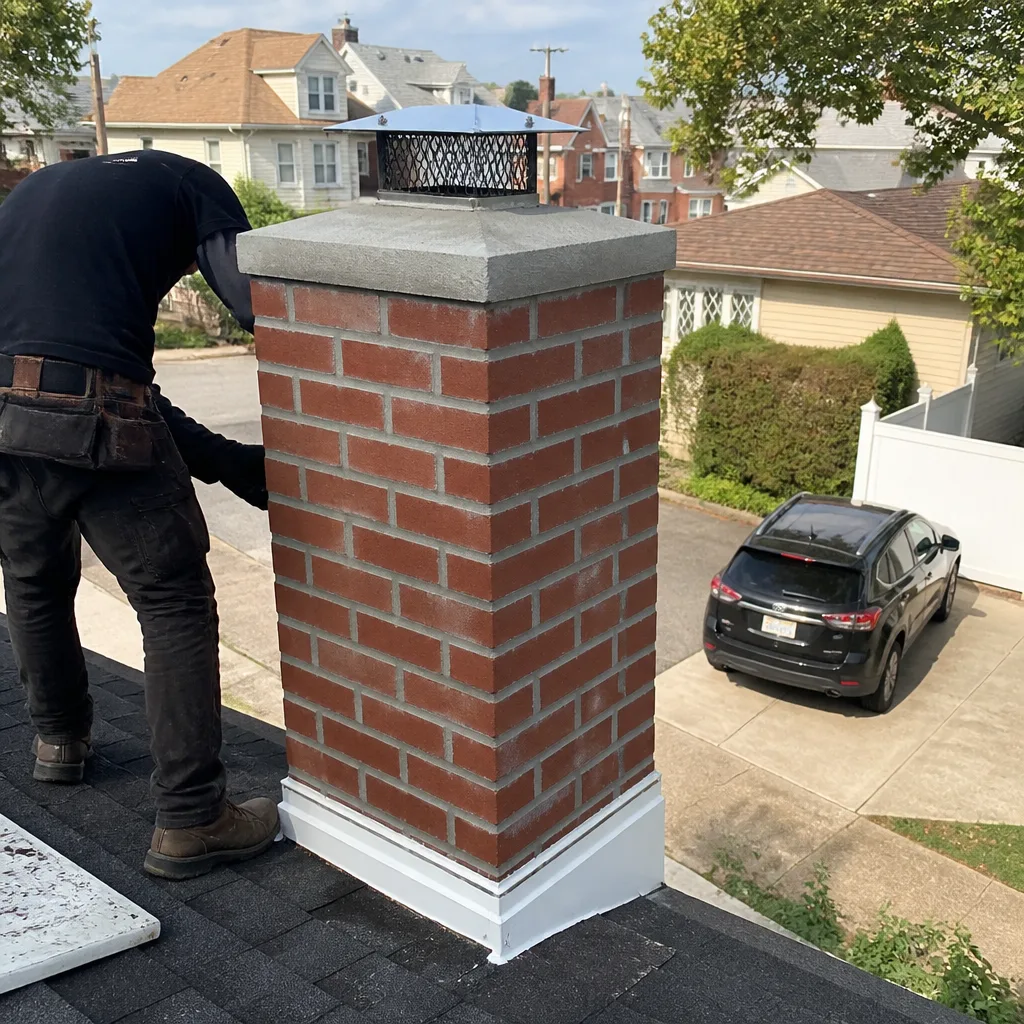 After
After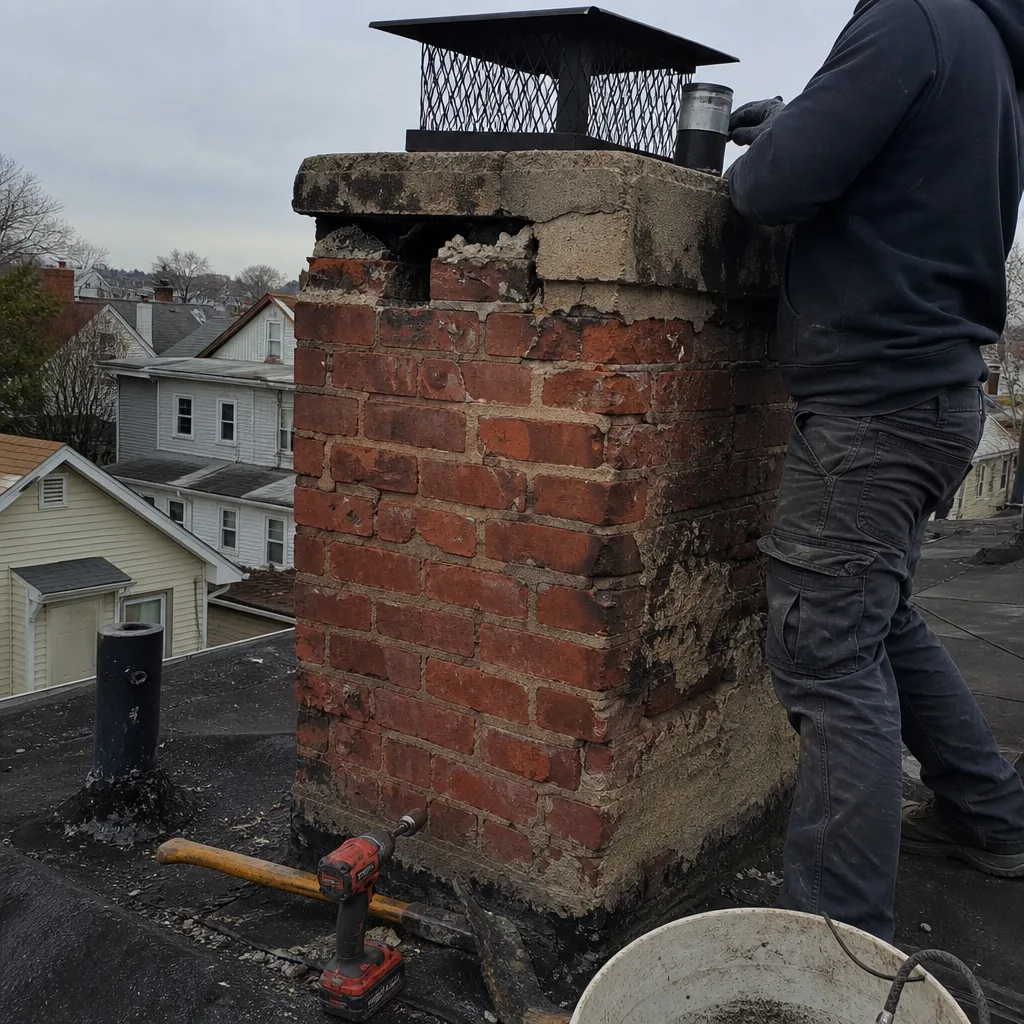 Before
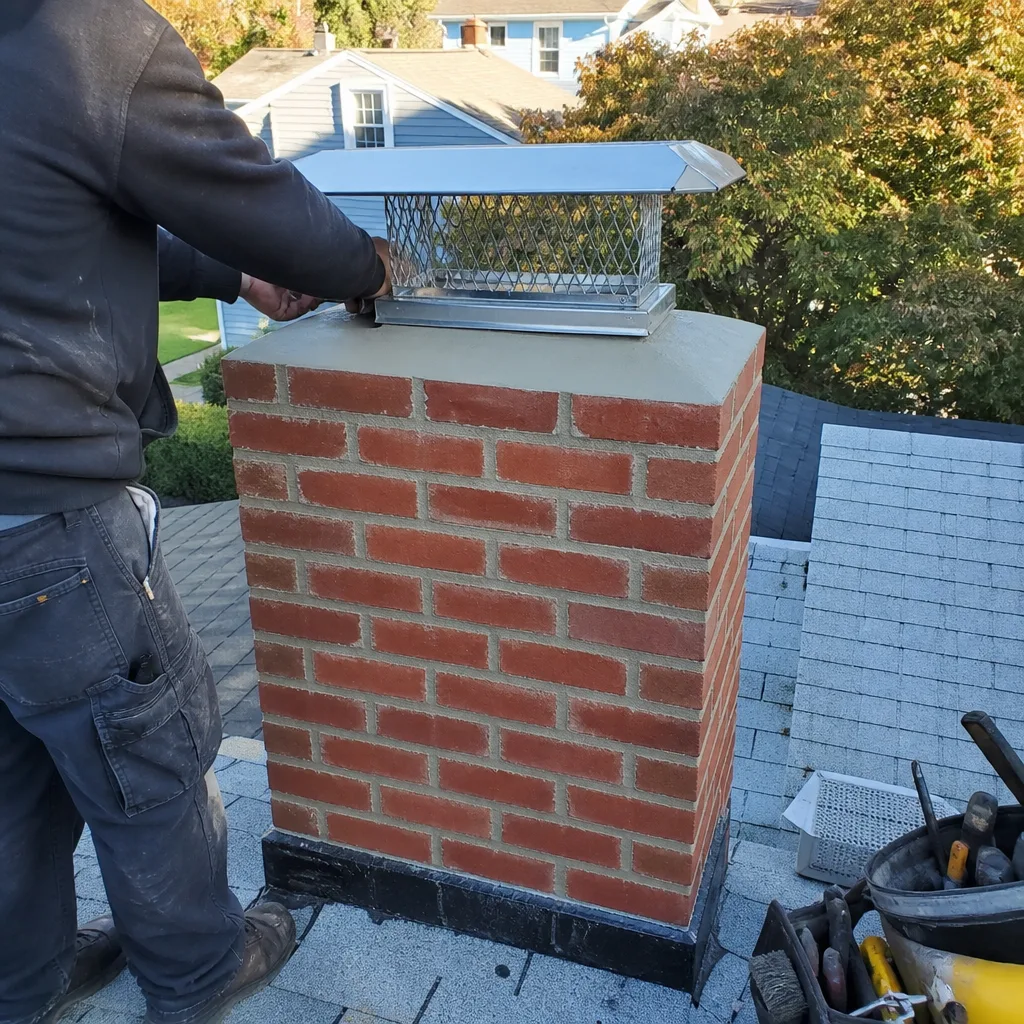 After
After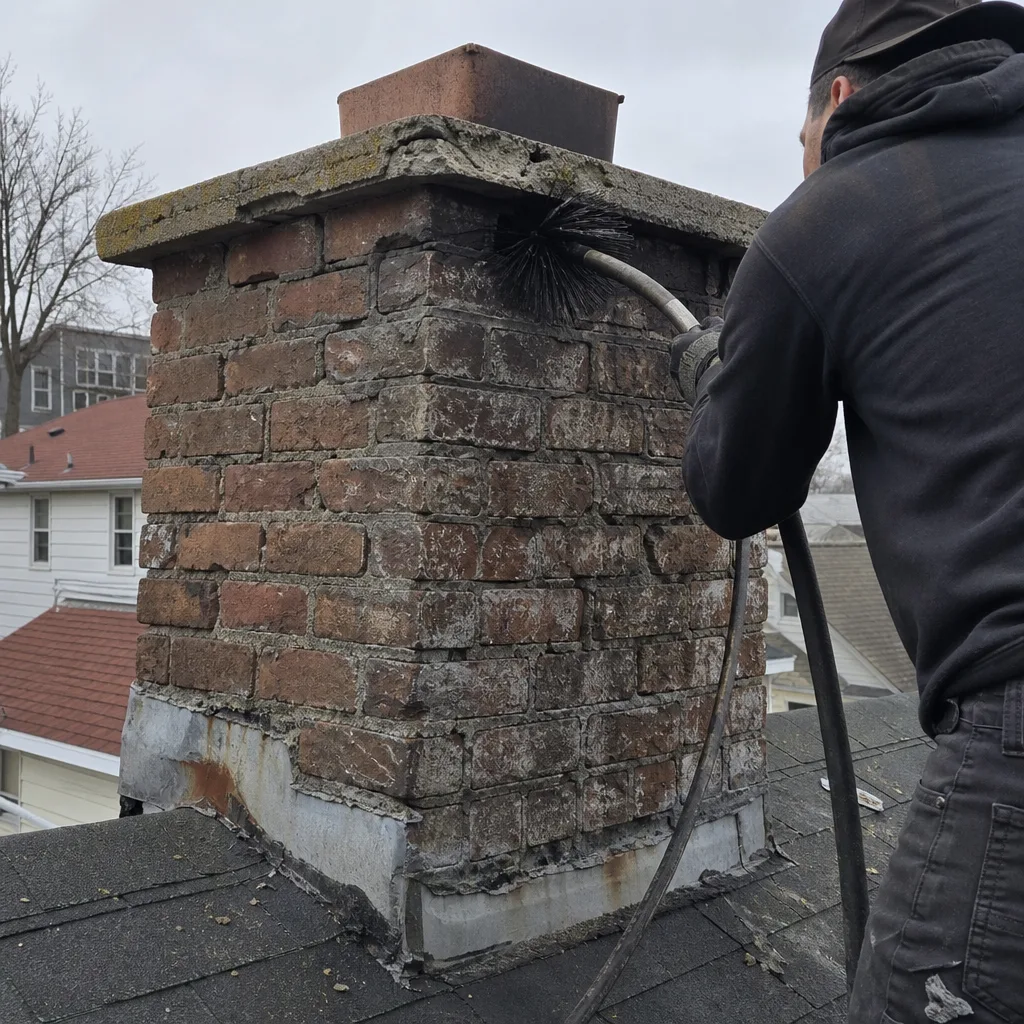 Before
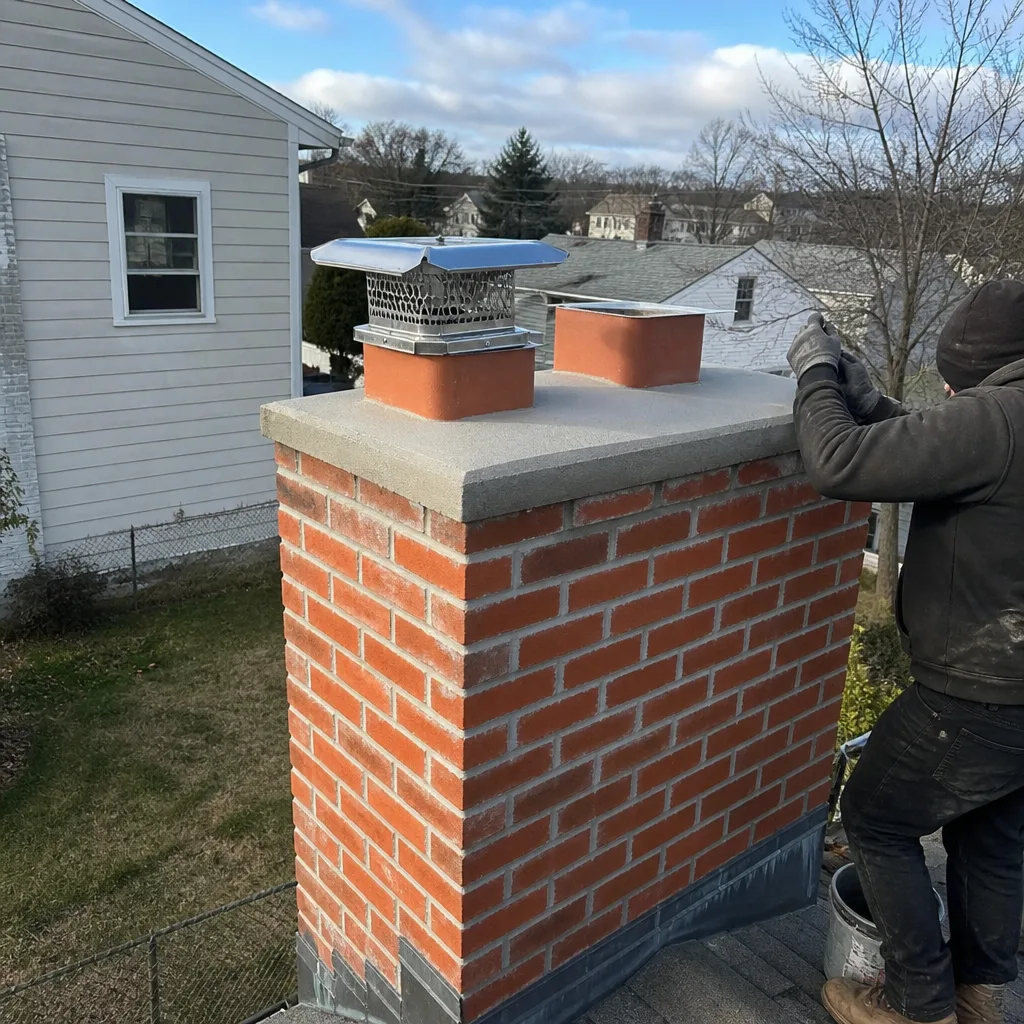 After
AfterChimney Cleaning & Sweep Maintenance Checklist for Brooklyn Homeowners
A chimney sweep can clean out a year’s worth of creosote in an afternoon, but the cap you never replaced in 2021 has let in three winters of moisture that no brush can fix. Most maintenance happens in the quiet months between professional visits, and Brooklyn’s specific weather pattern (freeze-thaw cycles off the harbor, nor’easters that drive rain sideways, humid summers that swell your mortar) punishes neglect faster than almost any climate in the Northeast. This guide is a working document: month-by-month tasks, what you can safely check from the ground, what paperwork to keep, and the signs that mean you need more than a sweeping. If you own a fireplace or wood stove in Brooklyn, this is the checklist that keeps small problems from becoming a liner replacement.
Quick Answer
A Brooklyn homeowner should have their chimney professionally swept once per year (twice if you burn more than two cords of wood), inspect the cap, crown, and flashing from the ground every season, and keep a simple log of every fire, cleaning, and repair. Between professional visits, the monthly tasks are: check for visible damage after any storm with winds over 30 mph, clear the firebox of ash when it exceeds one inch, and look for water stains on the ceiling near the chimney after heavy rain. If it has been more than 12 months since a certified sweep has looked inside your flue, Chimney Cleaning & Sweep services are already overdue.
Table of Contents
- The Month-by-Month Brooklyn Chimney Maintenance Schedule
- The Four Things You Can Safely Eyeball from the Firebox
- The Sidewalk Check: Spotting Cap, Crown, and Flashing Failure from the Ground
- How to Keep a Chimney Log That Makes Every Future Sweep Faster and Cheaper
- Understanding Creosote: What It Looks Like and Why Brooklyn’s Climate Makes It Worse
- After the Sweep: Questions to Ask and Paperwork to Keep
- Common Mistakes to Avoid
- When to Call a Professional
- Frequently Asked Questions
- The Bottom Line
The Month-by-Month Brooklyn Chimney Maintenance Schedule
Brooklyn’s calendar does not line up neatly with the generic chimney advice you find in national guides. Our winters are wetter than inland New York, our summers are more humid, and October through March brings nor’easters that test every seal on your roof. Here is what a homeowner in Brooklyn should be doing each month, burn season or not, with The Complete Guide to Chimney Cleaning in Brooklyn as your reference.
January – February: Peak Burn Season
- Check for ceiling stains after every heavy rain or snow melt. Brown or yellow rings on the ceiling near the chimney mean water is getting past the flashing or through a cracked crown. This is the single most common chimney problem we see in Park Slope and Ditmas Park rowhouses in winter.
- Burn only seasoned hardwood. Greenwood or softwood (pine, spruce) produces tar-heavy smoke that builds creosote fast. If you hear sizzling or see water bubbling from the end grain, your wood is not ready.
- Keep the damper fully open during fires and closed when the fireplace is cold. A partially open damper during a fire cools the flue gases, which accelerates creosote condensation. A damper left open when cold dumps your heating money up the flue.
March – April: Nor’easter Season
- After any wind event over 30 mph, walk outside and look at the chimney cap. A missing or tilted cap is an open pipe for rain, and Brooklyn’s March storms will exploit it within a week. If you cannot see it clearly, grab a pair of binoculars and check from the sidewalk.
- Check the mortar joints you can see from the ground or an upstairs window. Look for gaps, crumbling mortar, or white efflorescence (that chalky white deposit that means water is moving through the brick). Bay Ridge and Sheepshead Bay homes near the water get more of this than inland neighborhoods.
- Dry-brush the firebox and remove cold ash. Ash left through the spring absorbs humidity and becomes mildly acidic, which can pit the firebrick. Wear a dust mask and go slow; ash is fine particulate you do not want to breathe.
May – June: Inspection and Repair Window
- Book your annual sweeping now if you did not do it in early fall. The best chimney sweeps in Brooklyn are booked solid from September through December. A May sweeping means you get the appointment time you want, the crew is not rushed, and any repair is done before next winter, not in an emergency call during it.
- Check the fireplace damper for rust and smooth operation. Open and close it several times. If it sticks or you see rust flakes, moisture is getting in from above. That is a cap or crown issue, not a damper issue.
- Look for spalling brick on the chimney exterior. Spalling means the brick faces are popping off in flakes or chunks. It is caused by water freezing inside the brick, and it is permanent. The brick must be replaced; no sealant fixes it permanently.
July – August: Humidity Season
- Run a dehumidifier in the basement if your chimney shares a wall with it. Brooklyn’s August humidity gets into masonry and can cause musty smells that migrate up through the flue and into the living room. A dry basement keeps the chimney dry from below.
- Check for animal activity. Summer is prime nesting season. Listen for scratching or chirping in the flue. Squirrels, starlings, and raccoons all view an uncapped Brooklyn chimney as a rent-controlled apartment. We have removed all three from flues in Gravesend and Midwood.
- Leave the firebox door or screen open (fireplace cold, damper closed) on dry days. This allows the firebox to air out, which prevents the sour smell that develops when humid air sits trapped in a closed firebox all summer.
September: Pre-Burn Preparation
- Do the sidewalk check described in full below. Cap, crown, flashing, brick condition. Ten minutes with binoculars now beats a $2,000 repair in February.
- Burn one piece of newspaper in the fireplace with the damper open. If smoke does not draw upward immediately, you likely have an obstruction (a bird’s nest, a dead animal, a collapsed flue tile). Do not build a real fire until this resolves.
- Order or split and stack next season’s firewood now. Wood needs six months to a full year of covered outdoor seasoning. Wood bought in November and burned in December is the leading cause of fast creosote buildup in Brooklyn fireplaces.
- Call a chimney sweep in Brooklyn if you have not had an inspection in the past 12 months. The pre-season rush fills up fast. A clean flue in September means a safe fire in October.
October – December: Burn Season Begins
- Before your first fire, verify the damper is open and the flue is unobstructed. Shine a flashlight up from the firebox. You should see the flue liner and no blockage. If you see what looks like a pile of twigs or a dark mass, do not light a match. Call a professional.
- Keep the firebox ash under one inch all season. More than an inch restricts airflow to the fire, which means more smoke, more creosote, and less heat. Remove cold ash weekly during heavy burn months.
- Install a chimney cap if you do not have one. We will say this again below because it matters that much. A $200-$400 cap prevents 80% of the water and animal problems we see in Brooklyn chimneys every year.
The Four Things You Can Safely Eyeball from the Firebox
You do not need to get on your roof to do meaningful chimney maintenance. With a flashlight, a pair of safety glasses, and about ten minutes on your hands and knees, you can check four things from inside your fireplace that tell you most of what you need to know. Here is what matters and what the signs mean.
1. Damper Operation and Condition
Open and close the damper. It should move freely and seal reasonably well when closed. A damper that will not open fully restricts the flue draft, which pushes smoke back into the room. A damper that will not close fully lets warmed house air escape all winter, and it lets cold air drop down the flue in summer. Rust on the damper frame is a moisture warning: water is finding its way past the cap or through the crown. The damper is also where we most often find creosote flakes, which is a sure sign a sweeping is due.
2. Creosote Buildup on the Firebox Walls
Shine your flashlight up past the damper and look at the flue walls. Creosote is the black or dark brown residue that condenses from wood smoke. In its earliest stage, it looks like black dust that brushes off. In its later stages, it looks like shiny black tar or even puffy, flaky chips. If you can scrape off a visible buildup with a butter knife from the firebox level, there is more above, and the flue needs professional cleaning before another fire. A quarter-inch of creosote is enough to fuel a chimney fire that can exceed 2,000 degrees inside the flue.
3. Firebrick Condition
Look at the firebrick lining the firebox. Cracks under 1/16 inch are normal expansion cracks, especially in older Brooklyn brownstones. What is not normal is missing brick, brick that has shifted out of the wall, or gaps between the firebox floor and the walls wider than a dime. These gaps let heat reach the combustibles surrounding the fireplace, which is how house fires start inside walls. White staining on the firebrick means water has entered through the chimney above, and stained brick is spalling brick; it will only get worse.
4. The One Thing That Always Requires a Professional
Anything above the damper. Full stop. The flue liner, the smoke chamber, the chimney throat, and everything outside the house above the roofline cannot be safely inspected or repaired from inside the home. We say this because homeowners reasonably ask, and the answer should be honest: you cannot see the flue liner clearly from the firebox, and you cannot clean it safely without professional equipment. High-access work carries real risk, and chimney fires start in the spaces a homeowner cannot see. The camera inspection a professional brings (we run one on every chimney cleaning and sweep in Brooklyn) shows the entire flue, including the sections no flashlight will ever reach.
The Sidewalk Check: Spotting Cap, Crown, and Flashing Failure from the Ground
You can see more from the sidewalk than most people think. Brooklyn’s rowhouses and detached homes usually give you a clear sightline from the street or a neighbor’s yard, and a pair of binoculars gets you a close view without a ladder. Here is what to look for and what it means.
The Chimney Cap
The cap is the metal cover on top of the flue. Its job is to keep rain, snow, leaves, and animals out while letting smoke out. From the sidewalk, check that the cap is still there, sits level, and covers the flue opening completely. A missing cap means rain goes directly down the flue liner and into the smoke chamber, where it mixes with creosote and creates an acidic paste that eats mortar. A tilted cap means the wind has shifted it, and the flue is partially exposed. We have pulled more soaked insulation, rusted dampers, and squirrel nests out of cap-less Brooklyn chimneys than we can count, and every one of those repairs cost more than the cap that would have prevented it.
The Crown
The crown is the concrete or mortar slab that caps the top of the chimney structure (not the flue, but the brickwork around it). It should be solid and slightly sloped so water runs off. From the ground, look for visible cracks wider than 1/16 inch, missing chunks, or a crown that looks like it is disintegrating. Hairline cracks are normal for older crowns, but in Brooklyn’s freeze-thaw cycles, every crack becomes a wider crack by spring. When a crown fails, water seeps into the top courses of brick, freezes, expands, and pops the brick faces off. This is how a $300 crown repair becomes a $3,000 chimney rebuild in three winters.
The Flashing
Flashing is the metal material where the chimney meets the roofline. It is typically aluminum, galvanized steel, or copper, and it should sit flat and tight against both the brick and the roof. From the sidewalk or across the street, look for pulled-away flashing, rust streaks from corroding metal, or gaps between the flashing and the brick. Use your binoculars to check for caulk that is cracked or peeling away. Leaking flashing is the number one cause of water-stained ceilings in Brooklyn living rooms. And flashing that looks fine from the street can still be failing underneath; if you have ceiling stains, have the flashing inspected up close by a professional, even if it looks intact from below.
Brick and Mortar
Scan the visible chimney brick for spalling (flaking or popping brick faces), missing mortar joints, or sections that look darker than the surrounding brick. Dark or wet-looking brick even on dry days means the masonry is saturated, and saturated brick is brick that will crack when it freezes. White efflorescence is not just cosmetic; it tells you water has already moved through the brick and has left salt deposits. On older Brooklyn homes, we also see a particular pattern where the interior wythe (the inner layer of brick you cannot see) has deteriorated while the exterior looks fine, which is another reason that an occasional professional inspection is worth the fee.
How to Keep a Chimney Log That Makes Every Future Sweep Faster and Cheaper
A simple paper log or a note on your phone changes how quickly we can diagnose a problem. Most homeowners remember their chimney history the way they remember their car’s oil change history: vaguely, and with generous estimates. A chimney log removes the guesswork. Here is what to record and why.
What to Write Down Every Time You Burn
- The date and the outside temperature. Below-freezing days mean a colder flue, which means more creosote condensation even with good wood. That is normal; the log tells us if you are burning mostly in deep cold, which changes the recommended sweeping interval.
- What you burned. Wood species matters. Oak and maple produce less creosote than pine and birch. If you burn a mix, note the rough proportion. This is the single most useful piece of information for predicting how much creosote we will find in the flue.
- How the fire behaved. Did it draw well? Did smoke spill into the room when you first lit it? Did you smell smoke in the house the next morning? These observations point to draft problems, and a log that shows “smoke in room on windy days, started November” is a diagnostic goldmine.
- Any unusual smells or sounds. A chemical smell, a smoky smell when no fire has burned for days, or a flapping sound on windy nights. These are cap and damper signals.
What to Record After Every Professional Visit
- The date of the sweeping or repair. Every chimney should be swept at least annually. Your log is your proof that you are maintaining it, which matters for insurance claims if there is ever a chimney fire.
- The company name, the tech’s name, and what they found. If a tech tells you there is a hairline crack in a flue tile, write that down. Next year, the next tech (or the same one) can check whether it is growing. Without a record, every visit starts from zero.
- Photos or camera footage notes. Many Brooklyn chimney companies now provide a video scan. Note where the file is stored or keep a USB drive, and note what the scan showed. When you call in a different company for a second opinion, that footage is worth real money.
- The amount of creosote removed or noted. If the sweep says “second-degree creosote in the last three feet of flue,” write that down. It tells you whether the next sweep should happen in 6 months or 12.
A chimney log takes about 90 seconds per fire and about two minutes after each service visit. Over five years, it is the difference between a sweep who can quote a repair in one visit and a sweep who needs three visits to figure out what is happening. We ask our long-time Brooklyn customers about their burn habits and their chimney history, and the ones who keep logs get better service, faster, for less money. The Top Hat Chimney team will also help you set one up, but a simple notebook works just fine.
Understanding Creosote: What It Looks Like and Why Brooklyn’s Climate Makes It Worse
Creosote is the byproduct that makes chimney cleaning necessary at all. Wood smoke cools as it rises through the flue, and when it cools past a certain point, the unburned particles condense on the flue walls as creosote. The cooler the flue, the more creosote deposits. This is where Brooklyn’s climate works against us: we burn when it is cold outside, which means the flue is cold to start, and the smoke hits those cold walls immediately.
The Three Degrees of Creosote
- First-degree creosote is a black, dusty, sooty film. It brushes off easily and is what a routine sweeping removes. It is the normal result of dry wood burned with a proper draw. If your chimney has first-degree creosote after a year, your burning habits are fine.
- Second-degree creosote is crunchy, flaky, dark brown to black. It looks like burnt cornflakes stuck to the flue. It forms when the flue temperature is too low or when the wood is not fully seasoned. Professional sweeping removes most of it, but repeated second-degree buildup means you should change something: the wood, the burn habits, or the flue insulation.
- Third-degree creosote is the bad stuff. It is a hard, shiny, tar-like glaze that bonds to the flue liner. It forms when the flue is chronically cold, the wood is wet, or the fire is smoldered rather than burned hot. Brushes do not remove third-degree creosote. It requires chemical treatment or a professional grade rotary cleaning, and even then it is labor-intensive. Third-degree creosote is the fuel that drives the most dangerous chimney fires.
In our experience in Brooklyn, second-degree creosote shows up most often in homes where the fireplace is used for occasional ambiance fires on winter nights. The fires are not big enough or hot enough to warm the flue, so every fire deposits more creosote than a hotter-burning household. If that sounds like how you use your fireplace, the annual sweeping is non-negotiable, and you should burn a hotter, shorter fire rather than a long, smoky smolder.
After the Sweep: Questions to Ask and Paperwork to Keep
When the sweep is finished, that is the moment to get the information you need, not three months later when a problem appears and the memory is hazy. A good sweep will volunteer most of this; a great sweep welcomes the questions. Here is exactly what to ask before the truck pulls away.
Questions to Ask at the End of Every Service Call
- “What did you find, and can you show me?” The camera footage and a plain-English verdict, every time, no exceptions. If the sweep cannot or will not show you what they saw, that is a red flag. Every reputable Brooklyn chimney company uses a camera inspection now, and you are entitled to see it.
- “What degree of creosote was in the flue and how much?” This tells you whether next year’s sweeping should happen in 6 months or 12. If the answer is vague (“some buildup, the usual”), push for specifics.
- “Is there anything that needs attention now, or can it wait?” A reputable sweep will tell you plainly when a repair can safely wait. The honest answer to a small flue crack might be “watch it for a year and check again.” The honest answer to a failed crown is “do not go through another winter.”
- “What did you do on the roof, and what did you see up there?” The roof inspection is part of a proper sweeping. The sweep should be able to describe the cap, crown, flashing, and brick condition from the roofline level, not just the flue interior.
Paperwork to Keep
- The dated invoice with the service performed. This is your fire-safety record. If you ever have a chimney fire, the insurance company will ask for it.
- Any camera footage or a written summary of the inspection. Store this with your chimney log. It is your proof of condition at a specific point in time.
- The warranty or guarantee on any repair. A proper chimney repair in Brooklyn should carry a written warranty. Ours carries the 90-Day Done Right Promise: if it is not done right, one call brings the crew back at no additional cost.
- Recommendations in writing, especially if the tech recommends deferring something. A written “checked and okay for now” note protects you if two companies disagree later.
Common Mistakes to Avoid
- Skipping the inspection because you skipped the fires. Once a year, burn or no burn. Chimneys break in the off-season too, from rain, wind, freeze-thaw cycles, and animals. A chimney that did not burn last year still needs a sweep to check that it can burn safely this year.
- Burning unseasoned wood because it was cheaper or convenient. Wood that has not dried properly produces a low-temperature, smoky fire, which is how second-degree creosote forms. Seasoned hardwood costs a little more and saves a lot of cleaning.
- Sealing the chimney to stop a leak. Waterproofing sealants do not fix a leaking chimney crown, cracked flashing, or a missing cap. They trap moisture inside the masonry and make spalling worse. Fix the water entry point first, then talk to a professional about whether any sealant is appropriate at all.
- Ignoring a missing or broken chimney cap because the fireplace still works. Your flue does not care how the fire looks. It cares how it breathes. A missing cap lets in water every time it rains and gives every bird and squirrel in Brooklyn a front door. This is the most preventable chimney problem we see, and one of the most expensive to fix after a year or two of neglect.
- Assuming a house inspector’s chimney check is enough. Most home inspection chimney checks are visual only from the ground or roofline, and they do not include a camera scan of the flue interior. A chimney that passes a home inspection can still have hidden flue tile damage or third-degree creosote.
- Not asking to see the camera footage. You are entitled to see what the sweep saw. If a company cannot show you the flue condition, how do you know what they found, or whether the cleaning was actually needed?
- Putting off a small repair until spring, then forgetting about it all summer. The crown that needed a patch in February becomes a structural problem by October. Brooklyn’s freeze-thaw cycle runs from November through March; a crack that is small in January will be wider in April.
When to Call a Professional
Some things you can handle: cleaning ash, checking the damper, keeping a log, doing the sidewalk inspection. But the list of things that need a professional is clear. Call a certified chimney sweep if you see water stains on your ceiling near the chimney, if you smell smoke in the house when no fire is burning, if the damper is rusted shut or open, if you find animals or nests in the flue, if the sidewalk check shows a missing cap, cracked crown, pulled-away flashing, or spalling brick, or if it has simply been more than 12 months since anyone has looked at the flue with a camera. The high-access work, the flue interior, the smoke chamber, and any repair that touches the masonry or the liner is professional work. Getting on a Brooklyn roof is dangerous, and chimney fires start in the places you cannot see. Chimney repair in Brooklyn is work that we would never advise a homeowner to attempt without proper training and equipment. Top Hat Chimney offers free estimates in Brooklyn, and we are happy to come out and give you a straight answer about whether work can wait or needs doing now. Call (516) 289-9316.
Frequently Asked Questions
A chimney in Brooklyn should be professionally cleaned and inspected once per year, regardless of how often you burn. Homes that burn more than two cords of wood annually, or that burn softwood or unseasoned wood, should be swept every six months. Brooklyn’s cold-weather burn season and its freeze-thaw cycle mean that the annual inspection catches problems that would otherwise show up as leaks or chimney fires.
A professional chimney sweeping in Brooklyn typically costs between $200 and $350 for a standard open fireplace, depending on the height of the roof, the level of creosote, and the access situation. Additional charges apply for a camera inspection (included with many full-service sweeps), a stiff or glazed creosote removal, or animal removal. We always quote the price before any work begins; the number you hear on the phone is the number on the invoice. Call (516) 289-9316 for a free estimate.
You need a new chimney liner only when the existing one has visible cracks, gaps, or deterioration that cannot be safely resurfaced. A cracked flue tile allows heat and gases to reach the surrounding masonry and, in the worst case, the wood framing of your home. The only way to know is a camera inspection. Heating and liner products from brands like HeatShield and DuraFlex have made relining far less invasive than the full teardown of previous decades, and a good sweep will show you the camera footage so you can see the problem yourself before paying for the solution.
Creosote builds up in layers. A few years of skipped cleanings can mean second-degree or third-degree creosote, which is fuel for a chimney fire that can exceed 2,000 degrees and crack the flue liner or spread to the house. Skipped cleanings also allow water damage to go unnoticed, and a chimney that has not been inspected in several years may have a cap, crown, or flashing problem that has already done structural damage. The annual sweeping is the cheapest fire insurance you will ever buy; a two-year or three-year gap is when expensive repairs start showing up.
You can brush out loose, first-degree creosote from a short, straight flue with a hardware store kit, but you cannot clean what you cannot reach, and you cannot inspect what you cannot see. The upper flue, the smoke chamber, and the flue liner all require professional equipment and training. Doing it yourself also means climbing onto the roof, which is how people get seriously hurt. The equipment, the roof access, and the camera inspection that tells you whether the flue is actually clean are the reasons professional sweeping is worth the cost.
A cleaning removes the creosote and debris from the flue. An inspection is the camera scan, visual check, and condition assessment that happens as part of a professional cleaning. The two are always done together because you cannot inspect what you have not cleaned, and you should not clean without inspecting. A bare-bones cleaning without an inspection is incomplete and should raise questions. Every professional sweeping we perform in Brooklyn includes the full inspection because that is the only way to do it properly.
The Bottom Line
The chimney maintenance checklist for a Brooklyn homeowner comes down to this: sweep once a year, check the cap and brick after every big storm, burn only seasoned hardwood, keep a simple log, and do not ignore water stains or unusual smells. Most expensive chimney repairs in Brooklyn are the result of a small, visible problem that sat unaddressed for two or three winters. The monthly tasks are easy and take minutes; the annual professional visit is the safety net that catches what the monthly checks cannot see. Keep the log, keep the paperwork, ask to see the camera footage, and when something looks wrong, call someone who will tell you plainly whether it needs work or can wait. We have been doing exactly that in Brooklyn since 1999, and we are happy to answer your questions over the phone or at your fireplace. Call (516) 289-9316 for a free estimate, or reach out through the fireplace services page to learn more about how we can help keep your chimney safe and sound.
Written by Wendell Pike, Owner at Top Hat Chimney, serving Brooklyn since 1999. For more guides & resources, visit our blog.